🍓 Asparagus: Season, Storage, Nutrition, and Cooking Guide
Asparagus, a beloved spring vegetable, is known for its tender spears and distinct flavor. Whether you're a culinary enthusiast or someone exploring new vegetables, asparagus offers numerous nutritional benefits and culinary options. This guide delves into its characteristics, benefits, history, and how to make the most of asparagus in your kitchen.
✨ Characteristics
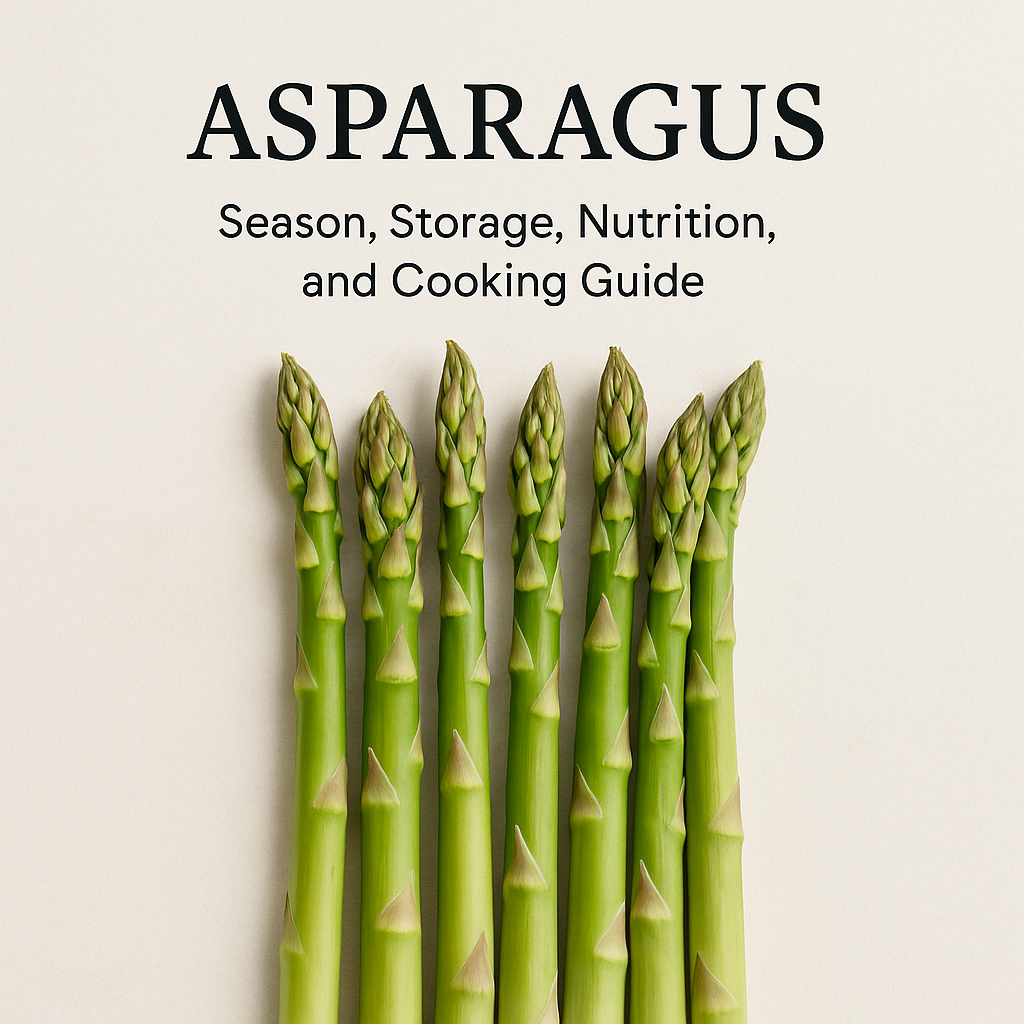
Asparagus is a perennial flowering plant species, recognized for its piercing, spear-like shoots. The spears vary in color — predominantly green, though white and purple varieties are also available. Asparagus stalks range in thickness, and their tender tips are esteemed for their young, mild flavor. The plant thrives in a temperate climate and requires well-drained soil to flourish.
The taste of asparagus has a subtle earthy flavor with hints of bitterness and sweetness. Its unique texture, which remains crunchy yet tender when cooked properly, makes it a favorite among chefs and home cooks alike. Asparagus is also low in calories, making it an excellent addition to any dietary plan.
💪 Benefits
Asparagus stands out as a nutrition powerhouse, offering a myriad of health benefits. It is an excellent source of vitamins and minerals, such as vitamin K, vitamin C, vitamin A, folate, and iron. These nutrients collectively support various bodily functions, including immune health, vision, and blood cell formation.
Rich in antioxidants, asparagus helps combat oxidative stress and may contribute to healthier aging. The high fiber content aids in digestion and promotes gut health. Additionally, asparagus is a diuretic, which can help with fluid balance in the body, although it is free from any direct claims of medical efficacy.
🌍 Origin
Historically, asparagus has been cultivated for millennia, tracing back to ancient Egypt, Greece, and Rome. The word 'asparagus' derives from the Greek word for 'sprout' or 'shoot.' The plant eventually spread across Europe and Asia and was prized for both its flavor and medicinal properties.
In modern times, asparagus became widely grown in other parts of the world, including North America, benefiting from advancements in horticulture and transport. Today, countries such as the United States, Peru, and China are among the top producers of asparagus globally, catering to an ever-growing demand.
📅 Harvest Season
The prime asparagus season varies depending on the region, but in general, it peaks in spring, particularly from March to June. The growing conditions during spring, with mild to warm temperatures and ample sunlight, spur asparagus to sprout quickly.
In other regions like Southern California or parts of Mexico, asparagus may be harvested earlier, providing a broader timeframe for enjoying this seasonal delight. The short harvest window makes fresh, locally grown asparagus a sought-after delicacy.
🧺 Varieties
Asparagus comes in several varieties, the most common being green asparagus. This variety is widely known and appreciated for its vibrant color and tender texture. White asparagus, prevalent in Europe, is grown without exposure to sunlight, resulting in a milder flavor and softer texture. Due to its cultivation method, it is often pricier than its green counterpart.
Purple asparagus, less commonly found, offers a sweeter taste due to higher sugar levels. It retains its color when raw but turns green when cooked. Each variety brings a unique flavor and aesthetic appeal to a dish, allowing for creative culinary expression.
🛒 How to Choose (Checklist)
- Color: Look for bright green or violet-tinged spears.
- Firmness: The spears should be firm to the touch and not limp.
- Tips: Tight, compact tips indicate freshness.
- Size: While thicker spears can be meatier, tenderness depends more on freshness than size.
- Odor: Fresh asparagus has a mild smell; avoid if there is a strong or unpleasant odor.
🍽 Cooking & Eating Methods
Asparagus is versatile in the kitchen, offering various cooking methods that enhance its natural flavor and texture. Here are some popular ways to prepare asparagus:
- Steaming: Retains the vegetable’s nutrients and vibrant color. Steam until tender-crisp to maintain some bite.
- Grilling: Brings out a smoky flavor. Toss spears in olive oil and season before grilling until charred.
- Roasting: A high-heat method that caramelizes spears, adding depth to their flavor. Roast with garlic and butter for a delectable side dish.
- Sautéing: Quickly cook in a skillet with butter or olive oil. Add lemon juice for a fresh finish.
Asparagus pairs well with a variety of ingredients, such as citrus, cheese, eggs, and nuts, making it a delightful addition to any meal.
❄ Storage Tips
Proper storage is key to maintaining asparagus' freshness and texture. Follow these tips to extend its shelf life:
- Refrigeration: Trim the ends and stand spears upright in a jar with an inch of water, cover with plastic, and store in the refrigerator.
- Freezing: Blanching asparagus before freezing helps retain its color and nutrients. Store in airtight containers or freezer bags.
- Consumption: Ideally, consume fresh asparagus within three to five days of purchase for optimal flavor and texture.
❓ FAQ
Q1: Can I eat raw asparagus?
A1: Yes, asparagus can be eaten raw, especially the tender tips and spears. However, cooking can enhance its flavor and digestibility.
Q2: How do I know when asparagus has gone bad?
A2: Asparagus that is slimy, mushy, or has a strong odor is likely spoiled. Fresh asparagus should be crisp and have tightly closed tips.
Q3: What are some common seasonings for asparagus?
A3: Olive oil, salt, and pepper are classics. Lemon juice, garlic, parmesan cheese, and herbs such as thyme and dill also complement asparagus well.