🍓 Arugula: Season, Storage, Nutrition, and Cooking Guide
Arugula is a vibrant green leafy vegetable packed with flavor and nutrition, popularized in culinary dishes around the globe. Whether you are looking to enjoy its distinct peppery flavor, boost your salad with nutrients, or experiment with new recipes, understanding arugula's many aspects will enhance your culinary experience.
✨ Characteristics
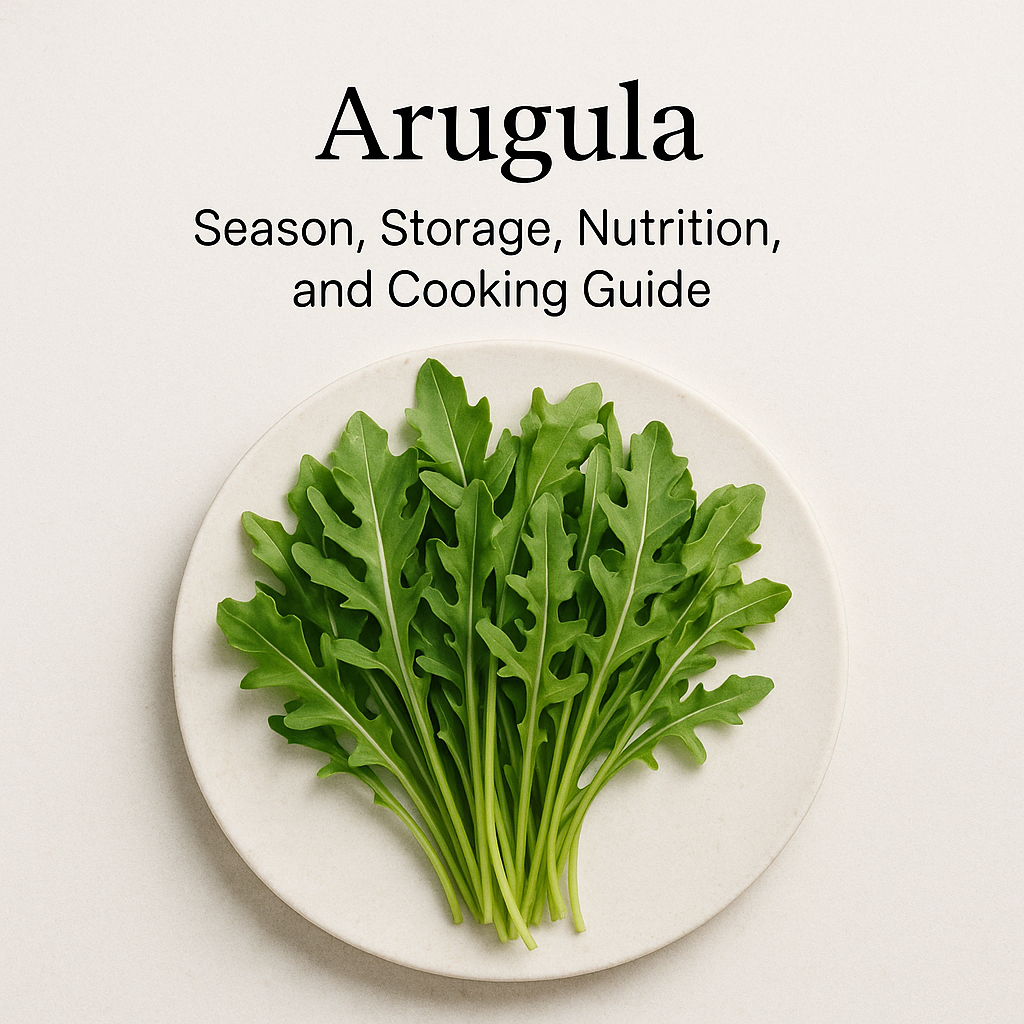
Arugula, also known as rocket or roquette, is a leafy green belonging to the Brassicaceae family, which includes broccoli, kale, and cauliflower. Characterized by its long, slender leaves and a distinct peppery flavor, arugula offers a unique addition to a variety of dishes. While its flavor profile is bold and slightly bitter, it is balanced with nutty undertones, making it a popular choice for salads, pizzas, and pastas. Arugula grows quickly and thrives in cooler weather, earning a place in both garden beds and indoor organic farms.
💪 Benefits
Including arugula in your diet can enrich your meals with a burst of flavor and a dose of essential nutrients. Arugula is low in calories yet high in vitamins A, C, and K, contributing to eye health, immune support, and bone strength. Additionally, arugula contains important minerals like calcium, magnesium, and potassium.
The rich antioxidant content of arugula helps combat oxidative stress, which is linked to chronic health issues. The nitrates present in arugula may support cardiovascular health by promoting blood flow and maintaining healthy blood pressure levels, although further research is needed to fully understand these effects.
🌍 Origin
Originating from the Mediterranean region, arugula has been a part of the culinary fabric for centuries. It was favored by Romans and Greeks, who incorporated it into their diets as both a vegetable and an herbal remedy. Over time, arugula spread across Europe and other parts of the world, gaining popularity for its robust flavor and health benefits. In modern cuisine, arugula is embraced not only for its taste but also for its versatility, gracing tables from Italy to North America.
📅 Harvest Season
Arugula is a cool-weather crop that can typically be harvested in spring and fall. In regions where winters are mild, it may also be grown throughout the winter months. Germination is quick, taking just one to two weeks, and gardeners often enjoy multiple harvests from a single planting due to its rapid growth cycle. Gardeners should aim to harvest when the leaves are tender and before the plant flowers, as older leaves can become excessively bitter.
🧺 Varieties
Arugula comes in several varieties that vary in flavor intensity and leaf shape. Some common types include:
- Wild Arugula: Known for its spicy flavor, with smaller, deeply lobed leaves.
- Garden Arugula: More common in supermarkets, this variety offers milder taste and large, broad leaves.
- Wasabi Arugula: Exhibiting a strong wasabi-like flavor, perfect for adding pungency to dishes.
- Sylvetta Arugula: Featuring small, tender leaves with an intense flavor profile, used in gourmet dishes.
🛒 How to Choose (Checklist)
- Look for fresh, bright green leaves without yellowing or wilting.
- Ensure the leaves are crisp and free from slimy textures.
- Choose arugula with evenly shaped leaves, avoiding those with too many blemishes or holes.
- Smell the arugula; fresh arugula should emit a peppery scent.
🍽 Cooking & Eating Methods
Arugula is celebrated for its versatility in the kitchen, seamlessly transitioning from salads to cooked dishes. Here are some popular methods to enjoy arugula:
- Salads: Use fresh arugula as a base or mix with other greens for a refreshing salad. It pairs well with citrus, vinaigrettes, and nuts.
- Pesto: Replace basil with arugula for a spicy twist on this classic sauce. Blend with nuts, Parmesan cheese, and olive oil.
- Pizza Topping: Add arugula to the top of a freshly baked pizza for a peppery crunch that complements the richness of cheese and meats.
- Soups and Stews: Stir arugula into hot soups and stews right before serving. This quick wilting preserves its nutrients and flavor.
- Smoothies: Blend arugula with fruits and other greens for a nutrient-packed green smoothie with a hint of spice.
❄ Storage Tips
To maintain arugula's freshness and nutrient content, proper storage is essential:
- Refrigerate arugula in the crisper drawer set to high humidity.
- Keep arugula dry by storing it in a salad spinner or wrapping it in paper towels inside a plastic bag.
- If wet, wash leaves thoroughly, dry completely, and store as mentioned above to prevent wilting and decay.
- Use refrigerated arugula within a few days for optimal flavor and texture.
❓ FAQ
Q: Can arugula be frozen for long-term storage?
A: Freezing arugula is possible, but it may affect the texture. For best results, blanch leaves briefly before freezing, and use frozen arugula in cooked dishes rather than raw salads.
Q: Is arugula suitable for growing in pots or containers?
A: Yes, arugula grows well in containers, provided they have adequate drainage and sunlight. Choose a pot that's at least six inches deep and use quality potting soil.
Q: How do I offset the bitterness of mature arugula?
A: To soften the bitterness of mature arugula leaves, balance their flavor by combining them with sweet or acidic ingredients such as roasted fruits, balsamic vinegar, or a honey-based dressing.