🍓 How to Store Root Vegetables: Season, Storage, Nutrition, and Cooking Guide
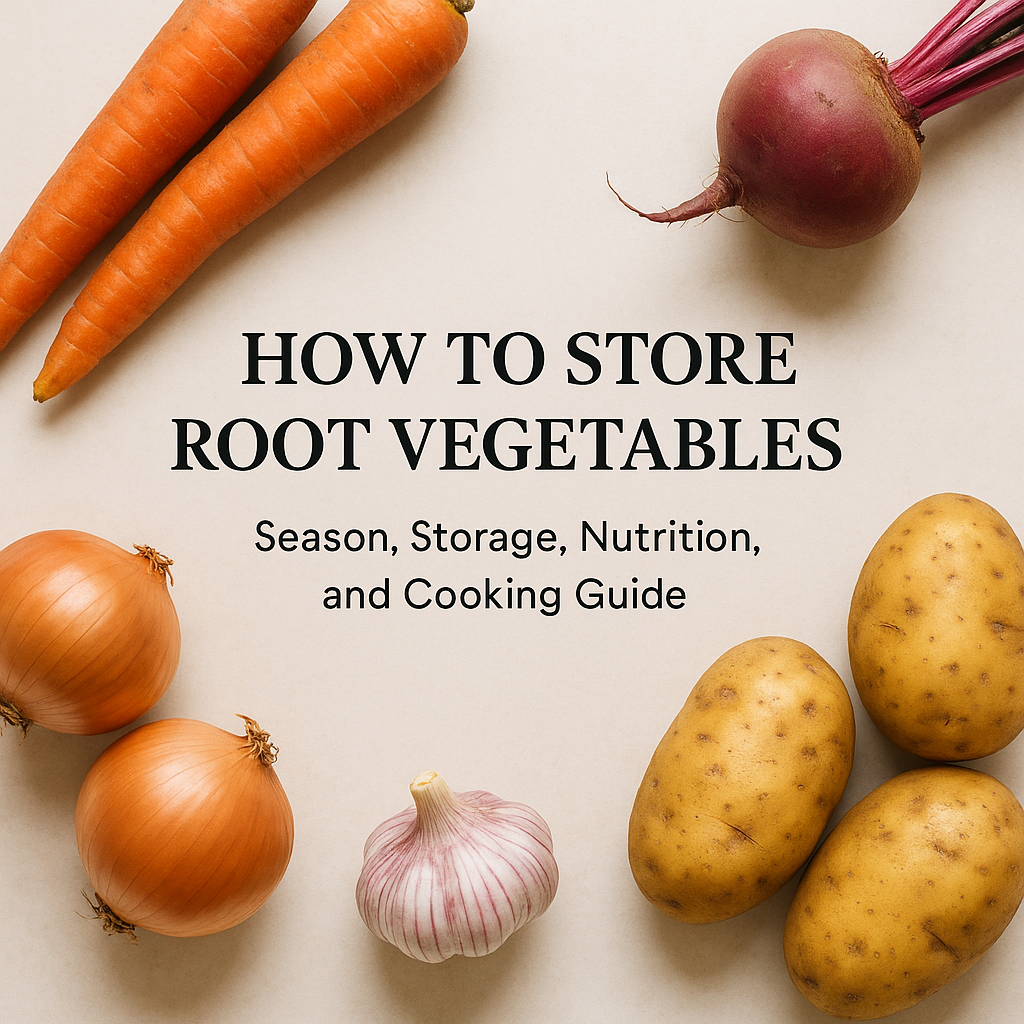
Root vegetables are a staple in many cuisines around the world, prized for their versatility, nutritional benefits, and long shelf life. These underground treasures, such as potatoes, carrots, and beets, play an essential role in culinary traditions and nutritional plans. This guide will help you understand how to store, select, and prepare root vegetables to optimize their flavor and nutritional value while minimizing waste.
✨ Characteristics
Root vegetables are a diverse group of plants that grow underground and absorb nutrients and water from the soil. Common types include tubers, taproots, and bulbs. These vegetables are generally high in carbohydrates, fiber, and essential nutrients like vitamins A, C, and various B vitamins. Their robust flavors can range from sweet to earthy, making them adaptable to a variety of dishes.
💪 Benefits
The nutritional benefits of root vegetables are numerous. They provide a rich source of antioxidants, which can help protect your body from oxidative stress. Additionally, many root vegetables are rich in dietary fiber, promoting digestive health and maintaining healthy blood sugar levels. Their high water content and low-fat profile make them an excellent choice for weight management and cardiovascular health.
🌍 Origin
Root vegetables have been cultivated for thousands of years and originate from various regions across the globe. For example, potatoes were first domesticated in the Andes of South America, while turnips and beets are native to parts of Europe and Asia. This worldwide cultivation contributes to the vast array of root vegetables available today.
📅 Harvest Season
Root vegetables are generally harvested in the cooler months of autumn and winter, though the exact timing depends on the type and regional climate. For instance, carrots and beets are typically harvested in late summer through fall, while parsnips are best after frost in autumn. Knowing the harvest season can help you purchase the freshest vegetables and plan your meals accordingly.
🧺 Varieties
There is a wide array of root vegetables to choose from:
- Carrots: Bright orange and sweet, carrots are versatile and rich in beta-carotene.
- Potatoes: Available in numerous varieties, from starchy Russets to waxy Yukon Golds.
- Beets: Earthy and sweet, with a vibrant red color or even golden tones.
- Turnips: With a peppery flavor, turnips are great roasted or mashed.
- Parsnips: These resemble carrots but with a sweeter, nuttier flavor.
- Radishes: Crisp and spicy, often consumed raw in salads or as snacks.
🛒 How to Choose (Checklist)
When selecting root vegetables, consider the following checklist to ensure freshness and quality:
- Look for vegetables that are firm and free from blemishes or cuts.
- Avoid those with wrinkled skin, as this indicates dehydration.
- Check for consistent color and shape; anomalies may signal poor growth conditions.
- If possible, purchase those with their greens still attached; fresh greens are a sign of a recently harvested vegetable.
🍽 Cooking & Eating Methods
Root vegetables can be prepared in numerous ways, adding variety and depth to your meals:
- Roasting: Enhances their natural sweetness and caramelizes their sugars.
- Boiling or Steaming: Retains nutrients and provides a tender texture.
- Mashing: Flavors like mashed potatoes become creamy favorites.
- Grilling: Adds a smoky flavor, perfect for outdoor meals.
- Raw: Particularly for carrots and radishes, providing a crisp, refreshing bite.
❄ Storage Tips
Proper storage of root vegetables can prolong their shelf life and maintain their flavor:
- Store in a cool, dark, and dry environment. Basements or root cellars are ideal.
- Avoid storing them near fruits like apples and pears as they emit ethylene gas, which can promote spoilage.
- If refrigeration is necessary, place them in a perforated plastic bag to maintain humidity and airflow.
- Avoid washing until ready to use to prevent excess moisture, which can lead to rot.
❓ FAQ
Q1: Can you freeze root vegetables?
A1: Yes, many root vegetables can be frozen, but it’s best to blanch them first to preserve flavor and nutritional quality.
Q2: How do you know when root vegetables are bad?
A2: Signs of spoilage include soft spots, mold, discoloration, or a foul odor.
Q3: What's the best way to clean root vegetables before cooking?
A3: Scrubbing them under running water with a brush can remove dirt and debris effectively.