🍓 Freezing Vegetables Safely: Season, Storage, Nutrition, and Cooking Guide
Freezing vegetables is a time-proven method to preserve their nutritional value and prolong their shelf life. This method enables you to enjoy fresh produce throughout the year, regardless of the growing season. This comprehensive guide covers everything you need to know about freezing vegetables safely, from understanding the characteristics and benefits of frozen veggies to mastering storage and cooking techniques.
✨ Characteristics
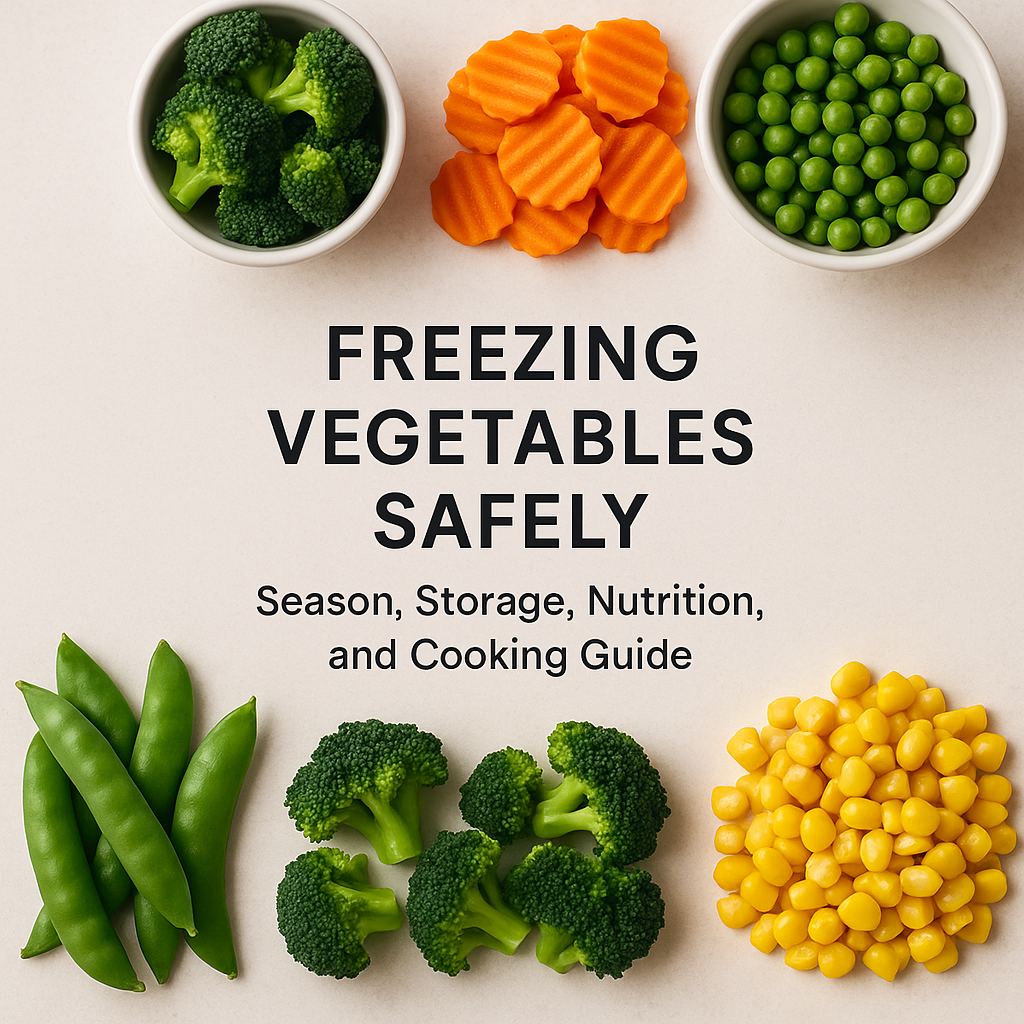
Frozen vegetables retain many of the fresh characteristics they had before freezing. The vibrant colors and crisp textures of vegetables like peas, corn, and broccoli are often preserved when processed and stored correctly. However, some vegetables might experience slight texture changes due to water content expanding during freezing. Proper blanching—a quick heat treatment—is essential as it helps purge enzymes that could affect flavor and color balance.
💪 Benefits
The key benefits of freezing vegetables are numerous. First and foremost, freezing helps retain most of the vitamins and minerals in fresh produce, making them a healthy option year-round. Additionally, buying in bulk during the peak harvest season is cost-effective. Frozen vegetables are time-savers, as they are pre-washed, pre-cut, and ready to cook, minimizing meal preparation time. Also, they reduce food waste, extending the usability of your groceries.
🌍 Origin
Historically, the method of freezing food traces back to indigenous cultures in cold climates who would use ice and natural surroundings to preserve game and other essentials. The more scientific approach started in the early 20th century with the advent of electrical refrigeration. Clarence Birdseye, an American entrepreneur, discovered rapid freezing techniques in the 1920s that led to the modern frozen food industry. Today, frozen vegetables are a staple in households worldwide, contributing to the convenience of modern life.
📅 Harvest Season
Understanding the harvest season for various vegetables is essential for maximizing quality and nutrient retention when freezing. Here are peaks for some popular veggies:
- Peas: Typically harvested in early summer, these can be frozen to maintain their sweet, fresh flavor.
- Broccoli and Cauliflower: Best harvested in late summer to early fall. The cooler months offer a perfect period for freezing them.
- Spinach and Kale: Spring-grown but can also have a second harvest in fall, making them ideal greens for pantry storage.
🧺 Varieties
Each vegetable has unique varieties that contrast in flavor, color, and texture, which can affect how well they freeze. Consider the following options:
- Carrots: Varieties like Nantes or Chantenay often maintain sweetness and texture post-freezing.
- Beans: Green beans, wax beans, and French beans freeze well when blanched correctly.
- Squashes: Butternut and acorn squash can be pureed or cubed for freezing, with both forms cooking well.
🛒 How to Choose (Checklist)
Selecting the best vegetables for freezing includes these essential guidelines:
- Choose fresh, ripened vegetables free of blemishes.
- Opt for those with vibrant, consistent coloring.
- Avoid overly mature or watery vegetables, which may have poorer texture when thawed.
- If possible, select organic varieties to avoid preservative concerns.
🍽 Cooking & Eating Methods
Frozen vegetables lend themselves to numerous cooking applications, making them versatile kitchen staples. Depending on the vegetable, they may be steamed, roasted, microwaved, sautéed, or cooked directly from frozen in soups and stews. Most labels provide cooking instructions for best results, ensuring the texture and flavor remain optimal.
Adding seasoning or herbs during cooking can enhance the flavors of frozen vegetables without overpowering their natural goodness. Also, some veggies like peas and corn can be consumed directly from thawing for salads, while others are better cooked for safety and texture.
❄ Storage Tips
Proper storage is crucial to maintaining the high quality of frozen vegetables. Follow these tips to keep them in top condition:
- Freeze vegetables promptly after receiving or picking to preserve nutrients.
- Ensure your freezer is set to 0°F (-18°C) or lower for optimal preservation.
- Use airtight containers or vacuum-sealed bags to prevent freezer burn.
- Label packages with the date and type of vegetable for easy rotation.
- Avoid over-packing the freezer; allow for air circulation around packages.
❓ FAQ
Q1: Can all vegetables be frozen?
While many vegetables freeze well, some high-water content vegetables like cucumbers and lettuce may not retain their quality after freezing.
Q2: What is blanching, and why is it important before freezing?
Blanching involves briefly boiling vegetables and then immersing them in cold water. This process helps preserve color, flavor, and reduces spoilage by killing enzymes.
Q3: How long can frozen vegetables be stored?
Most frozen vegetables maintain quality for 8 to 12 months if properly stored in the freezer. Regularly check for signs of freezer burn or ice crystals.