🍓 Freezing Fruits for Long-Term Storage: Season, Storage, Nutrition, and Cooking Guide
Freezing fruits is an invaluable method for preserving the taste, nutrition, and enjoyment of seasonal produce all year long. This guide will walk you through the characteristics of freezing fruits, the benefits, the best harvest seasons, and storage tips to ensure you make the most of this preservation technique.
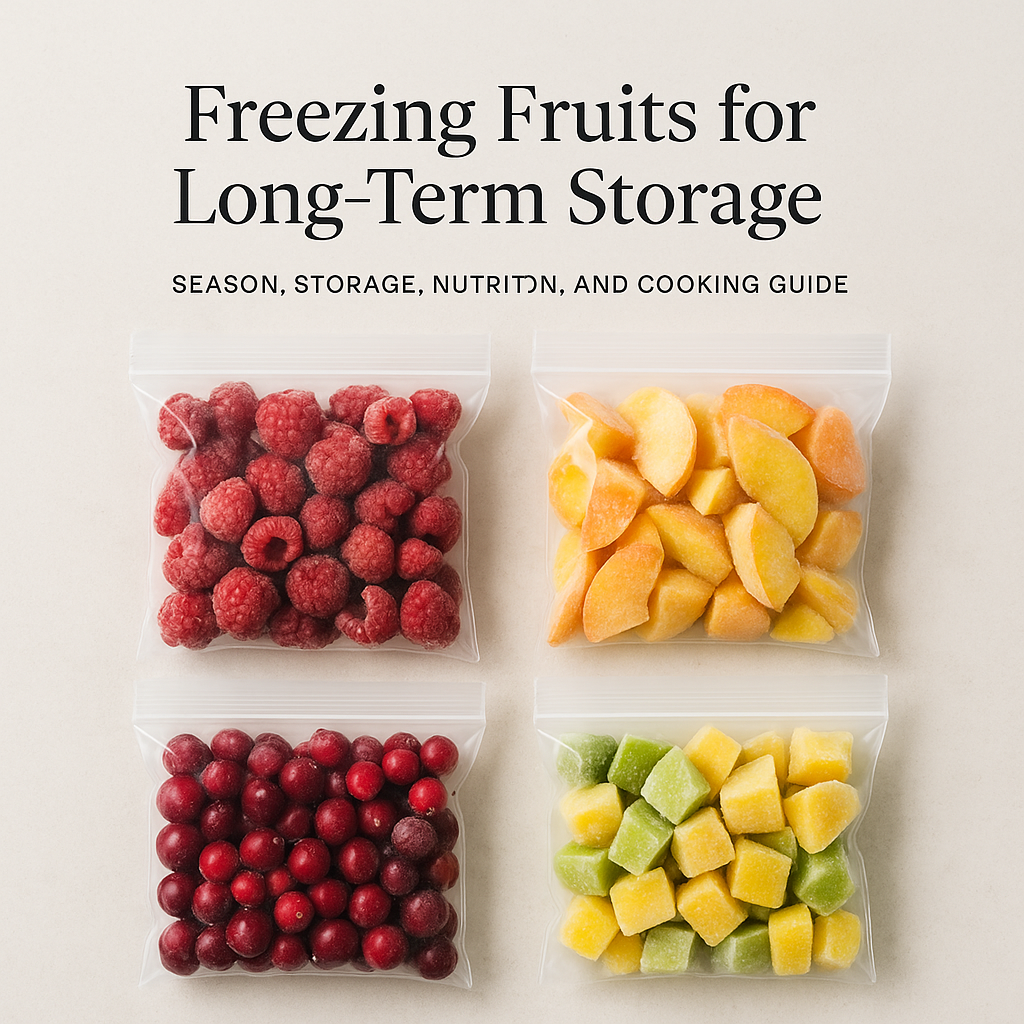
✨ Characteristics
Freezing fruits is not just a simple way to extend their shelf life; it's a means to preserve their natural flavors and nutritional benefits. The process inhibits the growth of microorganisms and slows down the enzyme activity that causes fruits to spoil. Some fruits freeze better than others, and understanding which to choose can improve both storage outcomes and culinary applications.
💪 Benefits
Freezing fruits offers several significant benefits:
- Preservation of Nutrients: Freezing preserves the vitamins, fibers, and antioxidants found in fresh fruits, ensuring that they retain their nutritional profile.
- Cost-Effectiveness: Buying fruits in bulk when they're in season and freezing them can be more economical than purchasing out-of-season produce.
- Convenience: Having a selection of frozen fruits ready to go at any time simplifies meal preparation, allowing for quick smoothies, desserts, or snacks.
🌍 Origin
The practice of freezing foods dates back hundreds of years, but modern freezing techniques truly took shape in the 20th century. Today, flash-freezing technology allows consumers to retain nearly the entire nutritional value of fresh fruit. This innovation has been particularly embraced in regions with short growing seasons or limited access to diverse produce.
📅 Harvest Season
Choosing the right time to freeze fruits is essential for maximizing both flavor and nutrition. Ideally, fruits should be frozen at their peak ripeness for the best results. Here’s a brief overview of the best times to harvest and freeze popular fruits:
- Strawberries: Late spring to early summer
- Blueberries: Mid to late summer
- Peaches: Late summer
- Apples: Early to mid-fall
🧺 Varieties
The types of fruits you can freeze vary widely, but here are some of the most popular varieties:
- Berries: Including blueberries, strawberries, raspberries, and blackberries, known for their vibrant colors and versatility.
- Stone Fruits: Such as peaches, plums, and cherries, perfect for baking or as a sweet complement in savory dishes.
- Tropical Fruits: Including bananas, mangoes, and pineapples, these fruits offer a tropical flair to smoothies and desserts.
- Apples and Pears: Offering delicious options for baking and making warm compotes even in the depths of winter.
🛒 How to Choose (Checklist)
When selecting fruits for freezing, consider the following checklist to ensure quality:
- 🌟 Choose fruits that are ripe but firm, without any signs of spoilage or bruising.
- 🥭 Opt for varieties that are naturally sweet to reduce the need for added sugars.
- 🌿 Select organic when possible to minimize pesticide residues.
- 🍏 Consider the intended use: will you be snacking, baking, or making smoothies?
🍽 Cooking & Eating Methods
Frozen fruits can typically be used in the same way as fresh fruits once thawed. Here are a few methods to enjoy frozen fruits:
- Smoothies: A popular use for frozen fruits which adds a refreshing, icy texture to the blend.
- Baking: Incorporate frozen fruits into muffins, pies, and cobblers; thawing is not always necessary.
- Snackage: Enjoy fruits like grapes directly from the freezer for a sweet, cooling treat.
- Compotes and Sauces: Perfect applications for fruits like cherries or berries, creating vibrant toppings for pancakes or desserts.
❄ Storage Tips
To enhance your freezing experience, follow these storage tips:
- 🍱 Use airtight containers or heavy-duty freezer bags to prevent freezer burn.
- 📅 Label and date each container to keep track of storage time.
- 🧊 Freeze fruits in a single layer on a baking sheet before transferring them to containers, preventing clumping.
- ⏲ Consume within optimal time frames: berries and stone fruits (6-8 months), tropical fruits (2-3 months).
❓ FAQ
1. Can all types of fruits be frozen?
While most fruits can be frozen, those with high water content, like watermelon and citrus, may become mushy when thawed. Trial and personal preference often dictate the feasibility for specific uses.
2. Do frozen fruits retain the same nutrients as fresh ones?
Generally, yes. Freezing can preserve up to 90% of the fruit's original nutrients, although some vitamin C and folate may be slightly reduced over time.
3. How do I prevent freezer burn on my fruits?
Ensure that fruits are stored in airtight containers, remove as much air as possible from packaging, and store at consistently cold temperatures to reduce the risk of freezer burn.