🍓 Winter Seasonal Produce Guide: Season, Storage, Nutrition, and Cooking Guide
Winter brings with it a variety of fresh produce that not only adds color and flavor to your meals but also packs a nutritional punch necessary to keep you warm and healthy during the cold months. This guide explores everything you need to know about winter fruits and vegetables, from their characteristics and benefits to storage tips and cooking methods.
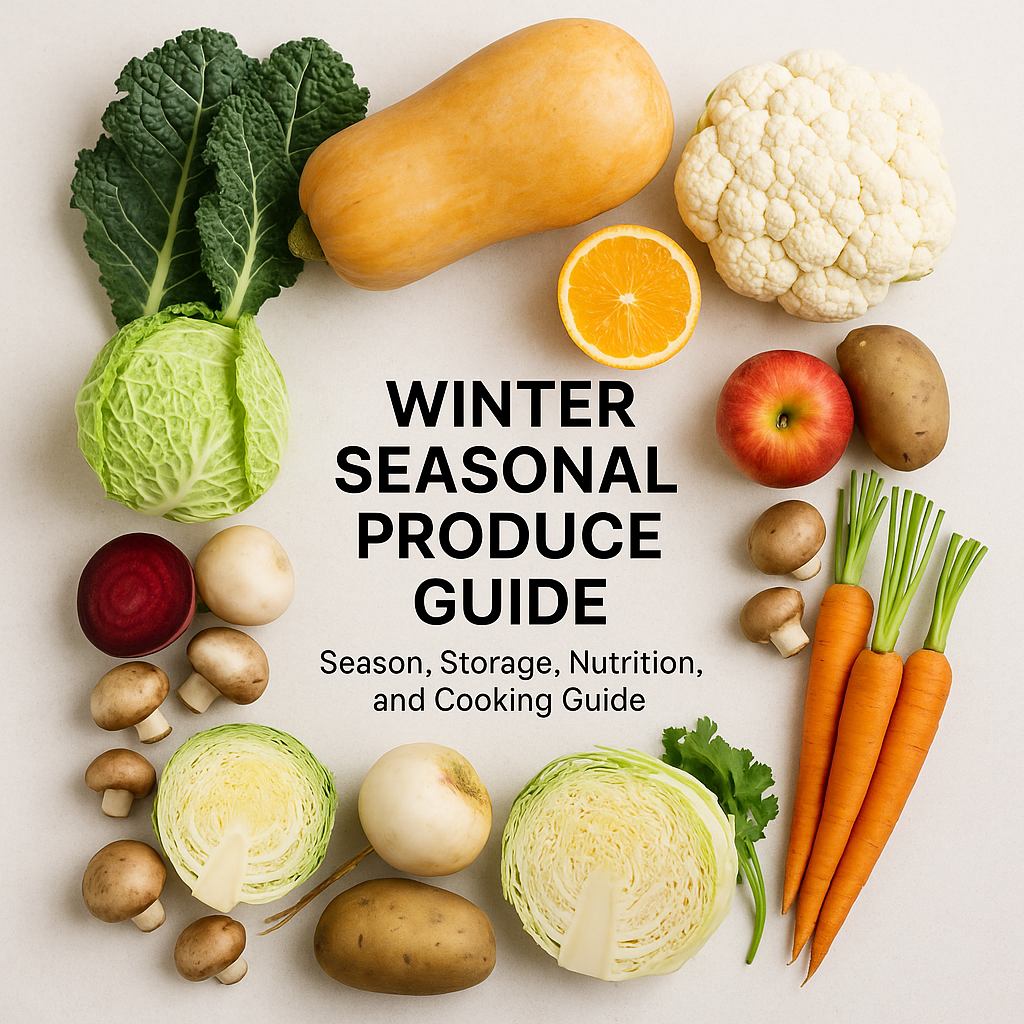
✨ Characteristics
Winter produce is characterized by its robustness and ability to thrive in cooler temperatures, making it ideal for storage and longevity. Vegetables like root crops such as carrots, parsnips, and tubers are known for their earthy flavors and dense nutrient content, while leafy greens like kale and Brussels sprouts offer a unique mix of vitamins and minerals. Fruits such as citrus varieties and pomegranates are also winter staples, known for their bright flavors and immune-boosting properties.
💪 Benefits
One of the primary benefits of consuming seasonal produce is enhanced freshness and flavor. These fruits and vegetables are harvested at their peak, ensuring maximum flavor and nutritional value. Winter produce is particularly beneficial for boosting immune systems, with many varieties offering high levels of Vitamin C, fiber, and antioxidants. Root vegetables provide complex carbohydrates that offer sustained energy, while leafy greens deliver essential vitamins and minerals. Moreover, consuming seasonal produce supports local farming communities and reduces environmental impact due to shorter transportation requirements.
🌍 Origin
Winter produce comes from various parts of the world and offers a rich history rooted in traditional practices. For example, citrus fruits like oranges and grapefruits are largely from subtropical regions such as Spain, the Mediterranean, and parts of the United States like Florida and California. Root vegetables thrived in the colder European climates, leading to their integration into many traditional European cuisines. Meanwhile, cruciferous vegetables such as cabbage and kale grew widespread due to their resilience and ease of cultivation, contributing to their popularity across multiple continents.
📅 Harvest Season
The harvest season for winter produce generally starts in late fall and continues through the winter months into early spring. Fruits like pomegranates and bananas hit peak season as autumn transitions into winter, while root vegetables like turnips and sweet potatoes are harvested during the fall and can be stored through the colder months. Citrus fruits generally reach their peak from November through March, providing a juicy splash of flavor during the winter gloom.
🧺 Varieties
The winter months bring an array of produce varieties, each with unique attributes and benefits. Common winter vegetables include:
- Root Vegetables: Carrots, beets, parsnips, and turnips provide earthy flavors and a solid nutrient profile.
- Cruciferous Vegetables: Cabbage, Brussels sprouts, and broccoli are rich in fiber and vitamins.
- Leafy Greens: Kale, collard greens, and Swiss chard are known for their versatility in cooking and nutrient density.
For fruits, winter varieties include:
- Citrus Fruits: Oranges, grapefruits, lemons, and limes offer a burst of Vitamin C and antioxidants.
- Tropical Fruits: Pineapples and bananas provide a sweet contrast to heartier winter meals.
🛒 How to Choose (Checklist)
When selecting winter produce, it’s important to look for key signs of freshness and quality. Here’s a checklist to guide your choices:
- Inspect for vibrant color – dull or discolored produce may indicate overripeness.
- Firmness matters – softer spots can be a sign of spoilage or aging.
- Check the smell – a fresh aroma is a good indicator of freshness in fruits.
- Examine leaves for greens – avoid wilted or yellowing leaves on vegetables.
- Choose local when possible for peak freshness and reduced environmental impact.
🍽 Cooking & Eating Methods
Winter produce is versatile and can be adapted into a variety of meals that warm the body and soul. Here are popular methods:
- Roasting: Root vegetables caramelize beautifully when roasted, enhancing their natural sweetness.
- Soups and Stews: Use a variety of vegetables to create hearty, nutrient-dense meals.
- Salads: Incorporate fresh citrus fruits and leafy greens for a zesty, refreshing dish.
- Stir-fries: Quickly cook vegetables like broccoli, kale, and carrots with a splash of soy sauce for a quick meal.
- Baking: Sweet winter fruits like apples and pears are perfect for baking into pies and desserts.
❄ Storage Tips
Proper storage of winter produce ensures longer freshness and less waste. Here are some tips:
- Root Vegetables: Store unwashed in a cool, dark place. Use a root cellar or a cool pantry.
- Leafy Greens: Wash and dry thoroughly, then store in the refrigerator wrapped in a paper towel.
- Citrus Fruits: These can be kept at room temperature but last longer when refrigerated.
- Sealed Containers: For cut produce or leftovers, store in airtight containers to maintain freshness.
- Avoid Plastic Bags: Use reusable produce bags or bins to enable air circulation and reduce waste.
❓ FAQ
- Q: Are frozen vegetables better than fresh in the winter?
A: Frozen vegetables are usually processed at their peak, retaining most nutrients. However, fresh is often preferred for better texture and flavor. - Q: How can I reduce waste with seasonal produce?
A: Opt for produce that stores well and use all parts of vegetables. For example, carrot tops can be used for pesto. - Q: Is eating seasonal produce more environmentally friendly?
A: Yes, it often involves shorter transportation distances and supports local farm sustainability, lowering carbon footprints.