🍓 Summer Seasonal Fruits and Vegetables: Season, Storage, Nutrition, and Cooking Guide
As temperatures rise and the sun shines brightly, summer introduces a vibrant palette of fruits and vegetables that are as delightful to taste as they are nutritious. This guide delves into the characteristics, benefits, and culinary uses of summer seasonal produce, a compelling blend of flavors and colors in your daily diet.
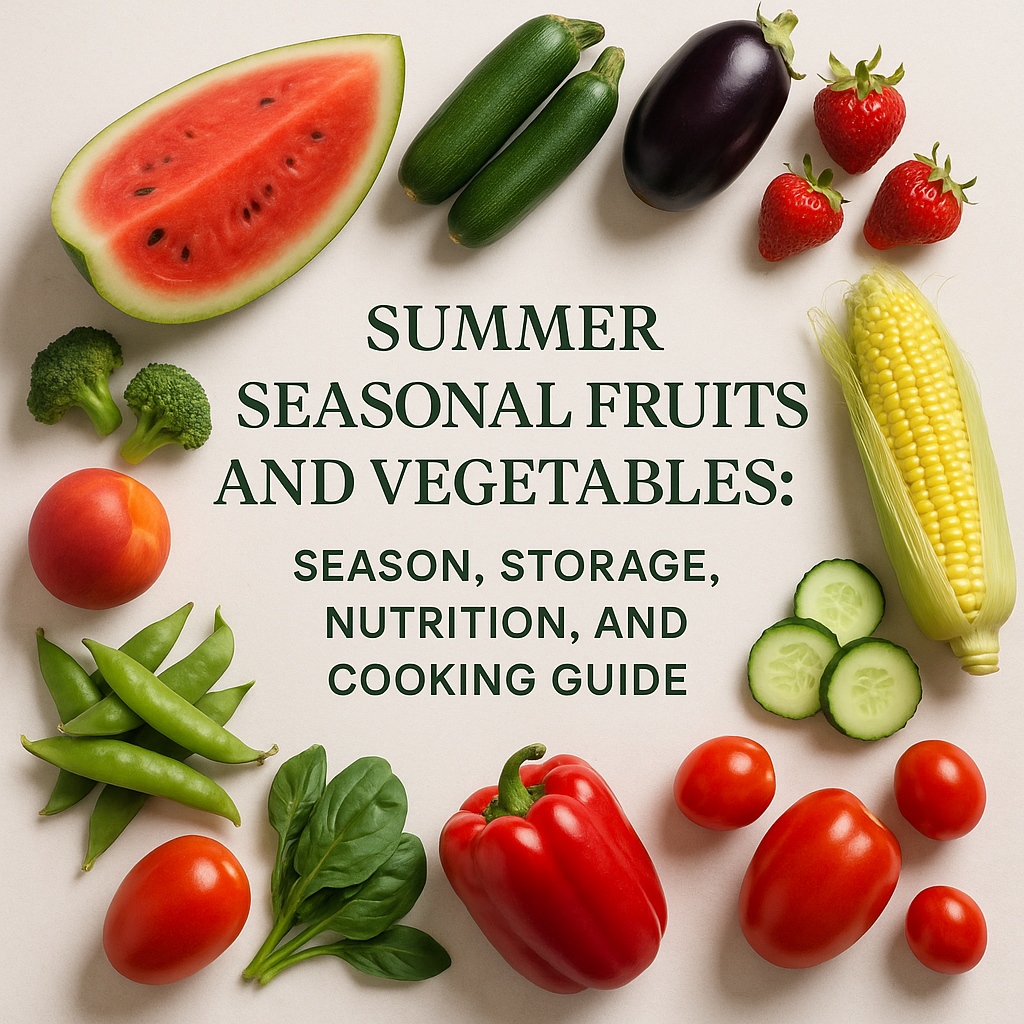
✨ Characteristics
Summer is a season that inspires growth and abundance, reflected in the colorful bounty of fruits and vegetables available. Typically, summer produce is characterized by its juicy, refreshing, and sweet nature, perfectly designed to keep you hydrated and energized. The colors range vividly from the deep purples of eggplants to the bright reds of strawberries, each promising a burst of flavor with every bite.
These fruits and vegetables thrive in the warm weather, growing in vibrant bushy patches or climbing lush vines. The key characteristic that connects all summer produce is their ability to refresh and nourish in the heat.
💪 Benefits
Summer fruits and vegetables are powerhouses of nutrition, offering a wide variety of vitamins, minerals, and antioxidants essential for maintaining good health. Consuming them can boost your immune system, improve digestion, and provide the energy needed for summer activities.
- Hydration: Many summer fruits, such as watermelon and cucumbers, have high water content that helps keep you hydrated.
- Antioxidants: Fruits like blueberries and strawberries are loaded with antioxidants that help protect cells from damage.
- Fiber: Vegetables such as leafy greens and carrots provide dietary fiber that aids digestion and helps maintain a healthy weight.
🌍 Origin
Many summer fruits and vegetables have fascinating backgrounds that reflect a blend of horticultural innovation and nature's groundwork. Tomatoes, originally native to western South America, are now a staple in global cuisine. Watermelons, with records tracing back to Southern Africa, have traveled the world, loved for their refreshing taste.
Different regions embrace their indigenous produce, adapting them over centuries for flavor and resilience, enriching local cultures and cuisines. Understanding their origins not only adds to their appreciation but also brings a global context to the dining table.
📅 Harvest Season
The harvest season for summer fruits and vegetables typically spans from late spring through early fall, with a peak in midsummer. This period varies slightly by region due to climate variations.
- Stone Fruits: Peaches, plums, and cherries usually make their debut in June and continue throughout the summer months.
- Melons: Watermelons and cantaloupes reach their prime in July and August.
- Berries: Strawberries, blueberries, and raspberries are often available from late spring to early fall.
- Corn and Zucchini: These beloved vegetables are plentiful in midsummer, perfect for barbecues and summer dishes.
🧺 Varieties
Summer offers a dazzling array of fruit and vegetable varieties, each boasting unique flavors and textures. Tomatoes alone have hundreds of varieties, ranging from tiny cherry tomatoes to large beefsteak types. Peaches can be clingstone or freestone, affecting how the flesh separates from the pit.
Cucumbers come in different forms too—some are slicing cucumbers, ideal for salads, while others are better suited for pickling. Diversity in summer produce encourages culinary creativity, ensuring endless delicious possibilities during this abundant season.
🛒 How to Choose (Checklist)
Choosing the best quality fruits and vegetables can enhance your summer cooking experience. Here’s a checklist to help you select the finest produce:
- Color: Choose fruits and vegetables with vibrant colors; they often indicate ripeness and freshness.
- Texture: Look for firm vegetables without blemishes, and consider their intended use. For instance, ripe mangoes should yield slightly to pressure.
- Smell: A fresh, fragrant aroma often suggests ripeness, especially for fruits like peaches and melons.
- Size: Uniform size can indicate consistent quality, but beware of oversized produce which may be less flavorful.
🍽 Cooking & Eating Methods
Summer is the perfect time to experiment with raw and cooked dishes that highlight the season’s bounty:
- Grilling: Enhance flavors by grilling veggies like corn, zucchini, and bell peppers. Fruits like pineapple and peaches develop a delightful caramelized sweetness when grilled.
- Salads: Use raw produce in salads for refreshing meals. Combine arugula, cucumber, and tomato for a classic summer salad, or create fruit salads with berries and melon.
- Roasting: Try roasting vegetables to concentrate their flavors, or making ratatouille—a colorful mix of summer vegetables baked to perfection.
- Smoothies: Blend fruits like bananas, berries, and spinach for nutritious smoothies that are perfect for breakfast or a post-workout snack.
❄ Storage Tips
Proper storage is crucial to maintain the freshness and nutritional quality of your summer produce:
- Refrigeration: Refrigerate berries and leafy greens promptly, while tomatoes and melons can ripen at room temperature first.
- Avoid Moisture: Keep produce dry to prevent spoilage; use paper towels to absorb excess moisture.
- Separate Ethylene Producers: Store bananas, and apples away from sensitive produce like cucumbers and leafy greens, as ethylene gas can speed up ripening.
- Freezing: Many fruits, like berries, freeze well; consider freezing them in a single layer before transferring them to storage containers.
❓ FAQ
- What are some popular summer fruits and vegetables?
Popular options include watermelon, peaches, strawberries, corn, and zucchini.
- How can I tell if a watermelon is ripe?
A ripe watermelon will have a hollow sound when tapped and a creamy yellow spot where it rested on the ground.
- Can I store tomatoes in the refrigerator?
For best flavor, store tomatoes at room temperature and away from direct sunlight. Refrigerate only once fully ripe.