🍓 Monthly Seasonal Produce Overview: Season, Storage, Nutrition, and Cooking Guide
Exploring seasonal produce can transform your culinary experience while maintaining nutritional balance and sustainability. Each month brings a variety of fruits and vegetables with unique flavors, benefits, and culinary applications. This guide delves into the critical elements of seasonal produce—understanding their characteristics, advantages, origins, and more—to help make the most of what each season has to offer.
✨ Characteristics
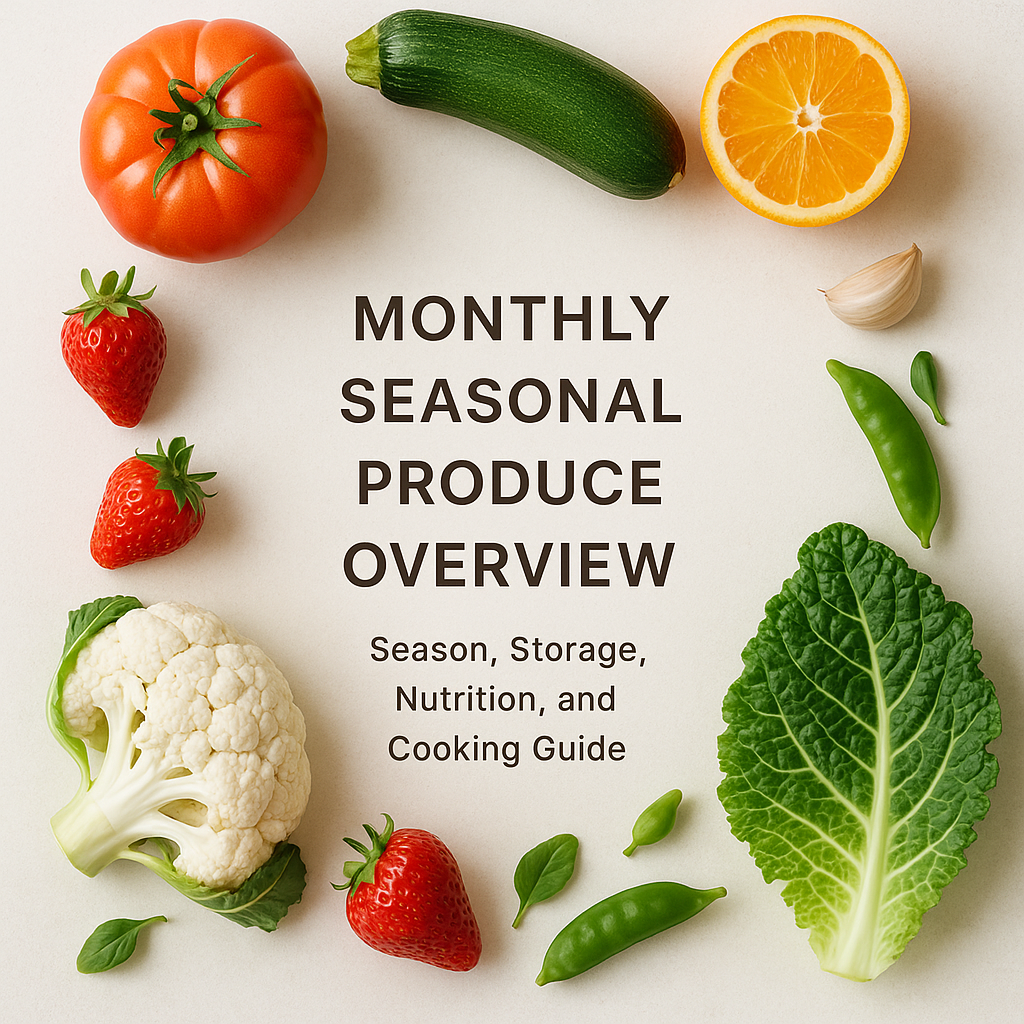
Each fruit and vegetable carries distinctive characteristics attributed to its variety and growing conditions. Seasonal produce generally boasts full flavor, optimal nutritional content, and peak freshness, offering an unrivaled taste and nutritional profile. Characteristics such as color, texture, and size often indicate the ripeness and quality of produce, guiding us towards the freshest selections. For example, a ripe summer tomato might have a vivid red hue, a firm yet giving texture, and a robust aroma.
💪 Benefits
Opting for seasonal produce comes with a plethora of benefits. Primarily, seasonal fruits and vegetables are harvested at their nutritional peak. This means they deliver enriched vitamins, minerals, antioxidants, and other vital phytonutrients. Additionally, seasonal produce consumed in its natural growing season supports local agriculture and reduces the carbon footprint associated with shipping out-of-season products from different geographical locations. By eating with the seasons, you can enjoy a more varied diet, which is essential for comprehensive nutrient intake.
🌍 Origin
Knowing the origin of seasonal produce helps trace the journey from farm to table, highlighting the variety of climates and soils worldwide that contribute to diverse produce offerings. Understanding the origin also deepens the appreciation of local flavors and traditions. Many regions take pride in their native fruits and vegetables, like the sweet cherries from Washington or juicy oranges from Florida. These local products often carry unique flavors not found elsewhere due to specific growing conditions.
📅 Harvest Season
Familiarity with the harvest seasons allows consumers to enjoy peak-season produce. Each month introduces different seasonal stars: spring might bring tender asparagus and strawberries, while fall ushers in apples and pumpkins. The harvest season is a time when produce is freshest, most affordable, and most abundant. It is also the time when the nutritional quality and flavor are at their best due to optimal growing conditions.
🧺 Varieties
Within each type of produce lies a spectrum of varieties, each with unique attributes. For instance, apples alone boast varieties such as Fuji, Granny Smith, and Honeycrisp, each offering different levels of sweetness and textures. These varietal differences can affect how each type fares in different dishes, dictating whether they’re better suited for baking, salads, or snacking. Exploring the rich diversity within each type of produce can enhance culinary creations and nutritional intake.
🛒 How to Choose (Checklist)
- Color: Bright, vibrant colors typically indicate freshness and optimal ripeness.
- Texture: Firmness or slight give might be desirable depending on the produce.
- Aroma: Sweet, earthy scents often signal good quality.
- Weight: Heavier produce usually indicates juiciness and freshness.
- Absence of blemishes: Choose items free from cuts, bruises, and mold.
🍽 Cooking & Eating Methods
Seasonal produce offers flexible culinary possibilities, from raw to cooked methods. Leafy greens like kale flourish in smoothies, while root vegetables such as carrots are delightful when roasted. Some produce is best enjoyed fresh, like berries in summer, providing a sweet, bursty addition to desserts. Grilling vegetables like zucchini and peppers brings out their natural sweetness, creating delicious sides or main dishes. Experimenting with different cooking techniques can help highlight the unique flavors of seasonal produce.
❄ Storage Tips
Proper storage significantly extends the life of seasonal produce, preventing food waste and preserving nutritional quality. Leafy greens prefer refrigerators, ideally in the crisper drawer. Potatoes like cool, dark places but don't thrive in refrigeration, which can turn their starch into sugar. Refrigerating berries in shallow containers prevents mold and squishing. Keeping different produce types apart can slow spoilage as certain ethylene-producing fruits hasten ripening in others.
❓ FAQ
Q1: Why is seasonal produce typically cheaper?
A: Seasonal produce is usually more abundant when it is in season locally, leading to a supply increase that can drive prices down. Additionally, reducing transportation and storage costs also contributes to lower prices during harvest.
Q2: Can eating seasonal produce enhance the flavor of my dishes?
A: Yes, seasonal produce is harvested at the peak of freshness, which usually correlates with enriched flavor, enhancing the taste of the dishes in which they are used.
Q3: How can I find out what's in season near me?
A: Local farmer's markets and community-supported agriculture (CSA) subscriptions often offer seasonal produce. You can also find information online through regional agricultural websites or seasonal produce guides, which outline harvest timings specific to your area.