🍓 Autumn Seasonal Produce Guide: Season, Storage, Nutrition, and Cooking Guide
Autumn marks a vibrant transition in our produce palette, bringing forward a rich variety of fruits and vegetables that thrive in cooler temperatures. This guide will serve as an educational resource for understanding the characteristics, benefits, and culinary applications of autumn’s bounty while providing tips on storage and choosing the freshest produce.
✨ Characteristics
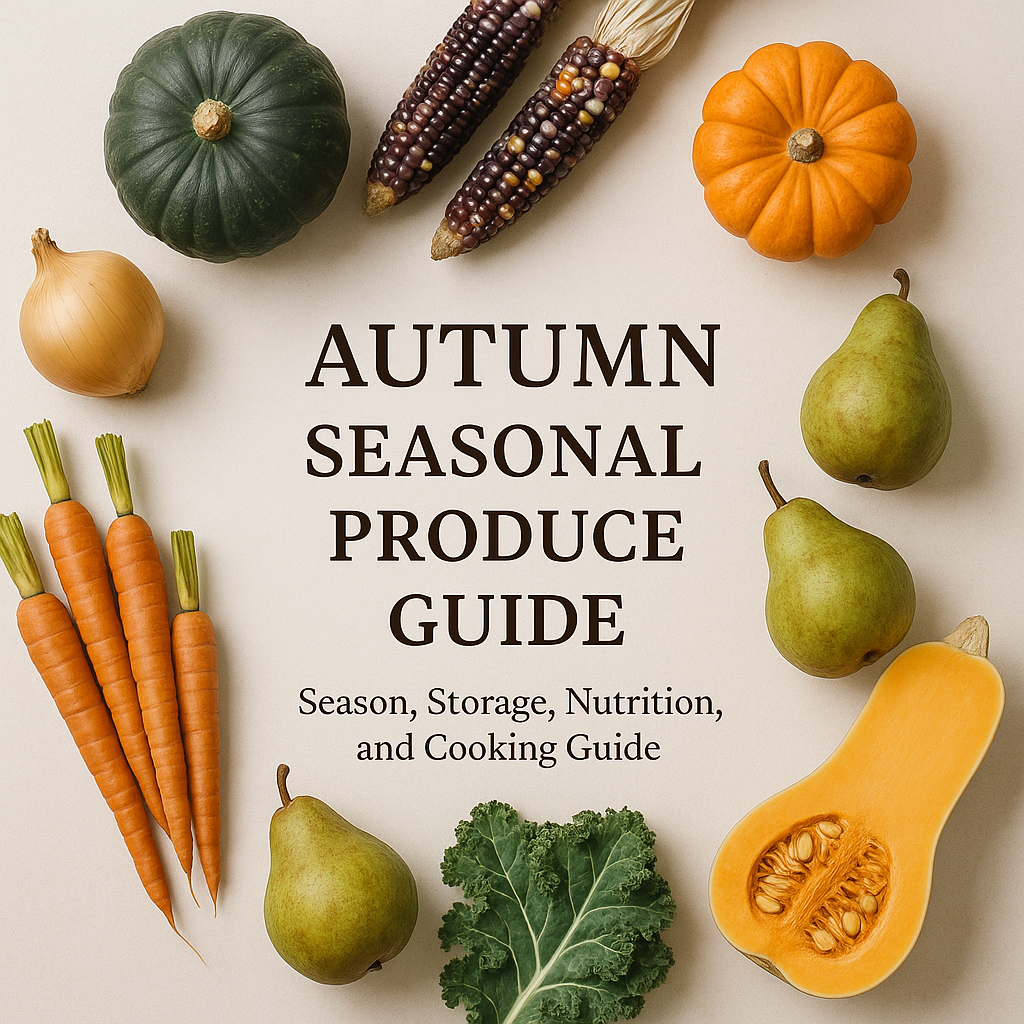
The autumn season is celebrated for its hearty and dense fruits and vegetables. These components are often high in fiber, complex carbohydrates, and various micronutrients. Typical produce includes root vegetables like carrots and beets, squashes such as butternut and acorn, and an assortment of apples and pears.
Autumn produce is distinctive for its robust flavors and earthy tones, manifesting rich colors such as the deep orange of pumpkins or the vibrant reds of apples. Their flavors range from sweet and tart to earthy and nutty, offering a remarkable sensory experience conducive to warm, comforting dishes.
💪 Benefits
The fruits and vegetables of autumn provide an array of health benefits, being packed with vitamins and antioxidants. Cruciferous vegetables like Brussels sprouts and cabbage contain powerful compounds that support immune function. Meanwhile, carotenoid-rich produce like pumpkins and carrots are known for their role in supporting eye health due to their beta-carotene content.
Besides vitamins, autumn produce is a great source of dietary fiber, aiding in digestion and making one feel full, which can be beneficial in weight management. Whole grains, which are also prominent in autumnal diets, contribute to heart health by helping to maintain healthy cholesterol levels.
🌍 Origin
Most autumn vegetables and fruits have cultural and geographic origins rooted in various parts of the world. Pumpkins, for instance, originated in North America and hold a vital place in both historical and cultural contexts. Similarly, varieties of squash have been cultivated in the Americas for thousands of years.
Root vegetables such as parsnips and turnips are native to Eurasia and have been staples in European agriculture for centuries. Apples, diverse in variety and adaptable to different climates, were originally from Central Asia, spreading throughout Europe and North America over time.
📅 Harvest Season
Autumn, spanning from late September to early December, is when these produce items reach peak ripeness. This period sees apples from the orchards, pumpkins from the fields, and the full range of colorful, nutritious leafy greens. It is essential to buy and consume these products during or shortly after their harvest to enjoy maximum freshness and nutrition.
Notably, regions with distinct autumn seasons, such as Northeast America and Europe, offer the most diverse crops. Alternatively, areas with milder climates extend the availability of certain produce beyond traditional autumn months.
🧺 Varieties
Autumn’s table boasts a cornucopia of varieties. Among apples, popular options include the sweet Honeycrisp, crispy Fuji, or the tart Granny Smith, each suitable for different dishes. Squashes range from the versatile butternut to the ornate acorn and the hearty hubbard.
Cabbages, Brussels sprouts, and other cruciferous vegetables can be found in multiple forms, each offering subtle flavor differences. Additionally, leafy greens like kale and spinach pivot from summer into autumn with cooler temperatures enhancing their texture and flavor.
🛒 How to Choose (Checklist)
- Color: Look for vibrant, deep hues indicating ripeness and nutrient density.
- Firmness: Opt for products that are firm to the touch, avoiding those with soft spots or shriveling.
- Weight: Heftier produce signifies juiciness, particularly for fruits such as apples and pears.
- Aroma: Fresh produce should have a pleasant, natural aroma.
- Skin: Uniform skin without blemishes or breaks minimizes premature decay.
🍽 Cooking & Eating Methods
Autumn produce can be prepared in numerous ways to suit a wide range of palettes and cuisines. Roasting enhances the natural sweetness of root vegetables and squashes, creating caramelized interiors wrapped in savory, crisp exteriors.
For soups and stews, the rich texture and flavors of autumn produce contribute to hearty, comforting meals perfect for cold days. Apples and pears can be baked or stewed, turning into delightful desserts or condiments that capture autumn’s essence.
Raw preparations, such as salads incorporating kale or shredded Brussels sprouts, offer a healthy, fiber-rich option. These dishes can be complemented by the rich flavors of nuts and seeds, enhancing texture and nutritional value.
❄ Storage Tips
Proper storage is crucial to elongating the freshness and nutritional value of autumn produce. Root vegetables keep best in cool, dark, and dry places. Onions, garlic, and potatoes should not be refrigerated due to the potential of sprouting or losing flavor.
Leafy greens require refrigeration to maintain their crispness. Storing them in airtight containers or wrapped in a damp cloth can prevent wilting. Apples and pears do well in a cool refrigerator drawer, away from strong-smelling items to avoid flavor absorption.
Squash types, such as pumpkins and butternuts, can be stored in a dark, dry pantry for several weeks if uncut. Once they are opened, however, refrigeration is recommended to prevent spoilage.
❓ FAQ (3 questions)
What are the best ways to cook autumn squashes? The best methods for cooking autumn squashes include roasting, which brings out their natural sweetness, steaming for retaining nutrients, and pureeing them into soups for a smooth, velvety texture.
Can I store root vegetables with other types of produce? It is generally recommended to store root vegetables separately to prevent moisture from causing other produce to spoil quicker. However, they can be stored with other roots in a cool, dark environment.
What are the advantages of eating seasonal produce? Eating seasonal produce supports better flavor profiles and nutritional content due to the optimal harvesting period. It also tends to be more economical and environmentally friendly, reducing the energy costs associated with storage and transportation.