How to Store Oranges & Citrus: Counter vs Fridge + Moisture Control
Frustration of Soft and Moldy Oranges
We’ve all been there—you reach for a bright orange on the counter only to find it soft, moldy, or starting to smell. The problem often boils down to excess moisture and incorrect temperature storage, which accelerate spoilage.
Fast Rules for Keeping Citrus Fresh
- Store citrus fruits in a cool, dry place for longevity.
- Use the fridge's crisper drawer for longer storage.
- Avoid washing before storage to prevent surface moisture.
- Separate damaged fruits to prevent spreading spoilage.
- Keep away from ethylene-producing fruits like bananas.
- Use a vented container to reduce condensation inside the fridge.
- Check for firmness regularly; discard if too soft or moldy.
Buying Checklist: Selecting the Perfect Citrus
When choosing citrus at the store, prioritize:
- Firmness: Look for firm, heavy fruits without soft spots.
- Scent: Check for a pleasant, fresh citrus aroma.
- Skin: Choose fruits with smooth, brightly colored skin free from blemishes.
- Avoid overly lightweight or squishy items, indicating dryness or spoilage.
The Real Fix: Step-by-Step Solution for Storing Oranges & Citrus
The goal is to maintain optimal moisture levels and stable temperatures for fresh citrus.
- Store in a single layer to prevent bruising and maintain air circulation.
- Use a breathable bag or a fruit basket on the counter to minimize moisture buildup.
- If refrigerating, set the crisper drawer to low humidity.
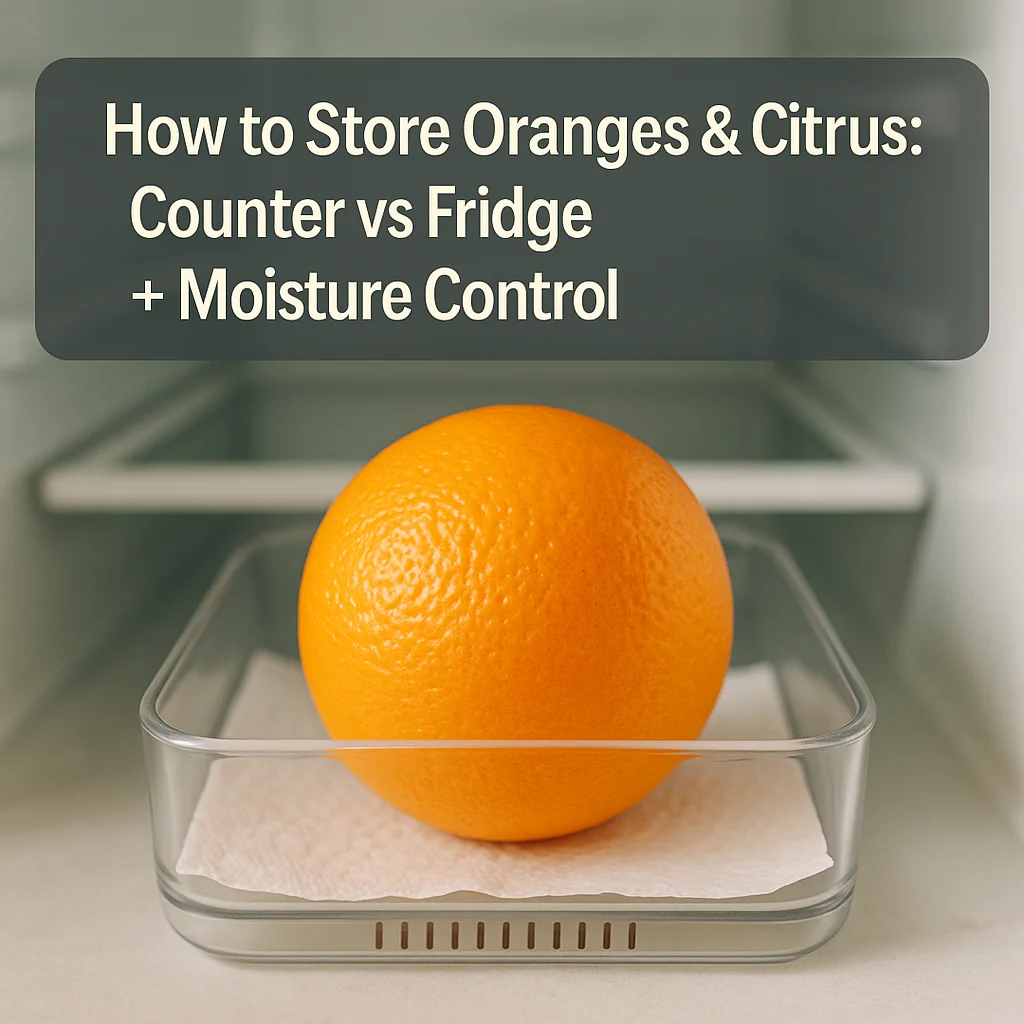
- Add a dry paper towel in the storage container to absorb excess moisture.
- Keep away from other ethylene-producing fruits; this prevents accelerated ripening.
- Check for surface moisture: wipe off condensation immediately to deter mold.
- For unripe citrus, room temperature encourages gradual ripening.
- Periodically turn or rotate the fruit to evenly distribute any minor moisture.
- For overripe fruit, use swiftly in juices or desserts to prevent waste.
- Discard any moldy or excessively soft fruits to protect the batch.
- Note if your fridge develops moisture on walls—consider changing its settings for better airflow.
If/Then Troubleshooting
- If fruits appear dry, they may need lower humidity storage.
- If mold appears, ensure fruits are dry before storage.
- If fruit smells musty, check for undetected spoilage.
- If fruit is too soft, it might be overripe; consume quickly.
- If condensation forms, increase ventilation or change the storage method.
- If fridge air is too humid, use more paper towels to absorb excess moisture.
- If fruits are sticky, ensure they've been kept clean and dry.
- If odors linger, an odor absorber like baking soda can help freshen the space.
15–20 Minute Weekly Prep Routine
- Inspect all stored citrus for signs of spoilage or mold.
- Rotate stock to use older fruits first.
- Wipe down counter and storage areas with a clean, damp cloth.
- Layer fresh paper towels in the crisper drawer or beneath the fruit.
- Review fridge settings to ensure optimal conditions for your citrus stock.
If I Only Had 2 Minutes
- Quick visual check for mold or soft spots.
- Rotate fruit to maintain even storage conditions.
Note: If your fridge is weird (too dry, too humid, or goods freeze on the back wall), adjust the settings to maintain a stable environment for your citrus.
Common Mistakes with Citrus Storage
- Storing in direct sunlight → increases temperature swings → store in a shaded area.
- Washing before storage → moisture promotes mold → wash just before use.
- Overcrowding storage → limited airflow → allow space between fruits.
- Ignoring ethylene → speeds up spoilage → keep separate from ethylene producers.
- Using sealed plastic bags → traps moisture → opt for breathable containers.
- Not checking fridge settings → may be too cold/humid → adjust for citrus needs.
- Leaving bruised fruit → spreads spoilage → remove damaged fruits promptly.
- Storing ripe citrus with unripe → uneven ripening → separate according to ripeness.
- Forgetting to rotate stock → older fruits left to spoil → apply FIFO (first in, first out).
- Overlooking minor spoilage → escalates quickly → address small signs early.
Food Safety Notes
- Wash citrus: Only before consumption to avoid added moisture during storage.
- When to toss: Discard fruits with mold, off odors, or significant softening.
Quick Table: Storage Tips for Citrus
| Produce | Best Storage | What to Avoid | Typical Problem | Quick Fix |
|---|---|---|---|---|
| Oranges | Fridge, crisper drawer | Plastic wrap or bags | Condensation | Use vented container |
| Lemons | Room temp or fridge | Ethereal exposure | Over-ripening | Separate from ethylene |
| Grapefruits | Fridge, low humidity | Direct sunlight | Mold growth | Ensure dryness |
FAQ: Caring for Your Citrus
- Do oranges go bad on the counter? Yes, they spoil faster than in the fridge.
- Should I refrigerate all citrus fruits? It's best, especially for longer storage.
- Can I freeze whole citrus? No, it alters texture and flavor emphatically.
- What's the ideal fridge temperature for citrus? Around 45°F (7°C) for optimal results.
- Do citrus fruits ripen after picking? Slightly; the quality doesn't improve much.
- Is it okay to keep citrus in plastic bags? Not advised—use breathable packing.
- How do I make citrus last longer? Control moisture and temperature variations.
- What if my citrus is getting slimy? Dispose of them, ensuring better storage practices.
- Can I store citrus with apples? Best kept separate due to ethylene gas from apples.
- Do I need to wrap cut citrus? Wrap tightly and refrigerate to retain freshness.
Conclusion: Rules to Save Money and Enjoy Fresh Citrus
- Keep moisture at bay with breathable storage solutions.
- Separate ethylene producers to slow down aging.
- Maintain stable temperatures to avoid texture damage.
Remember, storing citrus properly makes all the difference in taste and reduces waste. For more storage tips, visit our full list of topics, and explore our guide on ethylene pairing and shelf life.