How to Store Garlic: Whole vs Peeled, Fridge vs Freezer
Have You Ever Seen Garlic Turn Moldy or Sprout?
We've all experienced the frustrating disappointment of reaching for some garlic only to find it's moldy, sprouting, or simply too dried out. The real villain? Moisture and improper storage. Moisture causes mold and sprouting, while temperature swings can lead to condensation, which also accelerates spoilage.
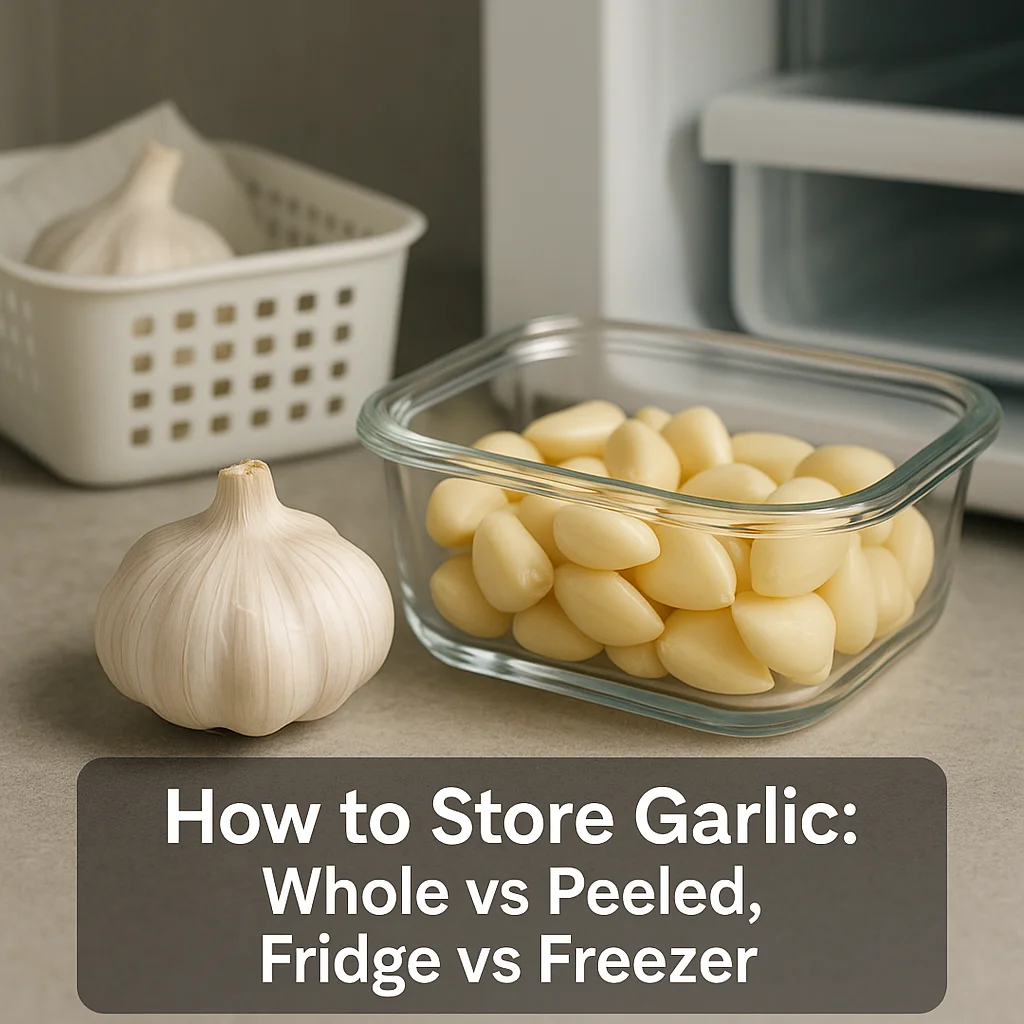
Fast Rules to Store Your Garlic Successfully
- Store whole heads at room temperature in a well-ventilated container.
- Keep peeled garlic in an airtight container in the fridge.
- Freeze minced garlic in oil or water for long-term storage.
- Avoid storing garlic in the fridge if it’s whole and unpeeled.
- Keep garlic away from onions and other ethylene-producing fruits.
- Avoid sunlight to keep garlic from sprouting.
- Use paper or mesh bags for better airflow when storing whole heads.
Buying Checklist for the Best Garlic
When shopping for garlic, choose those that are firm to the touch with tightly packed and intact cloves. Avoid bulbs with green sprouts, soft spots, or extensive drying, as these are signs of aging and might lead to quicker spoilage.
The Real Fix: Step-by-Step Solution for Storing Garlic
Our goal: keep garlic dry but not dehydrated, while avoiding temperature swings.
- Keep whole garlic heads in a cool, dry place with good air circulation. Use baskets or mesh bags to avoid moisture buildup.
- If you peel the garlic, place the cloves in an airtight container in the fridge to prevent condensation and latent mold growth.
- For long-term storage, consider freezing minced garlic. This maintains flavor without letting enzymes lead to spoilage.
- To freeze, chop garlic finely and mix with a bit of olive oil or water before placing in ice cube trays. This prevents freezer burn and preserves essential flavors.
- Check garlic periodically for firmness. A firm bulb indicates freshness, while softness may signal spoilage.
- Ensure garlic is stored away from direct sunlight which encourages sprouting due to warmth and light exposure.
- Avoid storing garlic close to potatoes and onions, as these can cause quicker spoilage through ethylene exposure.
- Observe whether condensation forms in containers. If so, air it out and restore with dry paper towels for moisture absorption.
- If garlic seems particularly dry or aging, observe the outer skin; dry, flaky skin suggests dehydration but not spoilage. Consider using softer bulbs soon.
- Do not store garlic heads in the vegetable crisper of the fridge as humidity levels are too high.
If things go wrong, try these troubleshooting tips:
- If garlic sprouts, trim sprouts before use.
- If mold is spotted, discard affected cloves immediately.
- If garlic is soft, check for other storage issues like excess humidity.
- If you find garlic dries out too quickly, wrap in a damp paper towel.
- If garlic develops an off smell, it’s best to toss.
- If fridge storage accumulates condensation, remove and dry properly.
- If garlic is too cold in the fridge, adjust location or drawer settings.
- If garlic disappears often, check its airflow and ethylene exposure.
15–20 Minute Weekly Prep Routine
- Start by checking your garlic for any soft spots or sprouts and use these first.
- Peeled garlic should be reorganized, placing older cloves on top in the container.
- If prepping for freezing, clean and chop garlic, and portion into ice cube trays with olive oil or water.
- Label freezer portions with the date for easy tracking.
- Check ventilation setups for whole garlic to ensure adequate airflow.
- Refresh paper towels for moisture absorption where needed.
- Optimize drawer settings in the fridge for peeled garlic (cool, not cold).
If I only had 2 minutes
- Remove any sprouted cloves from whole bulbs.
- Check peeled garlic for signs of moisture or mold.
- Move older garlic to the front for use.
If your fridge is weird: If too humid, add a moisture absorber like rice; if too dry, lightly dampen paper towels in storage containers.
Common Mistakes and How to Fix Them
- Storing whole garlic in the fridge → Leads to sprouting → Store at room temperature.
- Using sealed plastic bags for whole bulbs → Promotes mold → Use mesh bags instead.
- Exposing garlic to sunlight → Causes sprouting → Store in a dark place.
- Storing garlic with onions or potatoes → Faster spoilage via ethylene → Store separately.
- Refrigerating chopped garlic without oil/water → Dry out quickly → Add a liquid before freezing.
- Allowing condensation in stored peeled garlic → Mold formation → Use airtight containers properly.
- Ignoring sprouts on garlic → Bitter taste → Trim before use.
- Refraining from regular checks → Spoilage unnoticed → Schedule weekly prep routine.
- Freezing whole bulbs → Flavor loss → Mince first before freezing.
- Overcrowded storage → Poor airflow → Use properly spaced bags or containers.
Food Safety Notes for Garlic
Wash garlic right before use. Do not wash whole bulbs before storing, as this introduces moisture. If garlic looks or smells off, it's safest to discard. Trust your senses and use them conservatively when it comes to food safety.
Garlic Storage Quick Table
| Produce | Best Storage | What to Avoid | Typical Problem | Quick Fix |
|---|---|---|---|---|
| Whole Garlic | Room temp, ventilated | Fridge or sealed bags | Mold or sprouting | Use mesh bags or baskets |
| Peeled Garlic | Airtight in fridge | Exposed to air | Mold formation | Store in airtight containers |
| Minced Garlic | Freezer in oil or water | Freezer dry | Ice crystals, freezer burn | Add oil/water, use ice cube tray |
Frequently Asked Questions
- Can garlic be stored in the fridge? Whole bulbs should not be; peeled or minced garlic should be.
- Is it okay if garlic sprouts? Yes, but it may have a bitter taste. Trim the sprouts before use.
- Why does peeled garlic get moldy in the fridge? Probably due to moisture; airtight containers help.
- Can you freeze garlic? Yes, but it's best minced and frozen with oil or water.
- How do you store garlic with other vegetables? Keep it separate from ethylene emitters like onions and potatoes.
- What texture should fresh garlic have? Fresh garlic should be firm and not soft.
- What happens if the garlic smells off? This typically indicates spoilage; better to discard.
- How can you tell if garlic is still good? Check for firmness, lack of sprouts, and no mold.
- What’s the cause of garlic sprouting? Generally, it’s due to warmth and light exposure.
- Is stale garlic unsafe? Not necessarily unsafe, but flavor and potency will be reduced.
Closing Thoughts and Key Rules
- Store garlic whole and in a ventilated container at room temperature.
- Keep peeled garlic in airtight containers in the fridge to avoid mold.
- Remember that moisture and ethylene are major enemies of garlic.
When it comes to garlic, a little attention goes a long way in extending freshness and flavor. Happy storing!
For a complete list of our guides, visit: /post-list-all.html
For more storage tips, check out: /posts/storage-shelf-life-ethylene-pairing/