How to Store Carrots: Remove Tops + Crispness Tricks
Why Your Carrots Keep Getting Soft and Limp
It’s frustrating to reach for a carrot only to find it soft and withered. The culprit is often how they're stored. Excess moisture and improper temperature can speed up spoilage and lead to a slimy mess in your fridge. Let’s tackle this once and for all.
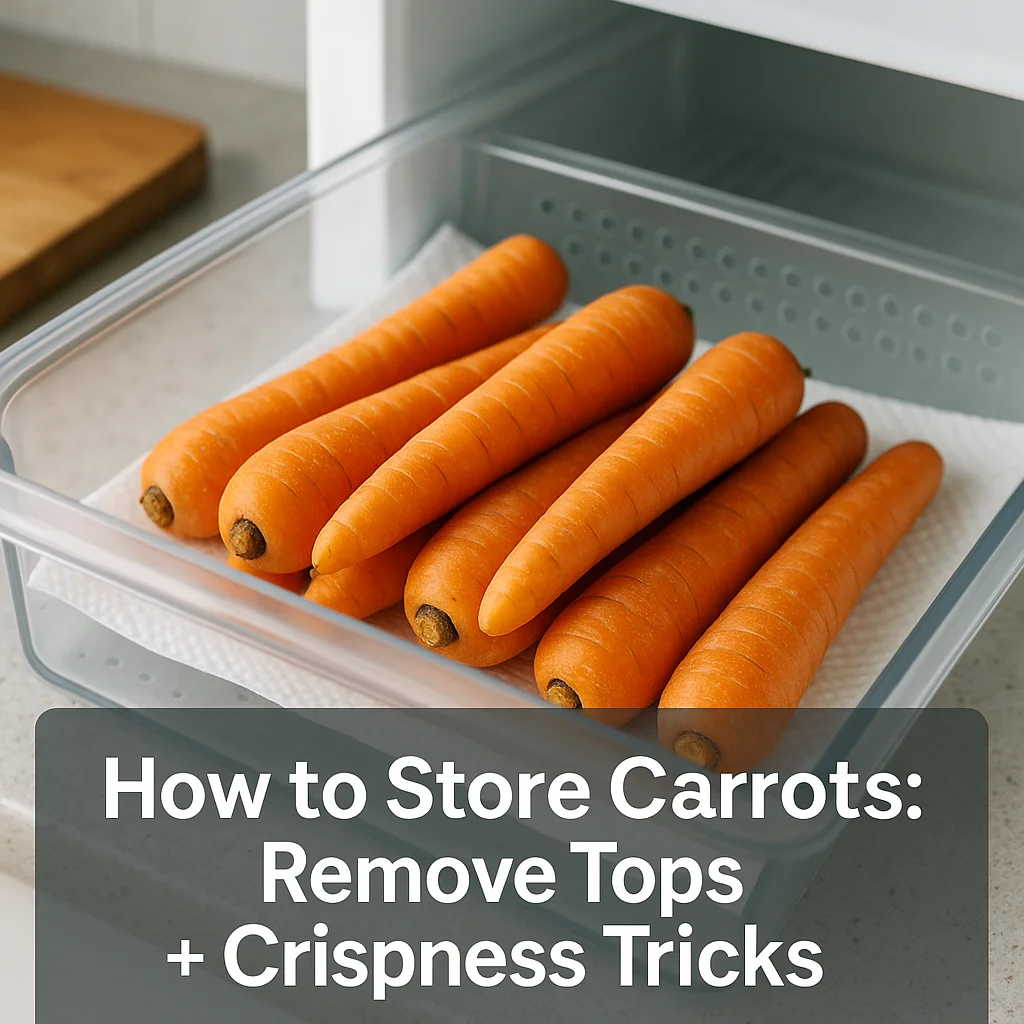
Fast Rules to Keep Carrots Fresh
- Remove carrot tops as soon as you bring them home to prevent moisture loss.
- Store carrots in a vented container in the crisper drawer for balanced humidity.
- Wrap carrots in a damp paper towel to maintain the right moisture level.
- Avoid storing carrots near apples or other ethylene-producing fruits.
- Check for firmness regularly and discard any carrots with soft spots.
- Keep carrots away from direct airflow in the fridge to prevent drying out.
- Inspect for condensation; wipe and adjust as necessary to prevent mold.
- Store in a cool, consistent temperature space to avoid degradation.
Buying Checklist: Choosing the Best Carrots
To start off strong, select carrots that are firm, brightly colored, and free from cracks. Avoid any with green tops, excessive softness, or visible mold.
The Real Fix: Step-by-Step Solution for Storing Carrots
Goal: Keep carrots dry but not dehydrated.
- Remove the carrot tops immediately upon returning home. This prevents moisture from wicking away into the tops, keeping the carrots hydrated.
- Pat the carrots dry with a paper towel to remove any initial surface moisture that could cause condensation and accelerate spoilage.
- Place a damp paper towel around the carrots. This trick maintains moisture balance, preventing dehydration.
- Store the wrapped carrots in a vented container to allow air circulation, which helps control humidity levels and prevents mold growth.
- Position the container in the crisper drawer of your fridge. This drawer is specifically designed to maintain optimal humidity for veggies.
- Avoid placing carrots near the back wall of the fridge, where freezing can damage texture.
- If condensation forms, re-dry and check your fridge settings to ensure the ideal balance of humidity.
- Regularly check for any signs of softening or sliminess, which indicate increased spoilage risk.
- If carrots have a strong smell or visible rot, discard them to avoid contamination of surrounding produce.
- Keep them away from ethylene-producing fruits like apples, which speed up spoilage through gas exposure.
- If carrots dry out → Add a new damp paper towel.
- If you see mold → Increase air circulation or ventilation.
- If they're limp → Rehydrate with a slight soak in cold water before use.
- If the fridge is too cold → Move carrots closer to the front or a warmer shelf.
- If you smell a strong odor → Identify and remove any spoiled items.
- If the paper towel dries out → Re-moisten it lightly.
- If there's too much condensation → Pat dry and adjust fridge settings.
- If tops regenerate → Cut again and ensure no leaves remain.
15–20 Minute Weekly Prep Routine
- Check all stored carrots for spots or mold and discard if necessary.
- Trim any left-over tops and pat them dry if moisture is detected.
- Refresh the paper towel wrap if it's dry or saturated.
- Reorganize the crisper to ensure uniform airflow and easy access.
- Trim any green tops or roots promptly.
- Quickly inspect for soft spots or obvious spoilage.
- Refresh paper towel as needed for moisture control.
If I only had 2 minutes:
Note: If your fridge is weird and erratically moist or arid, add desiccant packs for excess moisture and hydrating pads for overly dry environments.
Common Mistakes and How to Avoid Them
- Leaving the tops on → Drains moisture → Remove tops immediately.
- Not drying before storage → Leads to rotting → Always pat dry first.
- Placing against the fridge rear wall → Can freeze carrots → Store in crisper.
- Ignoring carrots for weeks → Surprise spoilage → Do weekly checks.
- Storing with ethylene producers → Speeds up aging → Keep them separate.
- Overcrowding the drawer → Restricts airflow → Ensure ample space.
- Skimping on the paper towel → Inconsistent moisture → Replace or dampen.
- Forgetting about temperature → Fluctuations spoil sooner → Maintain consistency.
- Not adjusting for condensation → Leads to mold → Regularly wipe excess moisture.
- Ignoring fridge aroma → Spoils faster → Find and clean spoiled produce promptly.
Food Safety Notes: Timing and Tossing
Wash carrots just before using them to avoid premature spoilage. If there's any doubt about quality, such as odd odors or severe softening, err on the side of caution and discard them.
Quick Table for Carrot Storage
| Produce | Best Storage | What to Avoid | Typical Problem | Quick Fix |
|---|---|---|---|---|
| Carrots | Wrapped in crisper drawer | Ethylene exposure | Softening/spoiling | Pat dry & adjust paper towel |
FAQ on Storing Carrots
- Should I always remove carrot tops? Yes, they draw moisture from the carrot, causing it to become limp.
- Is the crisper drawer necessary? It helps maintain humidity and prevent dry-out.
- What if my carrots still go soft? Ensure they're not near ethylene-producing fruits and refresh moisture control methods.
- Can I store them outside the fridge? Refrigeration keeps them fresh longer, slowing down spoilage.
- Are plastic bags okay? Only if vented, to prevent trapped moisture and mold.
- Does washing help storage? No, wash just before use to avoid quick spoilage.
- What if carrots freeze? Adjust fridge settings and move to the crisper.
- How do I fix limp carrots? Try rehydrating in cold water for crispness.
- Can carrots with spots be used? Trim away bad areas, but discard if the spoilage is extensive.
- Do organic carrots store differently? Storage is the same, but check more frequently as they might spoil faster without preservatives.
Closing Thoughts
- Always remove carrot tops to preserve moisture.
- Regularly check for condensation and spoilage.
- A balanced moisture environment is key for fresh carrots.
By keeping an eye on these simple steps, you'll extend the freshness of your carrots and ensure they're ready to enjoy whenever you need them. Check out other tips on our post list, or learn more about storing ethylene-sensitive produce at this page. Happy storing!