How to Store Broccoli: Best Fridge Setup + Freezing Prep
Why Does Broccoli Always Go Bad So Quickly?
We've all been there: You buy a fresh head of broccoli, store it in the fridge, only to find it turning yellow and limp in a few days. This scenario is often due to improper storage that accelerates spoilage. Moisture from condensation encourages mold, temperature swings damage texture, and ethylene gas emitted by nearby fruits speeds up aging.
Quick Tips for Storing Broccoli Successfully
- Keep broccoli dry but not dehydrated to avoid mold.
- Use a vented container to manage moisture levels.
- Place in the crisper drawer for consistent temperature.
- Avoid storing near ethylene-producing fruits like apples.
- Check firmness regularly; firm is fresh.
- Limit refrigerator opening to prevent temperature swings.
- If freezing, blanch first to deactivate browning enzymes.
- Avoid plastic bags or wrap which trap moisture inside.
- Rotate the storage location monthly to ensure even cooling.
- Inspect regularly for discoloration or sliminess.
Your Guide to Picking Just the Right Broccoli
Selecting great broccoli at the store will extend its life significantly once you get it home. Here's what to look out for:
- Color: Choose vibrant green heads; avoid yellowing.
- Firmness: Stems and florets should be firm, not soft.
- Compact Florets: Tightly packed florets indicate freshness.
- No Sliminess: Avoid any that appear slimy or wilted.
- Check the Cut: A fresh cut stem looks moist and green, not dry or brown.
The Real Fix: Step-by-Step Broccoli Storage Solution
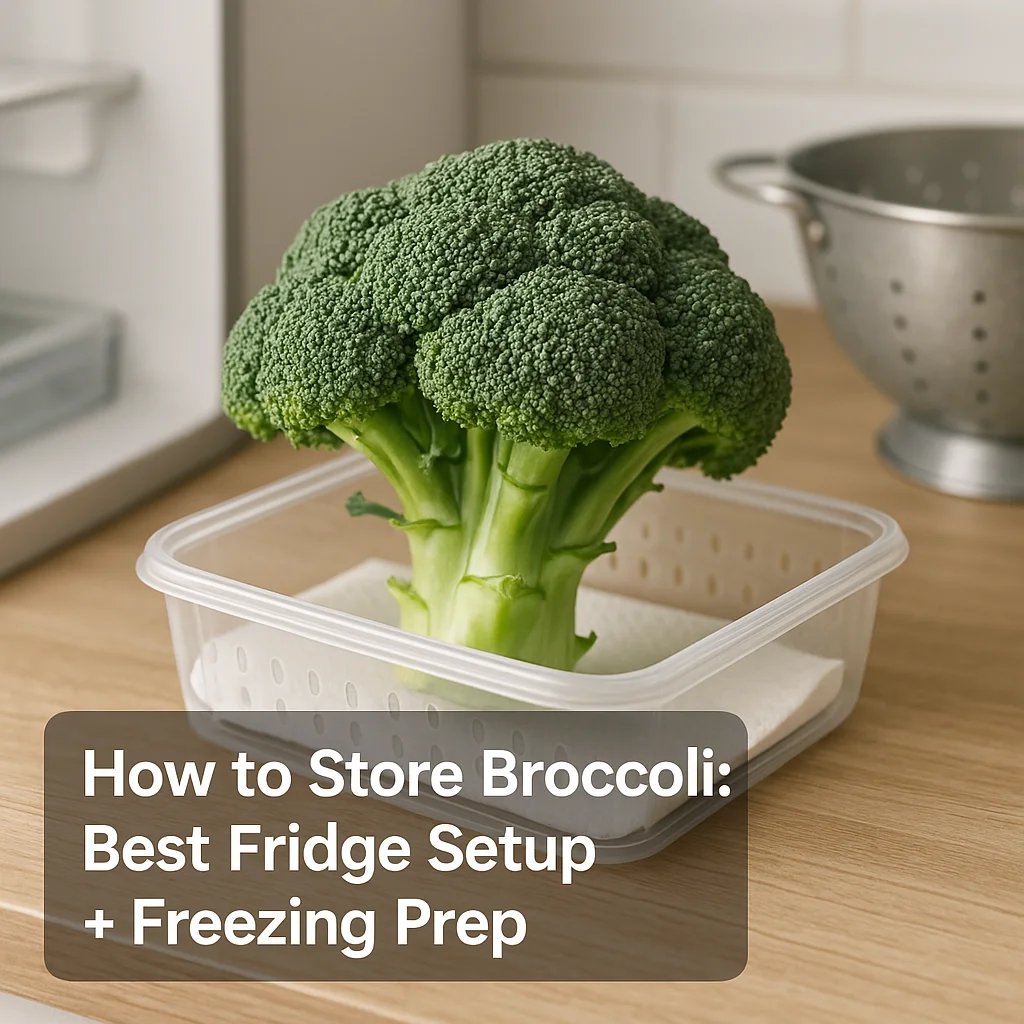
The primary goal is to keep broccoli dry but not dehydrated, minimizing moisture while avoiding direct ethylene exposure.
- Select a vented container: Vented containers help control moisture, preventing mold and softening.
- Use a paper towel: Line the container with a dry paper towel to absorb excess moisture; replace it when damp.
- Store in the crisper drawer: Store broccoli in the crisper, where moisture and temperature are controlled.
- Avoid the back of the fridge: Do not store near the back wall where it can freeze.
- Separate from fruits like apples and bananas: Fruits produce ethylene gas, speeding up aging.
- Check daily: Keep an eye out for changes in color, firmness, or the appearance of condensation.
- If signs of ripeness appear: Use any slightly yellow florets in cooking sooner rather than later.
- If freezing: Blanch broccoli in boiling water for 3 minutes, then cool in an ice bath, pat dry, and freeze in a single layer first before bagging.
If troubleshooting is needed:
- If tips are still moist → Replace the paper towel; increase venting.
- If florets are getting soft → Use quickly; start planning a dish.
- If yellowing → Evaluate temperature and moisture; use soon.
- If mold is present → Discard damaged area; double-check moisture control.
- If freezing isn't uniform → Consider re-arranging for even exposure.
- If placed too near fruits → Relocate to another part of the fridge.
- If issues persist → Try a different crisper setting.
- If constantly freezing → Lower the fridge temp slightly; rearrange items.
Your 15-Minute Weekly Broccoli Maintenance
- Remove broccoli from the fridge.
- Inspect each head for color and firmness.
- Replace any soggy paper towels.
- Check the container's venting system.
- Wipe away any condensation inside the fridge.
- Rearrange if needed for better airflow.
- Plan recipes involving broccoli that needs to be used soon.
If I only had 2 minutes:
- Check broccoli for color changes.
- Replace paper towel if damp.
- Quickly rotate position in fridge.
Note: If your fridge is weird (too dry, too humid, freezing), consider adjusting the settings or upgrading its capabilities.
Common Mistakes in Broccoli Storage
- Storing unwrapped broccoli in plastic: Leads to trapped moisture → Use a vented container instead.
- Refrigerator set too cold: Freezing damages texture → Use a fridge thermometer to check settings.
- Not replacing damp paper towels: Encourages mold → Change them regularly.
- Ignoring ethylene-producing fruits nearby: Speeds up ripening → Move broccoli away from fruits.
- Placing at back of crisper: Risk of freezing → Keep it in the middle area.
- Folding or squeezing into small spaces: Causes compression damage → Leave space around broccoli.
- Delaying usage past yellowing: Spoilage is likely → Use it promptly if yellowing starts.
- Not floret rotation: Uneven aging → Rotate once a week.
- Not sealing frozen bags: Freezer burn risk → Properly seal and remove air.
- Skipping blanching for freezing: Enzyme activity persists → Always blanch before freezing.
Food Safety Notes
It's best to wash broccoli just before use to prevent premature moisture buildup. Discard broccoli if it becomes slimy, develops an off-odor, or if any fuzzy mold spots appear.
Quick Reference Table for Storing Broccoli
| Produce | Best Storage | What to Avoid | Typical Problem | Quick Fix |
|---|---|---|---|---|
| Broccoli | Crisper drawer, vented container, paper towel | Near ethylene fruits, back of the fridge | Yellowing, mold, softness | Review venting, replace paper towel, front-center placement |
Frequently Asked Questions
- How long can broccoli last in the fridge? Typically 7 to 14 days with proper storage.
- Why is my broccoli turning yellow? Likely due to ethylene exposure or old age.
- Should I wash it before storing? No, wash just before use to avoid moisture buildup.
- What’s the purpose of blanching for freezing? Stops enzyme action and maintains color.
- How do I know if it’s gone bad? Check for sliminess, off-odor, or mold.
- Can I store in a sealed bag? It’s better vented to avoid moisture buildup.
- Does broccoli produce ethylene gas? No, but it is sensitive to it.
- Can I freeze without blanching? Not recommended due to texture and color changes.
- What causes the bitter taste sometimes? Overripe or improperly stored broccoli.
- Can I store cut broccoli the same way? Yes, but use it earlier than whole heads.
Final Thoughts
- Always use a vented container to maintain a perfect balance of moisture.
- Keep broccoli away from ethylene-producing fruits.
- Inspect and swap damp elements regularly to prevent mold.
Storing broccoli properly is easy and saves money. Keep it fresh and get ready for delicious, crisp meals every time!
For more articles, explore our complete post list or check out tips for pairing produce with ethylene knowledge.