How to Store Bananas: Slow Browning, Split the Bunch, Wrap the Stems
When Bananas Go Bad: The Real Reason It Happens
You buy a beautiful bunch of bananas, only to find them browning and overripe in just a couple of days. Sound familiar? The truth is, bananas emit ethylene gas which accelerates ripening. When stored together, this gas concentration speeds up the process even more. Add surface damage from tightly packed storage, and you've got a recipe for frustration.
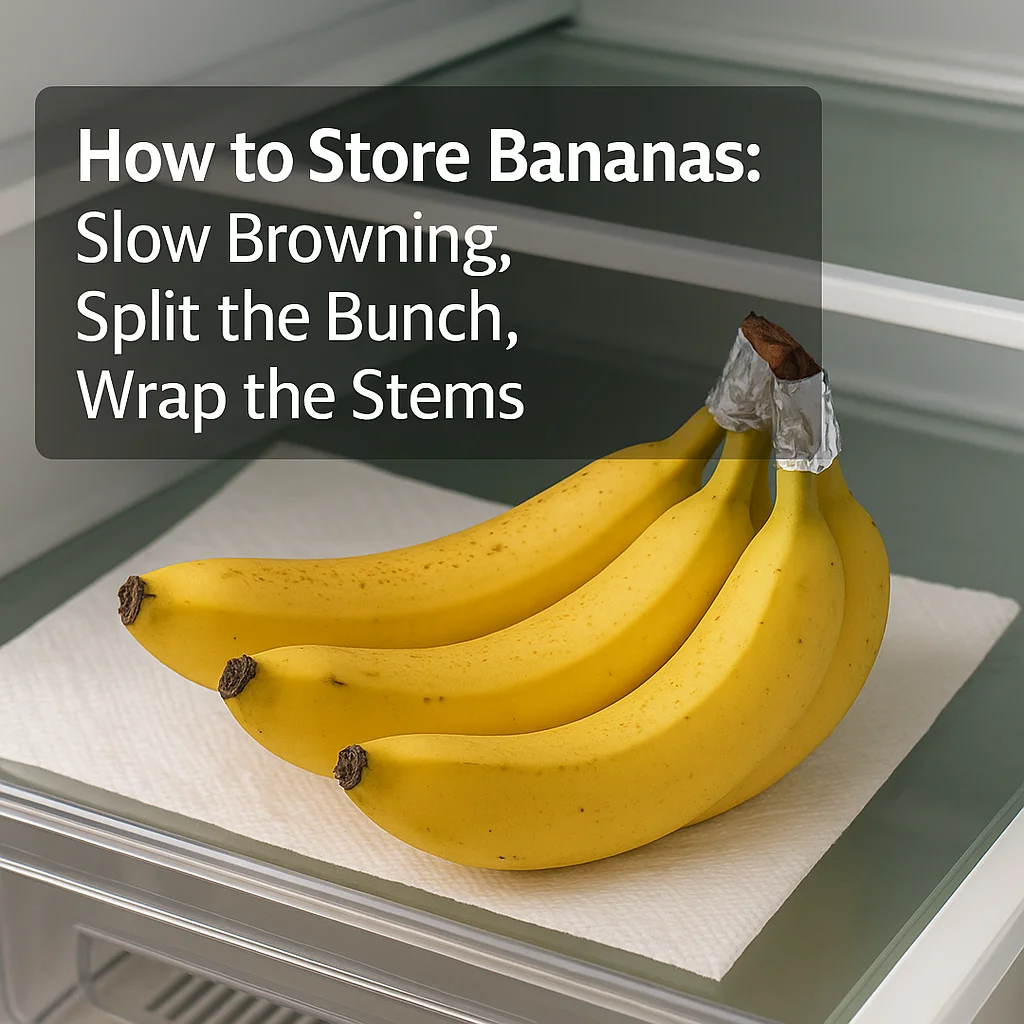
Fast Rules for Storing Bananas
- Keep bananas cool but not cold; room temperature is best.
- Split the bunch to slow down ethylene concentration.
- Wrap the stems in plastic or foil to reduce gas emission.
- Avoid storing bananas in airtight containers.
- Away from heat sources to maintain stable temperature.
- Don't wash bananas before storage to avoid moisture.
- Store ripe bananas in a fruit basket, separate from unripe ones.
- Use overripe bananas in smoothies or baked goods.
Buying Checklist for Perfect Bananas
Choosing the right bananas can make all the difference in how they store.
- Color and Ripeness: Choose greenish-yellow bananas for longer storage; fully yellow ones for immediate use.
- Surface Condition: Avoid ones with brown spots or bruises; these accelerate spoilage.
- Firmness: Firm bananas last longer than ones that give easily under light pressure.
- Stem Condition: Check for intact stems; broken ones are more prone to ethylene release.
The Real Fix: Step-by-Step Solution
The goal is to control ethylene and avoid surface damage.
- Assess: Start by checking banana ripeness upon purchase. Green edges mean they're not quite ripe, while fully yellow indicates readiness for immediate use.
- Split the Bunch: Separate bananas at the stems. This reduces concentrated ethylene gas buildup.
- Wrap the Stems: Use plastic wrap or aluminum foil for each banana stem. This minimizes ethylene emission.
- Room Temperature Storage: Keep bananas at room temperature. Cold slows ripening initially but can lead to faster browning because of temperature swings once taken out.
- Avoid Airtight Containers: Place them in a fruit basket to allow adequate air circulation.
- Monitor Daily: Check bananas daily for yellowing or brown spots. These indicate increased ripeness.
- Matured Bananas: For extended shelf-life, store ripe bananas in the fridge if necessary, but expect surface darkening. Flesh remains good.
- Separate by Ripeness: Ripe and unripe bananas should be stored apart to prevent uneven ripening.
- Troubleshooting: If browning occurs too quickly despite precautions, adjust by reducing the room's temperature.
If your bananas turn brown quickly:
- If wrapped stems fail → try a thicker layer of wrap
- If bananas brown in cool spots → ensure no excess humidity
- If ripening isn't even → separate by color and ripeness stage
- If spots appear on one side → check for proximity to other items
- If fridge causes dark skin → confirm temperature isn't too low
- If ethylene-sensitive fruits nearby → store separately
- If one banana ripens faster → consume or use first
- If bananas dry out → check airflow to prevent dehydration
15–20 Minute Weekly Prep Routine
- Inspect All Bananas: Choose ripe ones for immediate use; others for storage.
- Organize & Split: Divide the bunch to reduce ethylene concentration.
- Wrap Stems: Use fresh wrap materials to prevent gas from affecting others.
- Position: Place in a cool, dark area of the kitchen.
- Check Daily: Perform quick surface checks for spots or changes.
If I only had 2 minutes
- Locate the ripest bananas and plan to eat them soonest.
- Wrap the stems of any remaining bananas quickly.
- Split large bunches to save steps later.
If your fridge is weird
Consider buying a humidity-regulating container if your fridge is too dry or too humid. Avoid storing bananas in any fridge with a freezing back wall to prevent damaging them.
Common Mistakes When Storing Bananas
- Storing in the fridge immediately → quick browning → let them ripen at room temperature first
- Using airtight containers → trapped ethylene and moisture → use open baskets instead
- Leaving them bunched → high ethylene concentration → split bunches to slow ripening
- Leaving near other ethylene producers → faster ripening → separate them from other fruits
- Not wrapping stems → continuous ethylene emission → wrap to minimize gas release
- Storing in plastic bags → humidity build-up → moisture leads to quicker spoilage
- Forgetting to check daily → unnoticed overripeness → regular routine checks
- Keeping in high heat → quick ripening and spoilage → store in a cool spot
- Not using overripe fruit → food waste → use in recipes like banana bread or smoothies
Food Safety Notes
- Don't wash bananas before storage; this adds moisture which can speed up spoilage.
- Toss bananas if their skin becomes moldy or excessively mushy on touch.
- If a banana's flesh is sticky or smells off, it's safer to discard it.
Quick Table for Banana Storage
| Produce | Best storage | What to avoid | Typical problem | Quick fix |
|---|---|---|---|---|
| Bananas | Room temperature, split & wrapped stems | Airtight containers, high heat | Quick browning | Wrap stems, store separately |
Frequently Asked Questions about Banana Storage
- Can you refrigerate bananas? Yes, but only once they're ripe to slow further ripening.
- Why do bananas brown in the fridge? Temperature shock and exposure to air trigger browning.
- How can I keep bananas fresh longer? Split the bunch, wrap the stems, and keep at room temperature.
- What’s the best wrap for banana stems? Both plastic and aluminum foil work well.
- Can I store bananas with other fruit? Best to store separately to control ethylene interaction.
- What if my bananas over-ripen? Use them in baking or freeze for smoothies.
- Is it okay if the skin turns black? Yes, as long as the inside remains firm and smells sweet.
- Do brown spots indicate spoilage? Generally no, unless they're mushy or smell fermented.
- Why split the bunch? Reduces ethylene gas concentration, slowing ripening.
- How do I store banana bread with bananas? Wrap in foil and store in a cool, dry place.
Conclusion: Top Tips to Save Money
- Always wrap the banana stems to control ethylene release.
- Separate and store bananas at room temperature away from other fruits.
- Check and rotate stock regularly to prevent wastage.
Remember, a little care goes a long way toward keeping your bananas fresher longer. Happy storing!
Discover more storage tips here.
Learn more about ethylene and storage pairings here.