Winter Produce Guide: Citrus, Cabbage, Broccoli + Long-Lasting Storage
Have Your Fruits and Vegetables Ever Gone Bad Too Soon?
Imagine reaching for a juicy orange or a fresh head of broccoli, only to find it's wilted or moldy. This all-too-common frustration often boils down to improper storage. The real culprit? Condensation, temperature swings, and early spoilage due to improper ethylene management.
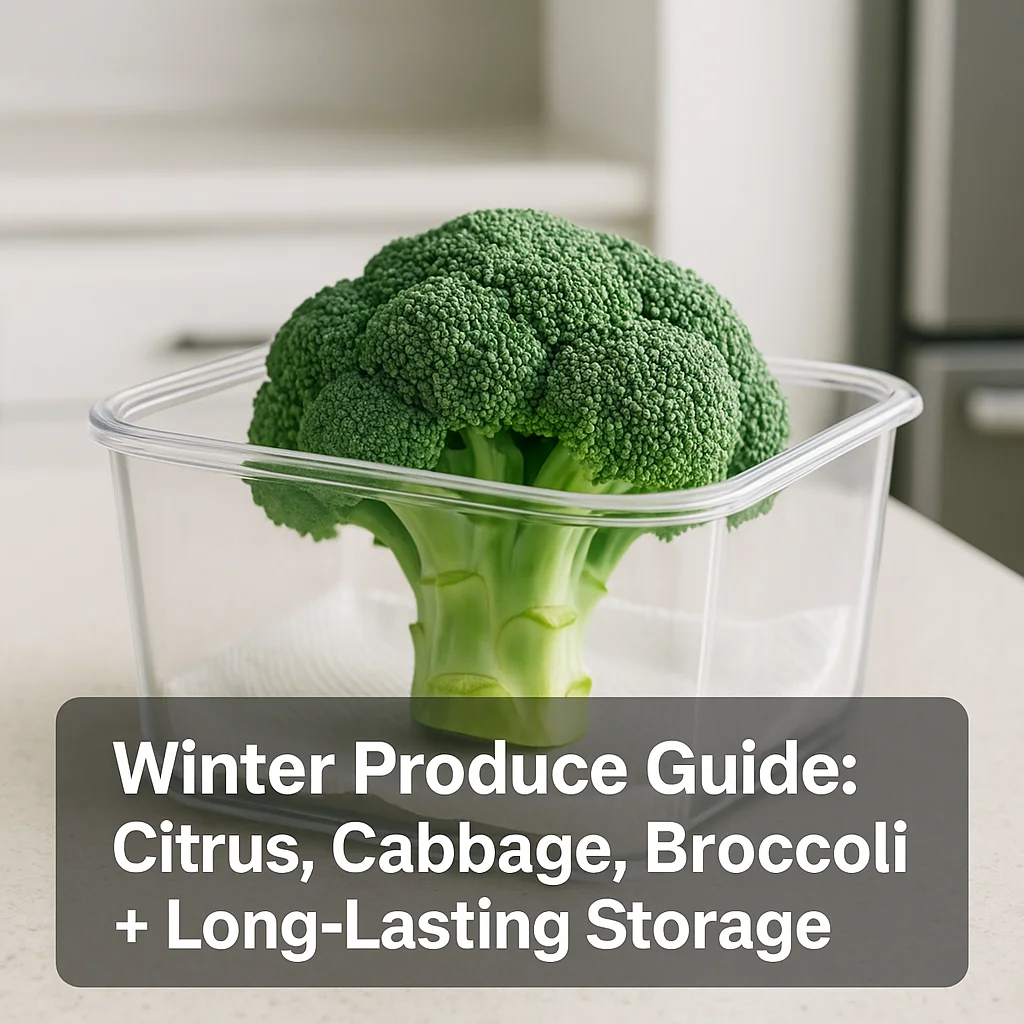
Fast Rules for Storing Winter Produce
- Store citrus in a cool, dry place or the fridge to reduce moisture and mold.
- Keep cabbage tightly wrapped to maintain texture and moisture.
- Use vented containers for broccoli to prevent mold while retaining crunchiness.
- Avoid temperature fluctuations to prevent condensation and spoilage.
- Minimize ethylene exposure by separating quick-ripening fruits.
- Use paper towels to absorb excess moisture on the fridge shelves.
- Ensure your fridge’s crisper drawer is set to low humidity for these vegetables.
- Check weekly for any soft spots or signs of spoilage.
- Store older produce at the front to use it up first.
- Keep your fridge clean to avoid cross-contamination.
Buying Checklist: How to Pick the Best Produce
- Citrus: Choose firm and heavy fruits with smooth skin. Avoid soft spots.
- Cabbage: Look for tightly packed leaves and a firm stem. Steer clear of yellowed edges.
- Broccoli: Opt for vibrant green with tight florets. Avoid any yellowing or flowering.
The Real Fix: Step-by-Step Solution
Our main goal is to maintain moisture levels without promoting decay.
- Inspect and sort: Check for any damaged fruits or vegetables. Remove these to prevent spoilage spread.
- Wrap citrus loosely: Store in mesh bags or breathable containers. This prevents trapping moisture which leads to mold.
- Wrap cabbage tightly: Use plastic wrap or wax paper to keep it moist but firm. This blocks out ethylene gas.
- For broccoli: Loosely wrap in damp paper towels and place in a vented container to balance moisture and venting.
- Use paper towels: Place on fridge shelves under produce to absorb excess moisture and prevent condensation.
- Avoid mixing produce: Store items prone to ethylene in separate drawers to slow ripening.
- Choose proper fridge placement: Put harder items like cabbage on lower shelves where it's cooler.
- Check weekly: Regularly assess for dehydration, sliminess, or off smells and act promptly.
- Look for fruits cooling: Ensure fridge is cooling uniformly, without hot spots.
- If ripeness is an issue: Allow citrus to ripen at room temperature before refrigerating.
- Venting drawers: Use low humidity settings for these particular vegetables and fruits.
If your produce looks soft, it's too moist:
- Check moisture barriers and adjust wrapping or container type.
- If condensation appears: Move produce to a higher shelf and allow air circulation.
- If flavor is lacking: Consider room-temperature ripening for a short period before use.
15–20 Minute Weekly Prep Routine
- Clean fridge: Quickly wipe down shelves to ensure a hygienic storage space.
- Inspect produce: Remove any damaged or overly ripened pieces.
- Rewrap and rotate: Rotate stock, putting older produce at the front.
- Check settings: Adjust crisper drawer humidity levels to suit specific produce needs.
- Weekly chop: Pre-cut broccoli into florets for easy access and quicker meals.
- Restock needs: Make quick notes for your next shopping trip based on what's low.
If I only had 2 minutes:
- Quick check for visible mold and toss problematic items.
- Move ripened citrus to the fridge to prolong life.
If your fridge is weird:
- Too dry? Wrap more tightly with an extra layer of moist paper towel.
- Too humid? Use vented containers and keep the door open momentarily for air exchange.
- Freezing back wall? Ensure no produce is touching the back of the fridge.
Common Mistakes and How to Fix Them
- Storing bruised fruits: Causes faster spoilage. Always sort and remove damaged items immediately.
- Mislabeled drawers: Ruins moisture balance. Check and adjust drawer settings as needed.
- Overcrowding: Limits airflow. Leave space for proper air circulation.
- Ignoring fridge maintenance: Mold spread. Clean the fridge monthly.
- Chopping too early: Speeds up spoilage. Only prep a few days’ worth ahead.
- Not supporting vents: Builds condensation. Use grated lids or vented containers.
- Mixing ripe with unripe: Accelerates decay. Store separately.
- Not checking temperature: Causes deterioration. Use a fridge thermometer.
- Missed inspection: Encourages unnoticed spoilage. Weekly checks recommended.
- Ignoring flavor change: Indicates spoilage. Conduct sniff tests before using.
Food Safety Notes
Wash fruits and vegetables just before use, not before storing, to prevent mold. Always toss anything with mold or a strange odor, as it poses potential health risks.
Quick Table
| Produce | Best Storage | What to avoid | Typical Problem | Quick Fix |
|---|---|---|---|---|
| Citrus | Fridge | Moisture | Mold | Mesh bags |
| Cabbage | Tightly wrapped | Loose bag | Wilt | Wrap tightly |
| Broccoli | Vented container | Closed bags | Sliminess | Use paper towels |
FAQs
- Can I store citrus fruits at room temperature?
Yes, for ripening, but refrigerate for long-term storage.
- How often should I check my produce storage?
Weekly inspections are ideal to catch any early spoilage.
- Does storing broccoli in a bag cause it to go bad faster?
It can if not vented. Use vented containers instead.
- Why does my cabbage wilt in the fridge?
Check your wrapping. It might be losing moisture due to loose wrapping.
- Is it safe to eat citrus with slightly blotchy skin?
Yes, unless there are soft spots or mold.
- Why does produce spoil faster when washed before storage?
Moisture can promote mold and spoilage. Wash just before use.
- Can I freeze these types of produce?
Certain ones, like broccoli, yes. Others, like citrus, not ideal as they lose texture.
- How can condensation be reduced in the fridge?
Ensure doors are sealed properly and utilize paper towels for drip catch.
- Why are some oranges sweeter than others?
Variety and ripeness stage impact flavor, not always controllable.
- Can ethylene interact with all fruits?
Some are more susceptible than others, like bananas; separate storage minimizes effects.
Closing Thoughts
- Always inspect your produce before storing it.
- Separate items sensitive to ethylene from those that aren’t.
- Maintain your fridge temperature and humidity settings.
Keep these tips handy, and you'll enjoy fresh, flavorful produce all winter long! For more guides on seasonal produce, check out our full list of articles and our monthly seasonal guides.