Fall Produce Guide: Apples, Pears, Sweet Potatoes + Storage Basics
Why Your Fall Harvest Spoils So Quickly
We've all opened the fridge to find apples turning soft or pears browning too quickly. The real culprit isn't time—it's how we handle them! Improper storage aids moisture build-up, leads to bruises from ethylene gas interactions, and ultimately makes your produce expire faster than it should.
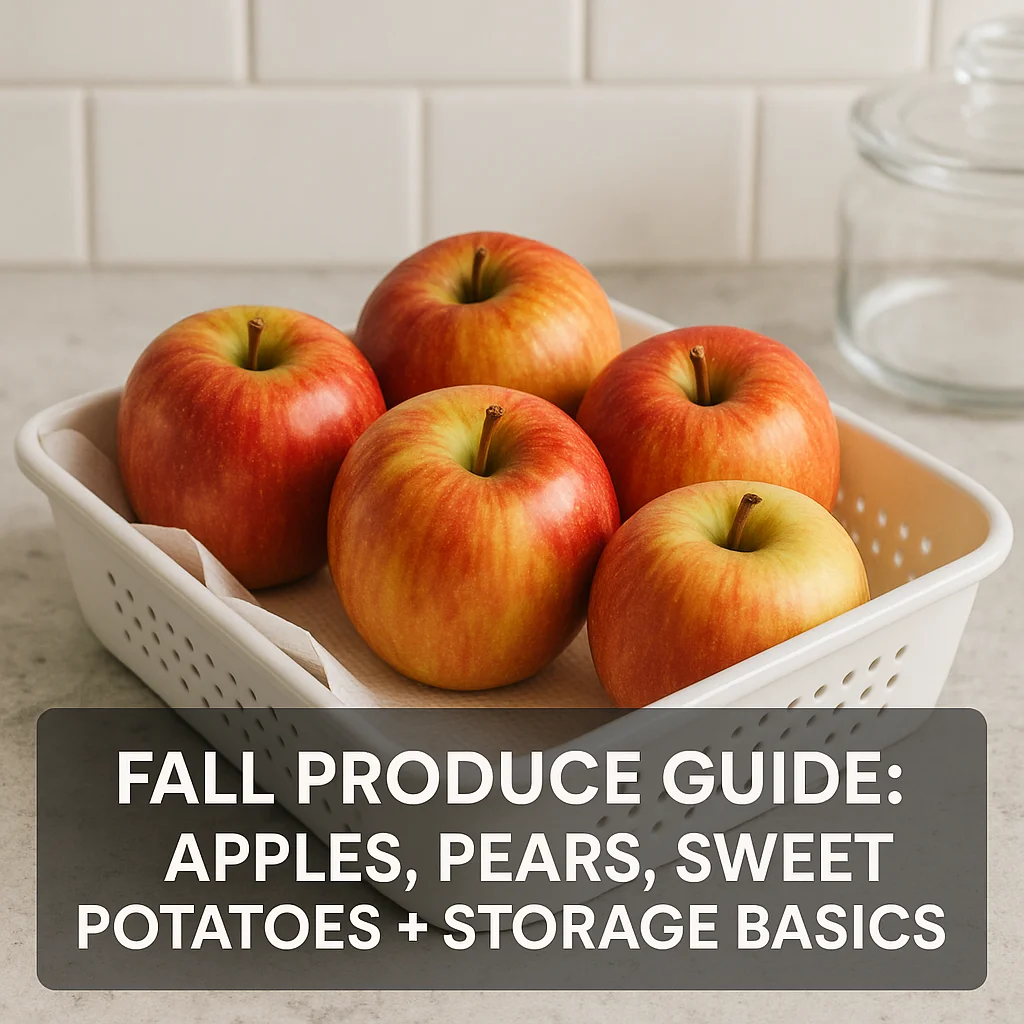
Fast Rules for Fresh Fall Produce
- Store apples in a separate drawer to isolate ethylene gas.
- Wrap pears in a paper towel to manage moisture.
- Keep sweet potatoes in a cool, dark place.
- Avoid washing until you're ready to use produce.
- Ensure airflow for ventilation; avoid airtight containers for ripening.
- Avoid temperature swings by placing produce in the middle of the fridge.
- Keep an eye on ripeness levels; discard any overly soft or bruised items.
- Label containers with the date of purchase to track freshness.
Buying Checklist: Making the Right Choice
Selecting quality produce is key to longer storage life. Here's how you can wisely handpick your apples, pears, and sweet potatoes:
- Apples: Opt for firm, brightly colored apples with no bruises. Avoid ones with wrinkles or mushy spots.
- Pears: Select slightly firm pears for better shelf life. Avoid mushy or extremely soft ones.
- Sweet Potatoes: Look for firm, smooth-skinned sweet potatoes, avoiding those with deep cuts or soft patches.
Step-by-Step Solution: How to Store Properly
The goal is to extend shelf life by controlling ethylene gas, moisture, and temperature stability.
- Sort your produce: Separate fruits like apples and pears from sweet potatoes to avoid cross-speeding their ripening.
- Prepare apples: Place apples in the fridge's crisper drawer. Separate them using a vented bag to limit ethylene exposure and moisture retention.
- Handle pears with care: Store unripe pears at room temperature until they soften slightly, then move to the fridge in a loosely wrapped paper towel to absorb excess moisture.
- Sweet potato storage: Keep them in a basket lined with newspaper in a dark, airy pantry. This avoids light-induced spoiling and excess moisture.
- Label it: Use labels on your storage bags with the date of purchase to track how long they've been stored.
- Inspect regularly: Check your produce twice a week for any signs of softness or bruising.
- Separate and conquer: For apples and pears nearing overripeness, separate them from others to avoid spreading ethylene.
- Fridge location: Avoid placing produce in the fridge door, which experiences temperature fluctuations.
- If pears are softening too quickly: Transfer them to the fridge immediately in a paper towel.
- If apples become waxy: Keep them separate in a more ventilated bag.
- If sweet potatoes sprout: Ensure they are in a cooler, drier area.
- If moisture forms: Add additional paper towels to absorb excess condensation.
15–20 Minute Weekly Prep Routine
- Start by cleaning and drying your storage areas.
- Check each type of produce for firmness and remove any questionable items.
- Wrap fruits like pears in new paper towels for moisture management.
- Re-organize the fridge to avoid congestion and allow airflow.
- Label bags or containers for easy monitoring.
- Set your fridge to a consistent middle-range setting.
- Dispose of older produce that is too soft or smells off.
If I only had 2 minutes: Wipe out fridge shelves, rearrange apples and pears, and do a quick visual check for any overly ripe items.
If your fridge is weird: If it's too dry, add a damp paper towel in the crisper. If it's too humid, open a vented container a crack to improve airflow.
Common Mistakes and How to Fix Them
- Storing apples at room temperature → quicker spoiling → Keep them refrigerated.
- Leaving pears in plastic → trapped moisture leads to rot → Use a paper towel wrap.
- Shelf storage for sweet potatoes → exposure to light and warmth → Opt for a dark pantry.
- Improper fridge settings → temperature swings → Keep settings mid-range and steady.
- Cutting too early → browning from enzymes → Wait until ready to use.
- Over-stuffing the fridge → limited airflow → Organize for space and ventilation.
- Not checking produce regularly → unnoticed spoilage → Inspect twice weekly.
- Washing before storing → adds moisture → Only wash before use.
- No rotation system → older produce overlooked → Use a labeled system.
- Ineffective labeling → confusion → Always use visible, clear labels.
Food Safety Notes
Always wash produce just before you use it, not upon arrival. When in doubt, err on the side of caution: discard any items with smells, sliminess, or drastic color changes.
Quick Table: Optimal Storage Insights
| Produce | Best Storage | What to Avoid | Typical Problem | Quick Fix |
|---|---|---|---|---|
| Apples | Fridge - crisper | Room temperature | Moist texture | Use vented bags |
| Pears | Fridge when ripe | Plastic wrap | Rots quickly | Wrap with paper towels |
| Sweet Potatoes | Dark cool area | Fridge | Sprouting | Use cold pantry |
FAQs on Storing Fall Produce
- Q: Can apples and pears be stored together?
A: It's best to store them separately due to ethylene gas. - Q: How long do sweet potatoes last?
A: In optimal conditions, they can last up to a month. - Q: What causes pears to ripen too fast?
A: Ethylene gas buildup accelerates ripening. Store them in ventilated conditions. - Q: What if my sweet potatoes are too soft?
A: They're likely overripe; use them immediately or compost them. - Q: How can I tell if an apple is bad?
A: Look for large brown spots and a mushy feel. - Q: What storage temperature is ideal?
A: Maintain a consistent fridge temperature around 34-40°F (1-4°C). - Q: Should I cut bruised produce?
A: Remove and discard bruised sections to prevent rot spreading. - Q: Why avoid washing before storing?
A: Washing introduces moisture that can lead to rotting.
Closing Tips and Takeaways
- Ensure separation of ethylene-producing and ethylene-sensitive items.
- Check your produce regularly and remove any spoiled items.
- Maintain consistent temperature settings in storage areas.
Remember, a little effort today means fresher produce tomorrow! Feel free to explore more guides on all posts or learn about what's in season with our monthly seasonal guides.