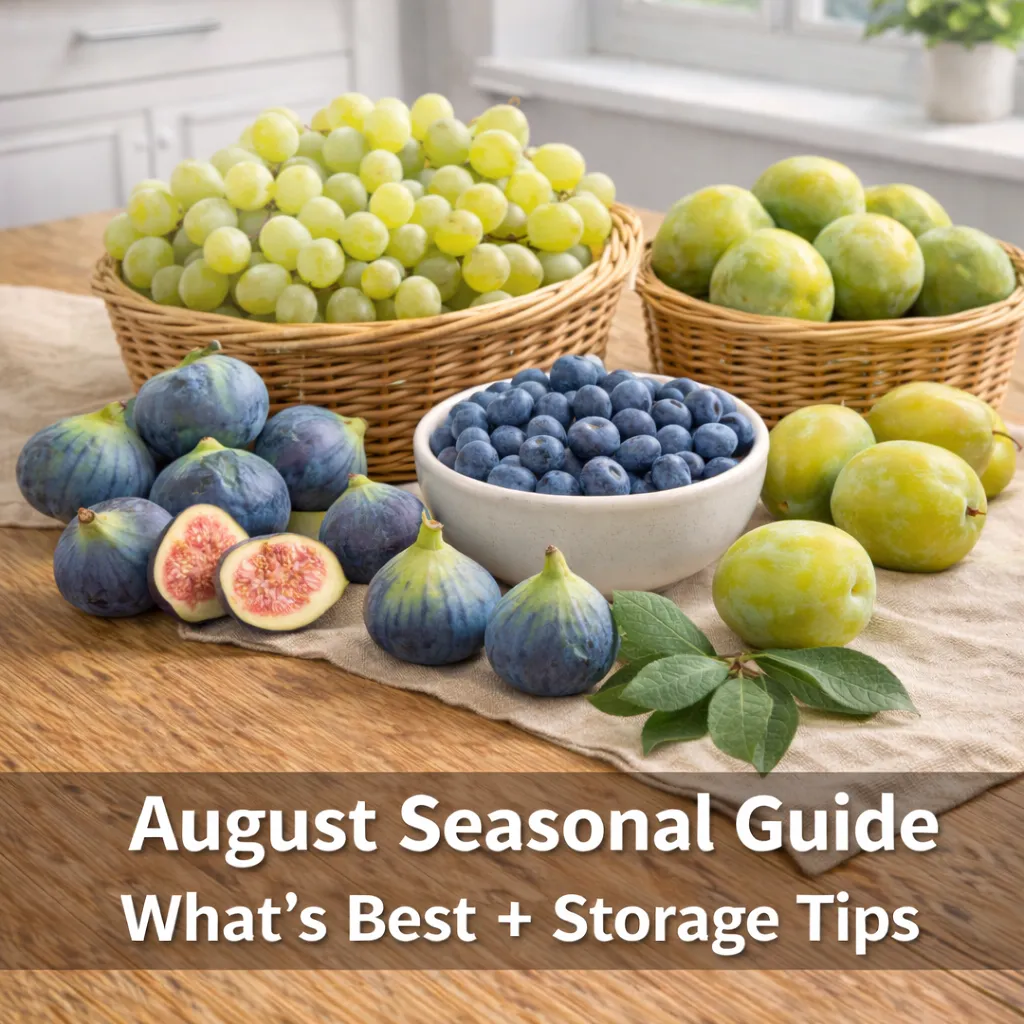
August Seasonal Produce Guide: What’s Best + Storage Tips
Why We Throw Out So Much Produce
Picture this: it’s a hot August afternoon, and you're excited to whip up a fresh summer salad. You open your fridge only to find wilting greens and soggy tomatoes. The real reason this happens? Improper storage. Humidity, ethylene gas, and temperature swings work together to speed up spoilage. Let’s tackle this frustration.
Fast Rules for Maximum Freshness
- Store leafy greens with a paper towel in a bag or container to absorb excess moisture.
- Keep ethylene-sensitive produce (like carrots) away from high ethylene emitters (like apples).
- Use airtight containers for berries to prevent moisture loss.
- Keep fruits like peaches and plums on the countertop until ripe, then refrigerate.
- Use vented bags for mushrooms to avoid over-moistening.
- Avoid washing produce before storage to reduce mold growth, unless immediately consuming.
- Check your fridge temperature; it should be around 37°F (3°C).
- Store root vegetables in a cool, dry place, with adequate airflow.
- Refrigerate cucumbers for short periods only; they may become mushy otherwise.
- Wrap herbs like cilantro in a damp paper towel and store in a sealed bag.
Buying Checklist: Choose Wisely at the Store
Selecting the best produce is your first step to reducing waste. Here's what to look for and avoid:
- Pick firm, brightly colored apples without soft spots or wrinkles.
- Look for dense, heavy watermelons with a deep yellow spot from sitting on the ground.
- Choose tomatoes that are shiny and give slightly to gentle pressure.
- Avoid leafy greens with yellowing or blemished leaves.
- Inspect berries for signs of mold and moisture in the container.
- Buy corn in the husk with moist silk and plump kernels.
- Avoid potatoes with sprouting eyes and green spots.
- Look for peaches with a fragrant aroma and slightly firm flesh.
- Select grapes that are firmly attached to the stem and not shriveled.
The Real Fix: Step-by-Step Solution for Long-Lasting Produce
Achieve the goal of keeping produce dry, cool, and separated:
- Leafy Greens: Wrap in a damp paper towel before placing in a vented bag. This maintains moisture balance, preventing wilting. Evidence of freshness includes crisp leaves and vibrant color.
- Berries: Store dry in an airtight container lined with a paper towel. This minimizes moisture contact, reducing the risk of mold. Freshness cue: no condensation inside container.
- Tomatoes: Keep on a counter away from sunlight until ripe. Avoids texture damage from cold. Look for a deep red color and firm touch.
- Carrots: Cut the greens and store in the crisper drawer. Keeps them from sucking away moisture from the roots. Cue: firm with sharp aroma.
- Peaches and Nectarines: Allow to ripen at room temperature, then refrigerate. Balancing ripening speeds and preservation. Look for fragrant smell and soft feel.
- Herbs: Trim and dampen cut stems; store in a jar with water like flowers. Keeps them hydrated yet airy. Watch for bright color and firm stems.
- Squashes: Store whole at room temp; avoid fridge unless cut. Keeps skin from hardening. Cue: firm exterior and no cuts.
- Root Vegetables: Keep in dark, cool space away from onions. Delays spoilage. Signs of quality: dry skin and firm body.
- Mushrooms: Store in original packaging or paper bag in fridge. Prevents sogginess from excess moisture. Freshness cue: dry to the touch and not slimy.
- Grapes: Refrigerate in breathable bag. Limits moisture from collecting. Optimal look: plump and attached to stem.
If something seems off, check the following:
- If greens wilt → Check for trapped moisture; replace with a dry paper towel.
- If berries mold quickly → Ensure they are completely dry before storing.
- If tomatoes lose flavor → Store at room temperature until peak ripeness.
- If carrots crack → Keep in a moist environment, but not wet.
- If peaches are grainy → Ripen at room temperature; refrigerate only when ripe.
- If herbs limp → Trim stem ends and place in water.
- If squash hardens → Store at room temperature, not chilled.
- If mushrooms slimy → Use a paper bag for storage to breathe.
Your 15–20 Minute Weekly Prep Routine
Regular prep can keep your produce fresher longer and reduce waste. Here’s a handy routine:
- Inspect all items and remove any with signs of spoilage.
- Wash and thoroughly dry leafy greens and herbs before storage.
- Place vegetables into appropriate storage containers (airtight, vented, or no container as needed).
- Wrap fruits coming to ripeness in paper towels and monitor daily.
- If I only had 2 minutes:
- Quickly check fridge for any wilted produce.
- Separate ethylene-emitting fruits from sensitive vegetables.
- Place a fresh paper towel in berry containers.
- Store onions and potatoes separately in dark, cool places.
- Set crisper drawers according to humidity needs of stored produce.
- Keep a running list of items nearing expiry dates for your next meal planning.
If your fridge is weird: It runs too dry, use extra paper towels in produce bags. If too humid, keep vents open. For a freezing back wall, avoid placing sensitive produce near it.
Avoid These Common Mistakes
- Packing the fridge too tightly → reduces airflow → distribute items evenly.
- Storing fruits and vegetables in the same drawer → speeds spoilage → separate them.
- Washing produce way ahead of time → leads to mold → wash right before use.
- Ignoring ethylene interactions → causes over-ripening → store separately.
- Using plastic bags with no airflow → encourages sogginess → switch to vented bags.
- Keeping potatoes in the fridge → causes them to become sweet/gummy → keep at room temperature.
- Refrigerating onions → leads to mushy texture → store in a cool, dry place.
- Placing tomatoes in the fridge right away → causes loss of flavor → let ripen first.
- Not rotating stored produce → freshness declines at the bottom → use older items first.
- Forgetting to adjust drawer settings → storage not optimized → tweak settings for humidity needs.
Food Safety Notes
Wash fruits and vegetables right before consumption to prevent mold and bacterial growth. Always discard anything with surface damage, apparent mold, or an off smell to avoid potential illness. When in doubt, toss it out.
Quick Table for Easy Reference
| Produce | Best Storage | What to Avoid | Typical Problem | Quick Fix |
|---|---|---|---|---|
| Leafy Greens | Fridge, damp towel in bag | Too much moisture | Wilting | Change towel regularly |
| Berries | Airtight container | Humidity | Mold | Keep totally dry |
| Tomatoes | Room temperature | Cold storage | Flavor loss | Ripen, then refrigerate |
| Carrots | Crisper drawer | Near ethylene emitters | Softening | Cut greens, refrigerate |
| Herbs | Jar with water | Humidity, air exposure | Limp | Keep stems moist |
Frequently Asked Questions
- Can all types of produce be stored in the fridge? No, some (like tomatoes and squash) do better at room temperature until ripe.
- Do I need special storage containers? Not necessarily; reuse clean plastic bins and jars for most produce.
- Why do berries go bad quickly? They rot in high moisture; keep them dry, refrigerated, and in airtight containers.
- Is it safe to eat overripe fruit? While often safe, overripe fruit may be mushy and less flavorful. If moldy, discard.
- How can I tell if vegetables are fresh? Look for vibrant color, firmness, and lack of surface damage or blemishes.
- Should I separate fruits and vegetables? Yes, especially ethylene-sensitive ones like leafy greens and carrots.
- What should I do if my produce seems off? Look for signs of mold, unusual softness, or an off smell. If uncertain, best to discard.
- How do I handle ethylene-sensitive produce? Keep them separate from high ethylene emitters to prolong freshness.
- Can freezing help extend shelf life? Yes, for some produce like berries and leafy greens, just blanch gut-friendly options first.
- What’s the best way to store potatoes not in the fridge? Use a dark, cool area with good ventilation, away from onions.
Closing: Essential Principles for Preservation
- Separate produce wisely based on ripening needs and sensitivity to ethylene gas.
- Use the right kind of storage container to maintain moisture levels.
- Regularly adjust fridge settings based on your produce needs.
Storage doesn’t have to be a hassle. With these practical steps, keeping your August produce fresh is a snap. Enjoy the very best of the month with ease!
Expand your produce knowledge by visiting our Complete Post List or explore other monthly highlights in our Seasonal Hubs.