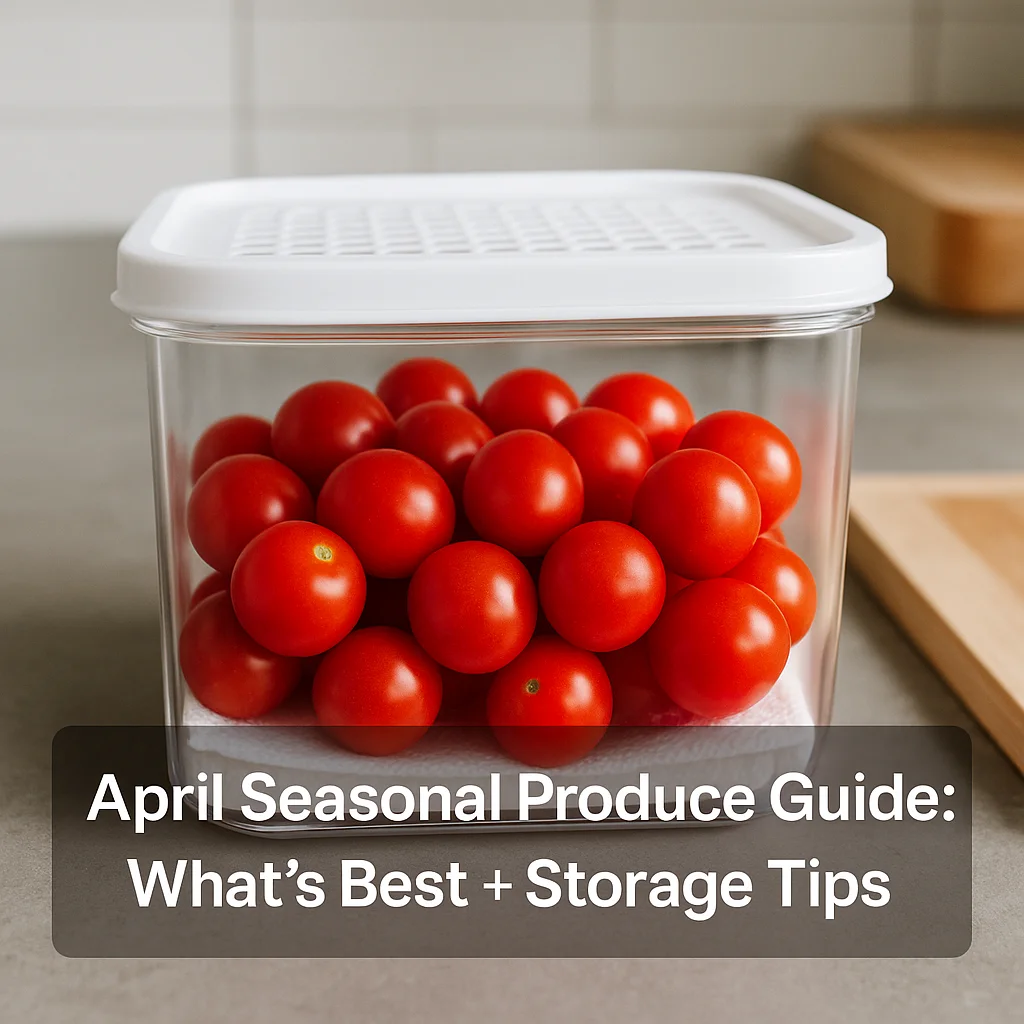
April Seasonal Produce Guide: What’s Best + Storage Tips
Why Your April Produce Goes Bad Too Quickly
Every April, you're excited to stock up on the freshest produce, but sigh in frustration when it spoils before the week is out. The culprit? Improper storage that exposes fruits and vegetables to moisture, temperature swings, and ethylene gas, accelerating spoilage.
Fast Rules for Fresher Produce
- Store leafy greens with a paper towel in a vented container to absorb excess moisture.
- Keep apples and bananas separate; bananas emit ethylene, speeding up apple ripening.
- Refrigerate most berries in a single layer; don’t wash until use.
- Keep potatoes in a cool, dark cabinet to avoid sprouting.
- Check fridge temperature with a thermometer; aim for 37-40°F.
- Store unripe avocados at room temperature until ripe, then refrigerate.
- Use airtight containers for cut produce.
- Avoid storing tomatoes in the fridge; they lose flavor.
- Toss any produce with visible mold immediately.
Buying Checklist for April Produce
When shopping, select produce that is firm, vibrant in color, and free from dark spots or blemishes. Avoid items that appear overly soft or have an off smell.
Step-by-Step Solution for Storage Success
Goal: To extend freshness through proper storage techniques tailored to produce type.
- Examine your produce for any surface damage before storage.
Why: Damaged produce spoils faster due to increased exposure to air.
Look for: Wilting or bruised spots. - Store leafy greens in a vented container with a damp paper towel.
Why: Controls moisture without drying; prevents condensation.
Look for: Crunchiness and deep green color. - Separate ethylene-sensitive items (e.g., leafy greens) from ethylene producers (e.g., apples).
Why: Ethylene accelerates ripening and spoilage.
Look for: Softening or browning edges. - Use an airtight container for cut fruits.
Why: Minimizes air exposure, maintaining freshness.
Look for: No browning on cut edges. - Keep tomatoes at room temperature on a countertop.
Why: Preserves flavor and prevents mealy texture.
Look for: Plump and fragrant tomatoes. - Store potatoes in a cool, dark cabinet.
Why: Avoids sprouting from light exposure.
Look for: Firmness and lack of sprouts. - Check your fridge's temperature with a thermometer.
Why: Consistent cold prevents spoilage.
Look for: Thermometer reading of 37-40°F. - Place berries in a single layer in a breathable container
Why: Reduces mold growth by allowing air circulation.
Look for: Plumpness and absence of mushy berries. - If your produce looks dehydrated, use vented containers with damp paper to increase humidity.
Look for: Dry or wrinkling skins.
If/Then troubleshooting:
- If berries are moist, then dry them with a paper towel immediately.
- If avocados are rock hard, then leave them on the counter until slightly soft, then refrigerate.
- If leafy greens are slimy, then discard contaminated leaves and dry the rest.
- If potatoes sprout, then discard the sprout parts and use the rest ASAP.
- If citrus is shriveled, then it was stored too cold; consider room temperature for next batch.
- If tomatoes are not fragrant, then let them ripen at room temperature.
- If the fridge back wall is freezing, then move produce to the front until fridge adjustment.
- If you see signs of rotten produce, then remove it immediately to prevent spread.
Your 15–20 Minute Weekly Prep Routine
- Inspect and clean out fridge produce drawer for any spoiled items.
- Prep leafy greens by rinsing, drying, and storing in vented containers with paper towels.
- Lay out berries on a towel to dry and store in breathable boxes.
- Separate ethylene producers from other produce and store accordingly.
- If I only had 2 minutes:
- Quickly look for and toss any visibly moldy produce.
- Move bananas and apples apart to different storage areas.
- Throw a paper towel in with your leafy greens if damp.
If your fridge is weird: If too dry, use damp towels; if too humid, ensure venting and air circulation; if back wall freezes, adjust settings and keep produce towards the front.
Common Mistakes and How to Fix Them
- Storing apples with bananas → Faster spoilage → Separate them.
- Washing berries before storage → Mold growth → Wait until just before eating.
- Refrigerating tomatoes → Loss of flavor → Store at room temperature.
- Placing produce in sealed bags → Condensation build-up → Use vented bags or containers.
- Leaving cut produce in open air → Rapid browning → Use airtight containers.
- Ignoring fridge temperature → Faster spoilage → Use a thermometer to check.
- Keeping potatoes in bright light → Sprouting → Use a dark and cool location.
- Neglecting to remove spoiled produce → Contamination spread → Regularly inspect and clean drawers.
- Storing leafy greens in wet containers → Slime and wilt → Dry before storing with a paper towel.
- Forgetting to consider ripening stages → Premature spoilage → Check and separate based on stage.
Food Safety Notes
Always wash produce under cool, running water right before consumption or use to reduce bacteria and pesticide residues. Toss produce that shows mold, an off smell, or signs of spoilage immediately.
Quick Storage Table
| Produce | Best storage | What to avoid | Typical problem | Quick fix |
|---|---|---|---|---|
| Berries | Fridge, single layer, breathable container | Sealed bags | Mold | Uncover to dry |
| Potatoes | Cool, dark cabinet | Light exposure | Sprouting | Remove sprouts, use immediately |
| Leafy greens | Fridge, vented container with paper towel | Moisture buildup | Slime | Dry leaves, change towel |
| Tomatoes | Room temperature | Fridge | Loss of flavor | Let ripen outside |
| Apples | Fridge | Near bananas | Overripe quickly | Separate storage areas |
FAQ
- Q: Can I store avocados and onions together?
A: No, onions can speed up avocado spoilage; store separately. - Q: How do I know if produce is ethylene-sensitive?
A: Generally, leafy greens, berries, and certain vegetables are sensitive. - Q: Is it okay to refrigerate all fruits?
A: Some fruits like bananas and tomatoes fare better at room temperature. - Q: Can I reuse the same paper towel in vented greens container?
A: Replace it weekly or when noticeably wet. - Q: Why do my fruits sometimes taste bitter?
A: Possible over-storage or wrong ripening environment. - Q: Can I save overripe fruits and veggies?
A: Yes, freeze for smoothies or soups if safe. - Q: Do plastic bags keep produce fresh longer?
A: Not without ventilation; condensation builds up. - Q: Should I wash produce immediately after buying?
A: No, wash just before use to avoid mold.
Closing Tips for the Frugal Produce Lover
- Don't wash until right before use unless necessary.
- Pay attention to ethylene interactions.
- Check your storage areas regularly.
Enjoy your fresh April produce without the waste and frustration. Happy eating!