Skip the “Detox” Hype: Focus on Hydration + Fiber + Consistency
Hook: Why produce often goes to waste
Imagine opening your refrigerator to find your carefully chosen fruits and veggies turned to mush. The primary culprit? Improper storage caused by excess moisture, unregulated temperature, or surface damage. Understanding the mechanisms behind these issues is crucial to prevent unnecessary waste.
Fast Rules: Practical Tips to Keep Your Produce Fresh
- Store fruits and veggies separately to avoid ethylene gas-induced ripening.
- Keep produce dry to prevent mold growth.
- Avoid temperature swings by consistently placing items in the same refrigerator area.
- Inspect produce for blemishes to reduce spoilage risks.
- Use vented containers for leafy greens to maintain airflow.
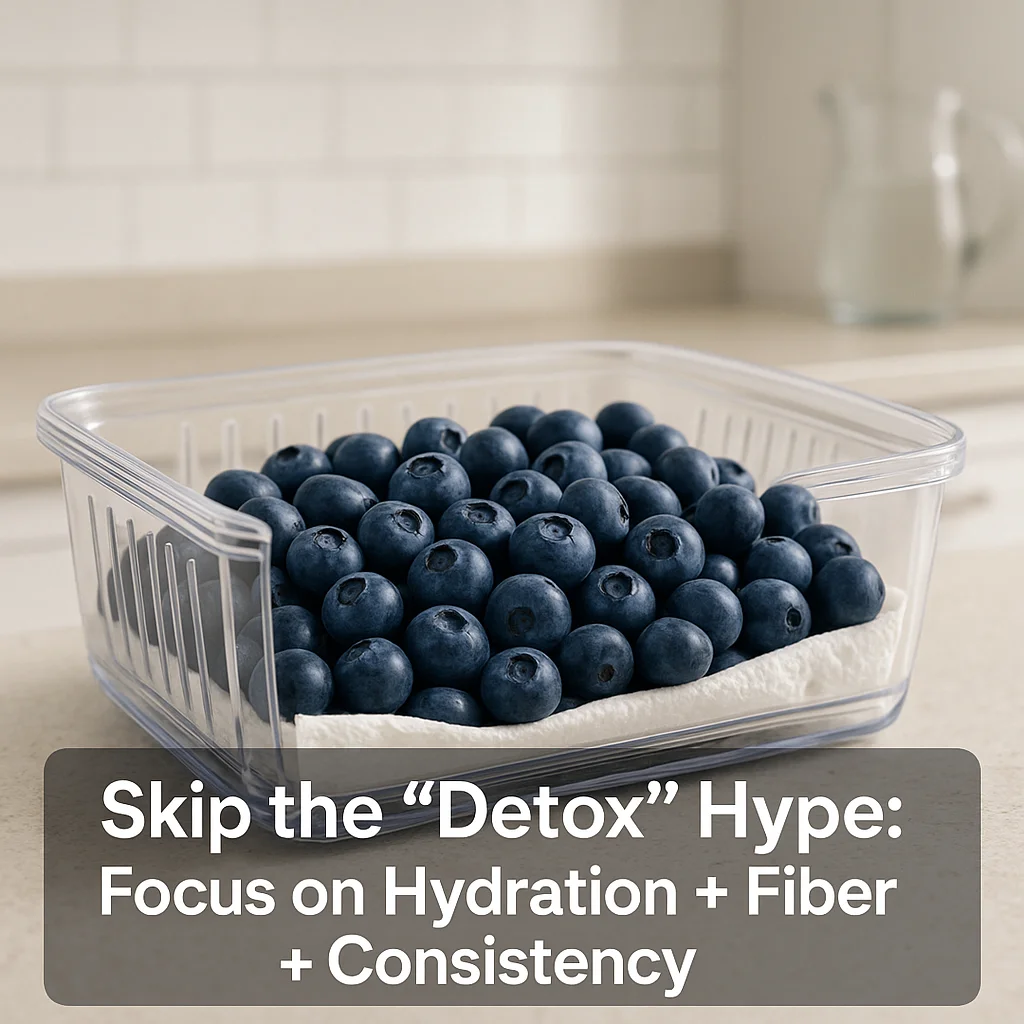
- Place paper towels in containers to absorb excess moisture.
- Keep berries unwashed until ready to consume to avoid mold.
- Allow unripe fruits to sit at room temperature until they ripen.
- Avoid stacking produce to minimize bruising.
Buying Checklist: Choose Wisely at the Store
Picking the right produce starts at the store. Here's what to look out for:
- Select firm, unblemished fruits and vegetables.
- Avoid items with visible mold or soft spots.
- Choose items that are seasonally fresh for optimal quality.
- Check color uniformity; it often indicates ripeness.
- Smell your produce to ensure no off-putting odors are present.
- Avoid overly packaged fruits and vegetables to reduce condensation-related spoilage.
The Real Fix: Step-by-Step Solution for Better Produce Care
The key to keeping your produce fresh longer is to balance moisture while minimizing temperature fluctuations.
- Separate fruits and vegetables into different drawers to reduce ethylene gas effects. Why it works: Ethylene gas accelerates ripening.
- Use breathable bags for leafy greens. Why it works: Prevents moisture build-up that makes leaves slimy.
- Line crisper drawers with paper towels. Why it works: Absorbs excess moisture that causes wilting.
- Place berries in a single layer in a shallow container. Why it works: Reduces pressure damage and mold growth.
- Keep cucumbers and zucchini in the veggie drawer at moderate cold settings. Why it works: Extreme cold can lead to surface pitting.
- Store root vegetables in a cool, dark, and dry place like a pantry. Why it works: Reduces sprouting and rot.
- Allow bananas and avocados to sit out until ripe, then refrigerate if needed. Why it works: Slow down ripening once optimal.
- Use airtight containers for cut vegetables to keep them moist but not wet. Why it works: Minimizes dehydration and nutrient loss.
- If condensation forms inside bags, pat dry and return to storage. Why it works: Combats mold formation.
- If your leafy greens are wilting → Move them to a less cold drawer and replace paper towels.
- If fruits ripen too quickly → Separate them further apart and adjust the fridge temperature slightly.
- If veggies seem dry → Add humidity by placing a damp paper towel near them.
- If strawberries mold → Ensure they're not washed and increase air circulation around them.
- If cucumbers feel slimy → Increase air circulation in their storage container.
- If onions sprout → Make sure they're stored in a cool, dark place away from potatoes.
- If peppers wrinkle → Store in a high-humidity drawer to maintain their firm texture.
- If avocados are either too hard or too soft → Adjust their location based on ripeness stage.
15–20 Minute Weekly Prep Routine
- Before shopping, evaluate current stock for spoilage signs to manage consumption priorities.
- Wash and spin-dry leafy greens, storing them in vented containers with a paper towel. If I only had 2 minutes: Quickly inspect and remove spoiled leaves.
- Trim ends of carrots and celery, storing them in water-filled containers for crispness.
- Pre-portion snacks with cleaned and cut produce for grab-and-go convenience. If I only had 2 minutes: Just cut a few ready-to-eat servings.
- Check refrigerator temperature settings to ensure optimal produce conditions. If your fridge is weird: Add spoons of rice to balance excess moisture or use a humidity adjuster tool.
Common Mistakes and How to Fix Them
- Washing berries before storage → Leads to mold → Only wash just before eating.
- Storing bananas in the fridge before ripening → Leads to skin blackening → Keep them at room temperature until ripe.
- Mixing fruits and vegetables → Interactions cause faster ripening → Separate storage areas are best.
- Using sealed containers for tomatoes → Trap moisture leading to splits → Store stem-side down at room temperature.
- Leaving potatoes and onions together → Accelerates sprouting → Store them separately in dark places.
- Ignoring inconsistent refrigerator temperatures → Causes spoilage and freezer burn → Use a fridge thermometer to monitor stability.
Food Safety Notes: Proper Cleaning and Timely Disposal
Always wash produce before eating, not before storing. For anything showing signs of slime, unusual discoloration, or strong odors, be conservative and discard.
Quick Table: Storage and Solutions
| Produce | Best Storage | What to Avoid | Typical Problem | Quick Fix |
|---|---|---|---|---|
| Leafy Greens | Vented bag in the crisper | Excess moisture | Wilting | Pat dry, replace paper towel |
| Berries | Shallow container in the fridge | Washing before storage | Mold | Store dry, wash before eating |
| Root Vegetables | Dark, cool pantry | Light exposure | Sprouting | Keep covered |
| Bananas | Room temp until ripe | Cold storage before ripening | Blackening | Keep on counter until ripe |
FAQs: All About Focus on Hydration, Fiber, and Consistency
- Can I store all fruits in the fridge? – Not all; fruits like bananas and avocados should ripen at room temperature first.
- How do I keep greens fresh all week? – Dry them well and store in vented containers in the crisper drawer.
- Why are my onions always sprouting? – Store them in a dark, cool, and dry place away from potatoes.
- Can I freeze leftover veggies? – Yes, but blanch them first to maintain texture and nutrients.
- Why is it important to control ethylene gas? – Ethylene can accelerate ripening, leading to premature spoilage.
- Does washing produce early help? – No, it can increase spoilage due to trapped moisture.
- How do I handle an overcrowded fridge? – Rotate items, and ensure air flow; use a wire rack if needed.
- Will lemon juice stop avocado browning? – Partially, as it reduces oxidation; wrapping tightly also helps.
Closing Thoughts
- Keep produce separated by type to control ethylene effects.
- Ensure consistent temperatures to prevent degradation.
- Utilize paper towels to manage moisture, preventing mold and rot.
Consistent, mindful produce care makes your efforts count. Even the simplest habits can lead to less waste and more enjoyment. Looking for more tips? Head over to our post list or explore our nutrition insights.