Potassium-Rich Fruits (Beyond Bananas): Best Options + Everyday Tips
Fruits Going Bad Too Quickly? Here's the Real Reason
Ever opened the fridge only to find that the lovely bunch of potassium-rich apricots you bought just a few days ago have shriveled or gone moldy? It's a common frustration, and it usually boils down to storing them in overly moist conditions which can speed up spoilage. This happens because moisture encourages mold growth and surface damage leads to faster dehydration.
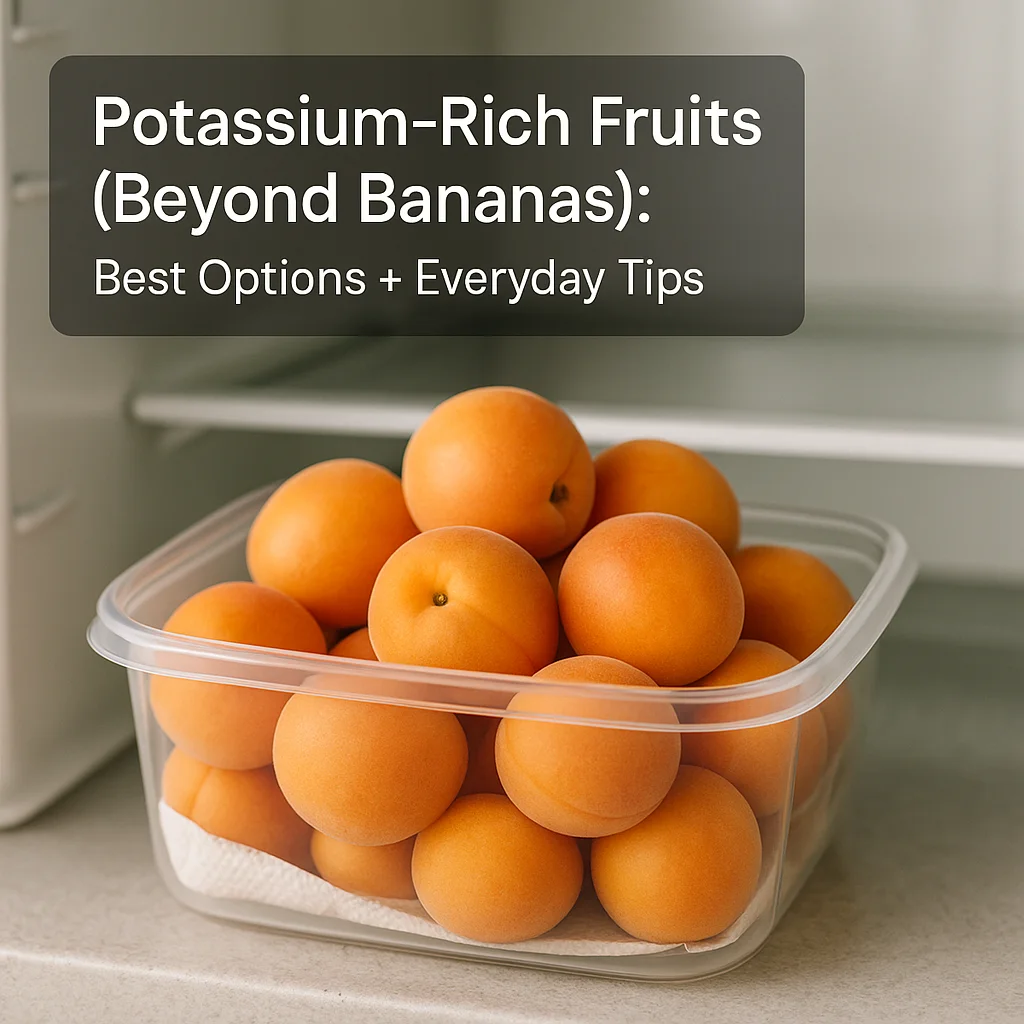
Fast Rules for Storing Potassium-Rich Fruits
- Keep them dry but not dehydrated to prevent mold.
- Avoid temperature swings; consistent temperatures are key.
- Control ethylene exposure by separating ripe and unripe fruits.
- Use vented containers for airflow, preventing condensation.
- Line storage containers with paper towels to absorb excess moisture.
- Avoid stacking fruits to reduce bruising and spoilage risk.
- Check for firmness and smell to gauge freshness regularly.
- Separate damaged fruits immediately to prevent spreading spoilage.
- Use the fridge drawer setting to control humidity levels.
Buying Checklist: Choosing the Best Potassium-Rich Fruits
When buying potassium-rich fruits, selection is crucial to ensure longevity and flavor.
- Apricots: Look for smooth skin without blemishes. Avoid overly soft fruits.
- Oranges: Choose firm, brightly colored ones without soft spots.
- Avocados: Select avocados that yield slightly to gentle pressure, indicating ripeness.
- Cantaloupes: Pick fruits with a sweet fragrance and creamy, not green, skin.
- Dates: Opt for plump, deeply colored fruits without sugar crystals or stickiness.
The Real Fix: Step-by-Step Solution for Perfect Storage
Our goal is to keep fruits dry but not dehydrated, control ethylene exposure, and avoid temperature swings.
- Check ripeness: Start by sorting your fruits into unripe, ripe, and overripe batches. This helps you manage when to eat them.
- Store unripe fruits on the counter: Let fruits like avocados and apricots ripen naturally at room temperature. This promotes uniform ripening.
- Transfer ripe fruits to the fridge: Use the crisper with a vented container for good airflow, slowing down spoilage.
- Line containers with paper towels: They absorb excess moisture, reducing mold risk.
- Separate ethylene producers: Keep apples and bananas apart from other fruits to avoid rapid ripening.
- Check humidity settings: Use the low-humidity setting for fruits that are sensitive to moisture, like oranges and apricots.
- Avoid fridge back wall: Store fruits away from the back to prevent freezing damage.
- Regular inspections: Monitor for changes in texture and smell frequently, allowing you to use them before aging advances too far.
- Use airtight containers sparingly: Only for fruits like dates that benefit from reduced airflow to prevent drying out.
- Rotate stock: Rearrange fruits regularly to use the oldest first, preventing hidden spoilage.
- If you see mold, then discard the fruit to prevent spreading.
- If fruits feel too dry, then add a drier environment or peel slightly.
- If fruits ripen too quickly, then adjust the drawer to a higher humidity level.
- If you notice bruising, then store more gently to prevent damage.
- If fridge fluctuates, then monitor and adjust placement away from cold spots.
- If paper towels are soaked, then replace to maintain effectiveness.
- If fruits lack smell, then they might be past prime; eat promptly.
- If you're unsure of ripeness, then check firmness and color frequently.
15–20 Minute Weekly Prep Routine
- Gather all your purchased fruits and sort them by ripeness.
- Inspect each fruit for any signs of damage, separating any questionable items.
- Line storage containers with paper towels and choose the best storage areas in your fridge.
- Transfer ripe fruits to appropriate containers, ensuring they have enough airflow.
- Set aside unripe fruits for counter-ripening, keeping them spaced apart.
- Check fridge settings and ensure drawers are set to the correct humidity levels.
- Place fruits optimally in the fridge to avoid temperature fluctuations.
- Perform a final check: reorganize and rotate where necessary.
If I Only Had 2 Minutes
- Sort fruits by ripeness quickly to avoid spoilage.
- Store ripe fruits in the fridge immediately to extend freshness.
- Ensure the most perishable are easily accessible to use soon.
If your fridge is weird: Adjust storage based on your fridge's conditions. If it's too dry, ensure slight humidity with a damp towel; if too humid, use additional paper towels.
Common Mistakes and How to Fix Them
- Storing in airtight containers → Trapped moisture → Use vented.
- Ignoring ripening stages → Overripe waste → Monitor frequently.
- Mixing all fruits → Rapid spoilage → Separate by type.
- Overtly washing before storage → Dampness → Wash right before use.
- Storing near fridge back → Freezing → Keep away from cold zones.
- Incorrect humidity settings → Sensitivity spoiling → Adjust as needed.
- Forgetting rotation → Old fruits rotting → First in, first out policy.
- Not using paper towels → Excess moisture → Line containers thoroughly.
- Placing ethylene emitters together → Quick ripening → Store separately.
Food Safety Notes
Wash fruits just before eating or cooking to reduce moisture intake that promotes spoilage. When fruits show significant mold, soft spots, or emit off smells, it's best to err on the side of caution and discard them.
Quick Table for Potassium-Rich Fruits
| Produce | Best Storage | What to Avoid | Typical Problem | Quick Fix |
|---|---|---|---|---|
| Apricots | Fridge, vented | High humidity | Mold growth | Paper towel liner |
| Oranges | Fridge drawer | Stacking tightly | Bruising | Space out fruits |
| Avocados | Counter, then fridge | Near apples | Rapid ripening | Separate storage |
| Cantaloupes | Fridge, whole uncut | Fruit bowl | Over-ripening | Refrigerate swiftly |
| Dates | Airtight container | Open air | Drying out | Airtight seal |
FAQ on Potassium-Rich Fruits
- Which fruits are high in potassium? Apricots, oranges, avocados, cantaloupes, and dates.
- How should I store apricots? In the fridge using a vented container with a paper towel lining.
- Can avocados be ripened faster? Yes, by storing them with bananas on the counter.
- Do citrus fruits need special storage? Keep them in the fridge drawer at a low humidity setting.
- Should dates be refrigerated? Not necessary if kept in airtight containers in a cool, dark place.
- Why do cantaloupes over-ripen? Due to exposure to room temperature for extended periods.
- How often should I check my fruits in storage? Every few days to catch signs of spoilage early.
- What are ethylene producers? Fruits like apples and bananas that promote ripening of nearby produce.
- Why use paper towels in storage? To absorb moisture and maintain fruits' ideal conditions.
- How do I know if an orange is bad? Look for soft spots, mold, or sour smell as signs.
Closing Thoughts
- Separate and store based on ripeness to minimize waste.
- Use vented containers with a paper towel to control moisture.
- Regularly inspect and rotate stock to keep fruits fresh longer.
By following these simple yet effective practices, you'll ensure that your potassium-rich fruits remain fresh and delicious, allowing you to enjoy their many benefits fully.
For more tips on storing different types of produce, visit our full list of guides, and read about the health benefits of fruits beyond hype.