Eat the Rainbow: What Different Colors Usually Mean (Simple, Practical Guide)
Hook: Real-Life Waste/Frustration Scenario
We've all been there: you've bought a vibrant collection of fruits and vegetables, envisioning colorful, nutritious meals. Yet, just days later, some of it turns mushy or gives off that unmistakable fermented smell. The culprit? Poor storage and unfamiliarity with how different colors indicate specific needs and freshness. Let’s dive into understanding this!
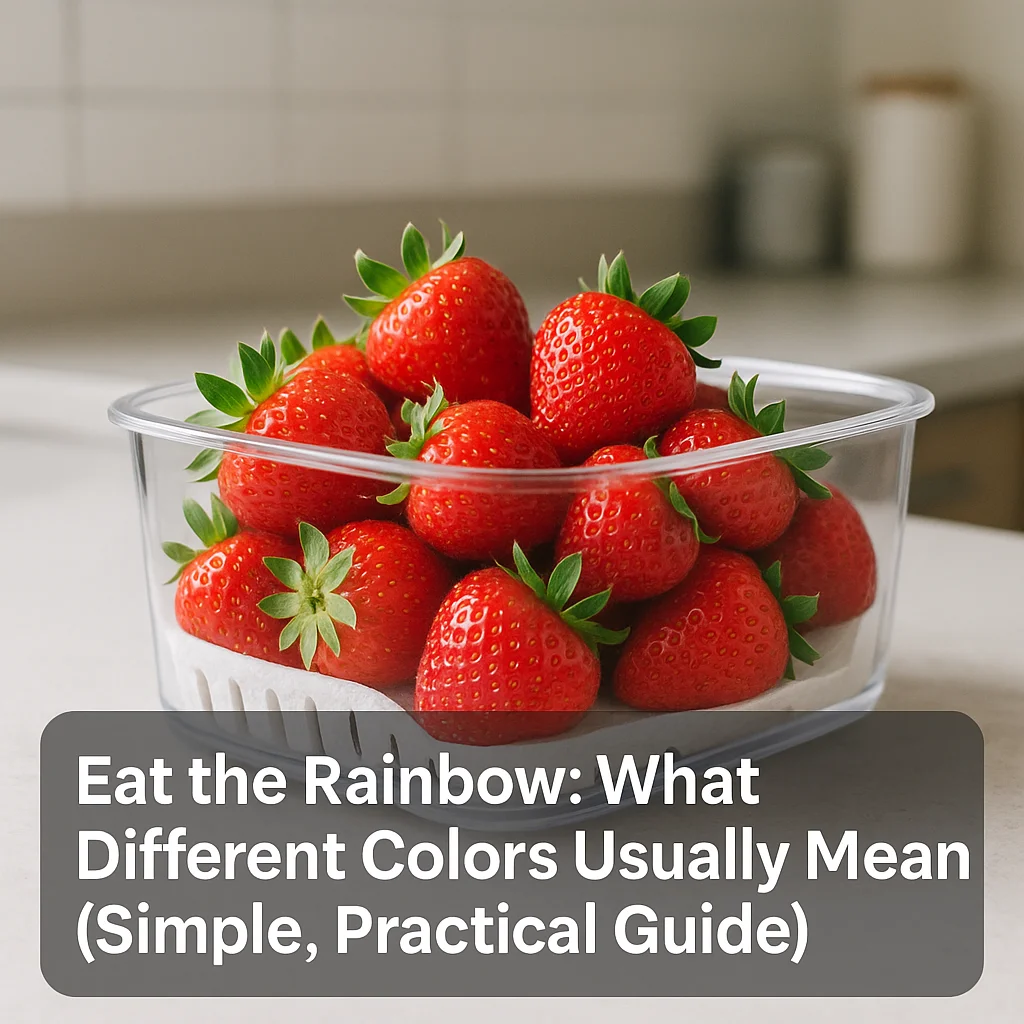
Fast Rules: Save Your Produce
- Red produce: Undergoes rapid ripening; store in cooler spots.
- Orange and yellow: Ethylene-sensitive; keep away from bananas and apples.
- Green: Moisture-retentive; leave unwashed until use.
- Purple and blue: High antioxidants; use promptly for best nutrition.
- White and brown: Naturally low moisture; significant odor signal spoilage.
- Multicolored: Ripen at different rates; store separately.
- Limit fridge placement for delicate greens; they prefer crisp zones.
- Use vented containers for humidity-sensitive items like mushrooms and berries.
- Maximize crisper effectiveness by managing drawer settings appropriately.
- Apply a paper towel layer to absorb extra moisture and prevent rotting.
Buying Checklist: Picking the Best
Ensure you select the best at the store to maximize longevity:
- Red produce: Choose firm, bright red without blemishes.
- Orange/yellow: Pick heavier for their size, signifying juiciness.
- Green: Select crisp and vibrant without yellowing.
- Purple/blue: Look for a rich, deep color.
- White/brown: Firmness and consistent texture is key.
- Avoid bruised, overly soft spots or split stems.
The Real Fix: Step-by-Step Solution
Goal: Control ethylene exposure and manage moisture to extend freshness.
- Red produce: Store in the fridge with minimal temperature swings. Reduces ripening, extending shelf life. Look for stable temperature settings.
- Orange/yellow produce: Separate from ethylene-producing fruits like apples. Prevents premature ripening. Check for unexpected soft spots.
- Green produce: Store unwashed in a dry, cool place. Reduces moisture-induced decay. Feel for firmness and freshness.
- Purple/blue produce: Use quickly after buying or refrigerate in vented containers. Keeps antioxidants intact longer. Observe color richness.
- White/brown produce: Place in cool, dry spots. Avoids moisture, which accelerates spoilage. Watch for discoloration or off-odors.
- Use paper towel layers: Between produce layers to absorb excess moisture. Ensures reduced rot chances. Replace weekly.
- Fridge crisper drawers: Adjust settings according to produce needs. Controls humidity effectively. Test drawer settings for best results.
- Airtight vs vented containers: Use vented for humidity-prone produce (like berries); airtight for others. Retains optimal conditions. Inspect for moisture inside containers.
- Ripeness stages: If produce is unripe, leave at room temp until ripe; refrigerate once ripe to slow further ripening. Mitigates premature spoilage. Spot-check ripeness regularly.
- If red produce softens: Move to a colder spot.
- If orange becomes too soft quickly: Separate immediately.
- If greens feel limp: Try repackaging with a towel layer.
- If purples lose color: Use them today; flavor is declining.
- If whites get slimy: Discard; they're expired.
- If any produce is odor-prone: Check for moisture damage.
- Ripening too fast: Check nearby ethylene producers.
- Mold appearing: Ensure fridge controls are stable and wipe surfaces.
15–20 Minute Weekly Prep Routine
- Sort produce: Identify what's ripening, keep those visible.
- Reorganize storage: Keep ethylene-sensitive apart.
- Inspect moisture levels: Replace damp paper towels.
- Adjust fridge drawers: Optimize crispers humidity settings.
- Rotate stock: Use older items first to minimize waste.
- If I only had 2 minutes: Move sensitive items and ensure towels are fresh.
If your fridge is weird: If too dry, add a dish of water; if humid, increase towel layers; if prone to freezing, avoid back placement.
Common Mistakes: Spoilage Causes and Fixes
- Storing apples with bananas: Ethylene chaos → separate them.
- Leaving tomatoes in the fridge: Flavor loss → counter storage for ripening.
- Washing before storing: Quick spoilage → wash only before use.
- Mixing onions with potatoes: Quicker spoilage → distinct locations.
- Plastic bag storage: Moisture buildup → use breathable bags or containers.
- Not checking drawer settings: Wrong humidity → adjust to fit produce.
- Ignoring expiration cues: Signals missed → set a regular check routine.
- Leaving in direct sunlight: Faster spoilage → find cooler spots.
- Ignoring ethylene gas functions: General chaos → categorize properly.
Food Safety Notes: When to Wash and Toss
- Wash fruits and vegetables just before consumption, not before storing.
- Discard any produce with fuzzy mold, strong unpleasant odors, or extensive surface damage.
- Check for slimy residues; if present, it's safer to throw away the item.
Quick Table: Produce, Best Storage, What to Avoid, Typical Problem, Quick Fix
| Produce | Best Storage | What to Avoid | Typical Problem | Quick Fix |
|---|---|---|---|---|
| Red fruits | Fridge (stable temp) | Humidity | Overripe | Move colder |
| Green leafy veg | Fridge (crisper) | Moisture buildup | Limpness | Re-towel wrap |
| Purple veg | Immediate use | Ethylenes | Lost color | Use today |
| Brown produce | Cool, dry places | Too close storage | Off-odor | Discard |
FAQ
- Why should I sort produce by color? Each color group often shares storage needs and spoilage rates.
- How do ethylene gases affect storage? They promote ripening and spoilage; separating sensitive items slows the process.
- Can I use the same rule for all vegetables? No, color often dictates specific storage needs for each type.
- Is fridge always the best storage option? Not always; some items, like tomatoes, prefer room temperature for better flavor.
- Are all purple vegetables high in antioxidants? Generally yes, but freshness can affect their nutrient levels.
- Does washing beforehand increase spoilage? Yes, it can add moisture, accelerating decay. Best to wash just before use.
- How does paper towel usage help? Absorbs excess moisture, extending freshness.
- What do limp greens indicate? Excess moisture retention and possible spoilage; repackage with towels.
- Should I avoid plastic bags completely? Use them sparingly; opt for breathable storage for most produce.
- Do whites and browns indicate spoilage? Not always, but discoloration and odor do indicate issues.
Closing
- Sort and store produce by ethylene sensitivity and color for prolonged freshness.
- Always use breathable storage solutions for humidity-sensitive items.
- Regularly inspect and rotate produce to use the oldest items first.
These tips will keep your produce fresher longer and you'll save money by wasting less. Ready to brighten your plate? Remember, the rainbow not only looks amazing but keeps you healthier, too!
Explore more blog topics at our FruitVegGuide Blog.
For more on nutrition without the hype, see our post on evidence-based health.