Washing Basics: Which Produce to Wash Right Before Eating (and Why)
Have You Ever Thrown Away a Soggy Head of Lettuce?
We've all been there—pulling a once-fresh head of lettuce or bunch of berries from the refrigerator only to find a soggy, mold-riddled mess. This happens because moisture accelerates mold growth and degrades produce faster. But by understanding when and why to wash produce, we can keep it fresher for longer and reduce that frustrating waste.
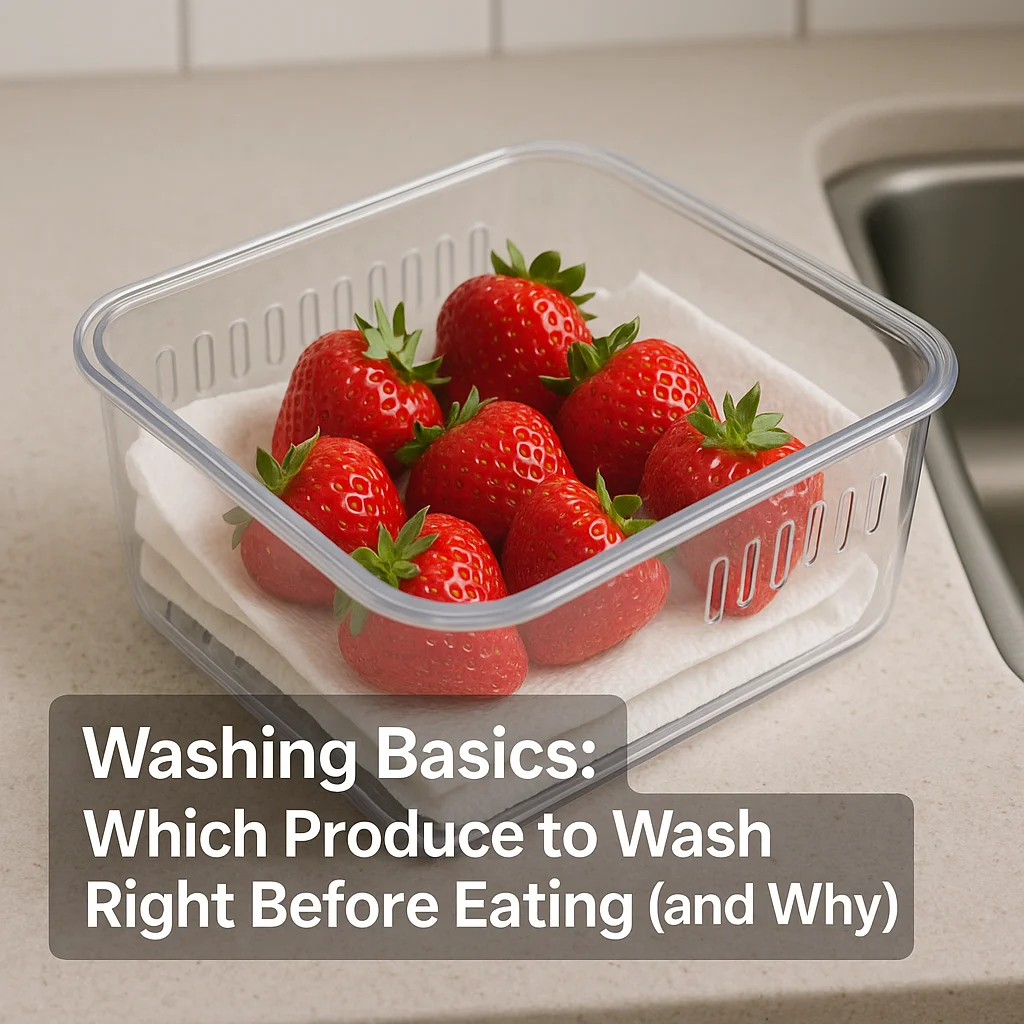
Fast Rules for Washing Produce
- Wash leafy greens just before using them to prevent wilting.
- Rinse berries immediately prior to consumption to avoid mold.
- Scrub root vegetables (e.g., carrots, potatoes) before cooking.
- Peel bananas—but never wash them—to avoid added moisture.
- Always wash apples, pears, and other firm fruits right before eating.
- Leave mushrooms unwashed until ready to cook; too much moisture ruins texture.
- Rinse herbs in small batches when needed to keep them fresh.
Buying Checklist: Choosing the Best Produce
Selecting the right produce at the store is your first line of defense against waste.
- Opt for lettuce with crisp leaves and no dark spots.
- Choose plump, dry berries without visible mold or wrinkling.
- Look for firm potatoes without sprouting eyes or soft spots.
- Pick ripe bananas free of bruises for longer shelf life.
- Select apples and pears that are firm to the touch with smooth skins.
- Avoid herbs if they show blackened leaves or excessive wilting.
Step-by-Step Solution for Keeping Produce Fresher
Goal: Control moisture to prevent mold and spoilage.
- Assess produce: Look for signs of ripeness and damage.
- Store leafy greens in a vented bag with a paper towel to absorb excess moisture—check for condensation signs.
- Keep berries in a breathable container, unwashed until eating time to avoid mold buildup.
- Potatoes and carrots should be kept in a cool, dark place, scrubbed just before cooking to maintain texture.
- Store bananas at room temperature until ripe; refrigerate afterward to slow ripening without washing.
- Apples and pears are best kept in the refrigerator crisper drawer to reduce ethylene exposure; wash immediately before consumption.
- Mushrooms should be stored in a paper bag to reduce sogginess—clean only when ready to cook.
- Fresh herbs in a glass of water, loosely covered with a plastic bag, can last longer—rinse as needed.
- Re-check berries a couple of times a week and remove any that start to mold to prevent further spread.
- Adjust fridge humidity settings: choose low humidity for fruits emitting ethylene, high for leafy greens.
- If ripeness differs (e.g., bananas), separate ripe from unripe fruits to control ethylene effects.
- Plan to consume produce in order of perishability—use high-risk items first.
- Airtight for cut produce: Use sealed containers to keep moisture in for already-cut items.
- Check regularly for signs of spoilage like smell or sliminess, particularly in leafy greens.
If/Then Troubleshooting Guide
- If greens wilt quickly → Add a slice of bread to the bag, which can absorb moisture.
- If berries mold → Place them in a shallower container for better air circulation.
- If potatoes sprout → Keep them darker and cooler; too much light prompts sprouting.
- If bananas brown → Separate stems; wrapping the crown can slow ethylene spread.
- If apples become mealy → Check the fridge temperature is not too low.
- If mushrooms soften → Transfer to a paper bag for better moisture management.
- If herbs dry → Refresh the water in the glass and trim the stems slightly.
- If fridge is too humid → Use more paper towels to absorb excess moisture.
15–20 Minute Weekly Prep Routine
- Check the fridge and countertop for signs of changes in texture or color.
- Remove any spoiled items to protect the rest of your produce.
- Replace or dry papers in storage bags or boxes holding leafy greens or herbs.
- Rotate produce to bring last-purchased items to the forefront for easy access.
- Get cooking! Plan meals around items nearing their peak or just-past freshness.
If I Only Had 2 Minutes
- Run a quick visual check for spoilage, prioritizing berries and greens.
- Remove and discard any visibly damaged or moldy produce.
- Check supreme perishables such as herbs and bananas.
Note: If your fridge is weird (too dry/humid/freezing back wall), experiment by adjusting the crisper settings or using more/less paper towel within produce containers to manage the environment.
Common Mistakes When Washing Produce
- Washing greens before storage → Leads to quick wilting → Only wash when ready to eat.
- Not drying berries after rinsing → Causes mold faster → Lay them on a towel to dry.
- Washing mushrooms → Waterlogged texture → Wipe with a damp cloth instead.
- Ignoring fridge settings → Too dry or moist → Adjust crisper settings appropriately.
- Overcrowding produce → Mismanaged air circulation → Give items some breathing room.
- Storing potatoes in the fridge → Alters flavor → Keep them in a dark pantry instead.
- Keeping ethylene producers and sensitive items together → Accelerated spoilage → Separate them.
- Not checking produce regularly → Misses early spoilage signs → Make it part of your routine.
- Forgetting paper towels → Faster condensation in packed greens → Add whenever storing greens.
- Washing and cutting in advance → Texture breakdown → Prep only near consumption.
Food Safety Notes
Wash produce like leafy greens and fruit only before eating to avoid moisture-related spoilage. Discard any produce that shows visible mold, excessive softness, or a bad smell. Prioritize safety and quality over thrift.
Quick Table for Washing Basics
| Produce | Best Storage | What to Avoid | Typical Problem | Quick Fix |
|---|---|---|---|---|
| Lettuce | Vented bag in fridge | Pre-washing | Wilting | Wash when needed |
| Berries | Breathable container | Washing early | Mold | Rinse right before eating |
| Mushrooms | Paper bag in fridge | Washing | Sogginess | Dry wipe only |
| Apples | Crisper drawer | Ethylene contact | Mealy texture | Store separately |
| Bananas | Room temperature | Refrigeration early | Early browning | Wrap crown in plastic |
FAQ
- Q: Why not wash produce right after buying?
A: Moisture can accelerate spoilage and encourage mold growth. - Q: Is it safe to wash all produce immediately before storage?
A: Not always; dry storage typically extends shelf life. - Q: How should I clean herbs?
A: Rinse them gently as you use them to prolong freshness. - Q: What’s wrong with washing mushrooms?
A: Water causes them to become soggy—brushing or wiping is better. - Q: Can I prepare fruit salad days in advance?
A: It’s best only shortly in advance to avoid mushiness and spoilage. - Q: Should I wash bananas?
A: No, just peel them; they don't benefit from added moisture. - Q: How can I keep apples and oranges longer?
A: Store apples in crisper, oranges in a different container. - Q: Does washing remove pesticides?
A: Rinsing can reduce residues, but results vary—buy organic when needed. - Q: What about washing pre-bagged salads?
A: Follow package instructions, but rinsing again can reduce bacteria. - Q: Why does moisture play such a role?
A: Moisture facilitates spoilage processes like mold and bacterial growth.
Closing Thoughts
- Store dry and wash produce only as you consume it to extend freshness.
- Choose high-quality produce at the store to start right.
- Monitor and manage storage conditions routinely.
By keeping these produce washing basics in mind, you’ll save money and enjoy fresher, more flavorful fruits and vegetables every day. Happy eating!
Explore related content in our post list or read our detailed article on best produce buying and prep practices.