How to Pick Fresh Strawberries: Caps, Color, Shine, and Scent
Why Strawberries Spoil Quickly (and How You Can Avoid It)
You’ve bought a lovely basket of strawberries, ready to enjoy this week. But by mid-week, half of them are mushy or moldy! The truth is, strawberries are sensitive to moisture and temperature changes. Such conditions create the perfect environment for mold and quick spoilage. Let's find out how to avoid this common frustration.
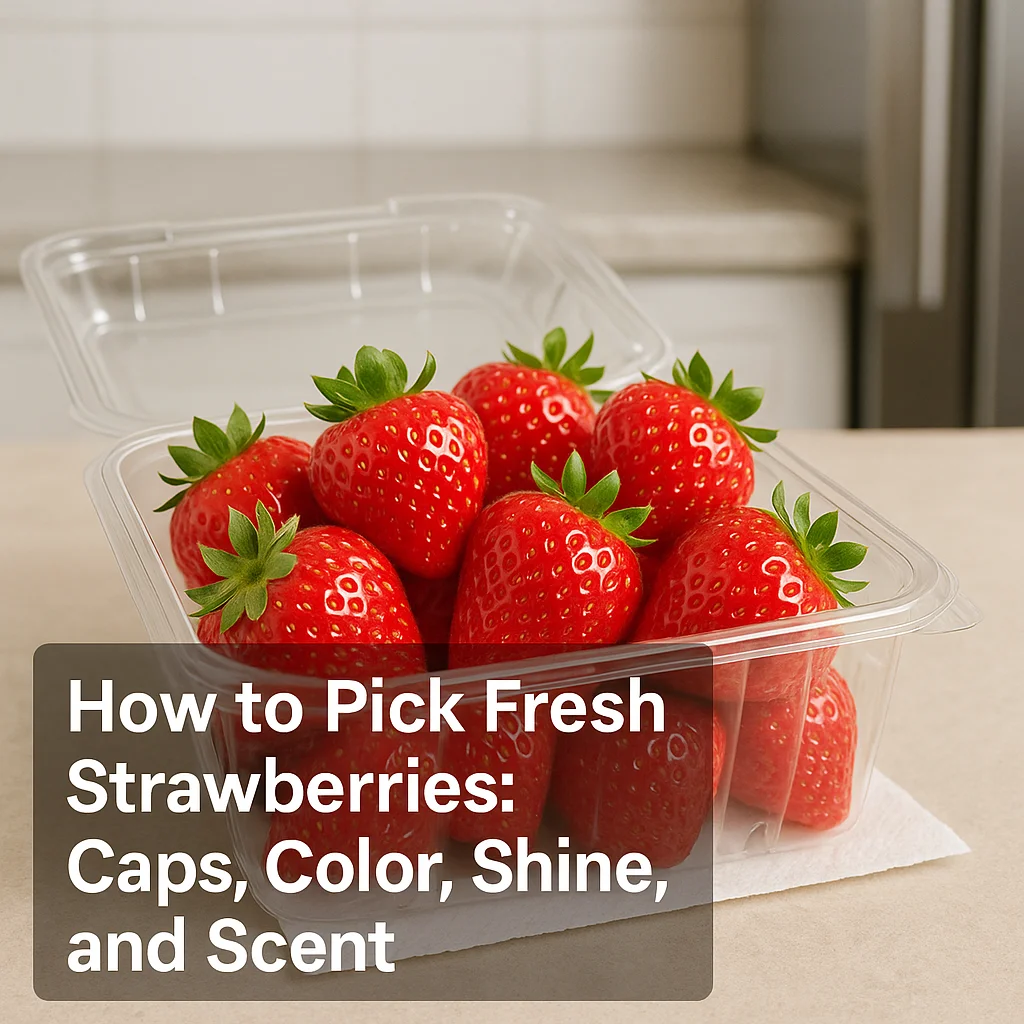
Fast Rules for Choosing Strawberries
- Choose strawberries with bright, even red color.
- Ensure the caps are green and fresh-looking.
- Look for a natural, shiny surface - not too dull or too glossy.
- Check the scent - they should smell fragrant and sweet.
- Avoid ones with white or green tips, indicating underripeness.
- Inspect for mold or moisture in the container - steer clear if present.
- A gentle squeeze should not leave a dent - firmness is key.
- Opt for ones slightly smaller; they tend to be sweeter.
- Handle gently to avoid bruising, which speeds up spoilage.
Buying Checklist: Sniff, Look, Squeeze
Picking the perfect strawberries is about using your senses:
- Color: Ensure a uniform red; avoid greenish tips.
- Caps: Look for vibrant green tops which indicate freshness.
- Shine: Prefer naturally shiny berries over excessively glazed ones.
- Scent: A sweet aroma is a good sign of ripeness.
- Size: Don’t always go for the largest; smaller often means sweeter.
Real Fix: Step-by-Step Solution to Keep Strawberries Fresh
Goal: Keep strawberries dry, at stable temperature, and accessible for quick use.
- Inspect for Damage: Remove any damaged berries immediately; they can cause others to spoil quickly due to surface damage.
- Pat Dry: If condensation is present, gently pat berries dry to prevent mold growth due to excess moisture.
- Container Choice: Use a vented container to allow air circulation, reducing moisture build-up.
- Paper Towel: Line the bottom with a paper towel to absorb excess moisture, keeping the surface dry.
- Fridge Placement: Store in the middle drawer to avoid temperature swings that lead to texture damage.
- No Stacking: Arrange them in a single layer to avoid bruising and spoiling faster.
- Daily Check: Briefly inspect daily for signs of spoilage like mold or mushy texture, removing any problem berries immediately.
- Ripeness Control: If under-ripe, leave out for a day on the counter to ripen further, but do not leave them under direct sunlight.
- Temperature: Avoid freezing; it damages the texture and flavor due to ice crystal formation.
- Airtight Is a No-Go: Don’t seal in airtight containers; the humidity can cause them to decompose faster.
- If the paper towel is soaked, replace it immediately to maintain dryness.
- Keep strawberries away from ethylene-producing fruits like apples; this gas speeds up spoilage.
- If you notice condensation inside the container, open briefly to let air circulate and dry them.
- If strawberries get too ripe and soft, use them in smoothies or desserts to prevent waste.
- If berries turn mushy → Check for contamination and discard if needed.
- If mold appears → Clean other berries immediately and toss the affected ones.
- If berries lack scent → Ripen at room temperature for a few hours.
- If berries sweat often → Ensure the fridge's humidity level is optimal.
- If some berries are underripe → Ripen separately from the main batch.
- If your vented container shows too much moisture → Increase air circulation.
- If strawberries are soft when purchased → Use immediately or freeze for smoothies.
- If berries have white tops → They likely won’t ripen further; use quickly.
15–20 Minute Weekly Prep Routine
This simple routine ensures your strawberries stay fresh all week:
- Visual Inspection: Check for damage or discoloration.
- Rinse and Dry: Rinse quickly under cold water and dry completely.
- Sort and Store: Place in a breathable container lined with a paper towel.
- Check Daily: Make minor adjustments like removing spoiled ones to ensure overall freshness.
If I Only Had 2 Minutes
- Quickly remove any moldy or damaged berries.
- Pat any moist strawberries dry with a paper towel.
- Place in a vented container for storage.
If your fridge is weird: If it is too dry, increase the container’s humidity slightly. If too humid, keep the lid ajar for better ventilation.
Common Mistakes with Strawberries
- Washing before storing: Leads to mold growth → Dry thoroughly before storing.
- Using airtight containers: Causes excess moisture → Use vented ones.
- Storing with apples: Ethylene gas speeds spoilage → Keep separately.
- Buying dull strawberries: Often indicates less sweetness → Opt for shiny ones.
- Overcrowding: Leads to bruising and spoilage → Spread them out.
- Leaving out overnight: Directly leads to spoilage → Refrigerate promptly.
- Freezing fresh strawberries: Alters texture → Pre-freeze on a tray first.
- Storing in the back of the fridge: Exposure to cold air damages texture → Store in the middle section.
- Ignoring small specks of mold: Mold spreads quickly → Remove immediately.
- Not removing caps: If overly damaged, leaves deteriorate quickly → Trim if necessary.
Food Safety Notes
Wash strawberries just before use to prevent excess moisture, which encourages mold. If strawberries become noticeably mushy or moldy, it’s best to discard them to avoid any risk.
Quick Table
| Produce | Best Storage | What to Avoid | Typical Problem | Quick Fix |
|---|---|---|---|---|
| Strawberries | Vented container in fridge | Sealed, moist containers | Mold growth due to moisture | Pat dry, use paper towel |
FAQ: Picking Fresh Strawberries
- Q: How can I tell if a strawberry is ripe? A: Look for deep red color and a sweet scent.
- Q: What does a fresh cap indicate? A: Green, healthy caps mean recent picking.
- Q: Are big strawberries better? A: Not necessarily; often, smaller ones are sweeter.
- Q: Can I eat strawberries with white tips? A: You can, but they may not be as sweet.
- Q: How to store for longevity? A: Use a vented container with a paper towel.
- Q: Should strawberries be refrigerated? A: Yes, to slow down spoilage.
- Q: Is shininess important? A: Yes, a natural shine generally indicates freshness.
- Q: Why avoid washing before storage? A: It promotes mold through excess moisture.
- Q: What if the container steams up? A: Open it briefly to allow moisture to escape.
- Q: Can I freeze overripe strawberries? A: Yes, but pre-freeze them on a tray first to maintain texture.
Closing
- Keep them dry and cool to slow down spoilage.
- Choose natural shine and sweet aroma for best flavor.
- Monitor daily to catch spoilage early and reduce waste.
With these tips, you're now set to enjoy sweet, fresh strawberries with minimal waste. For more guides, visit our full guide list or check out our detailed buying checklist and preparation tips.