How to Choose Peaches: Firmness, Fragrance, and Bruise vs Sweet Spot
Hook: Why Picking the Right Peaches Matters
Ever bought peaches that seemed perfect in-store only to find them mealy, overripe, or bruised at home? The frustration of wasted money and food means understanding the real reason these disappointments happen. Often, it's due to not knowing what to look for and avoid when selecting peaches. Misjudging a bruise for a sweet spot or ignoring the peach's fragrance can lead to culinary heartbreak.
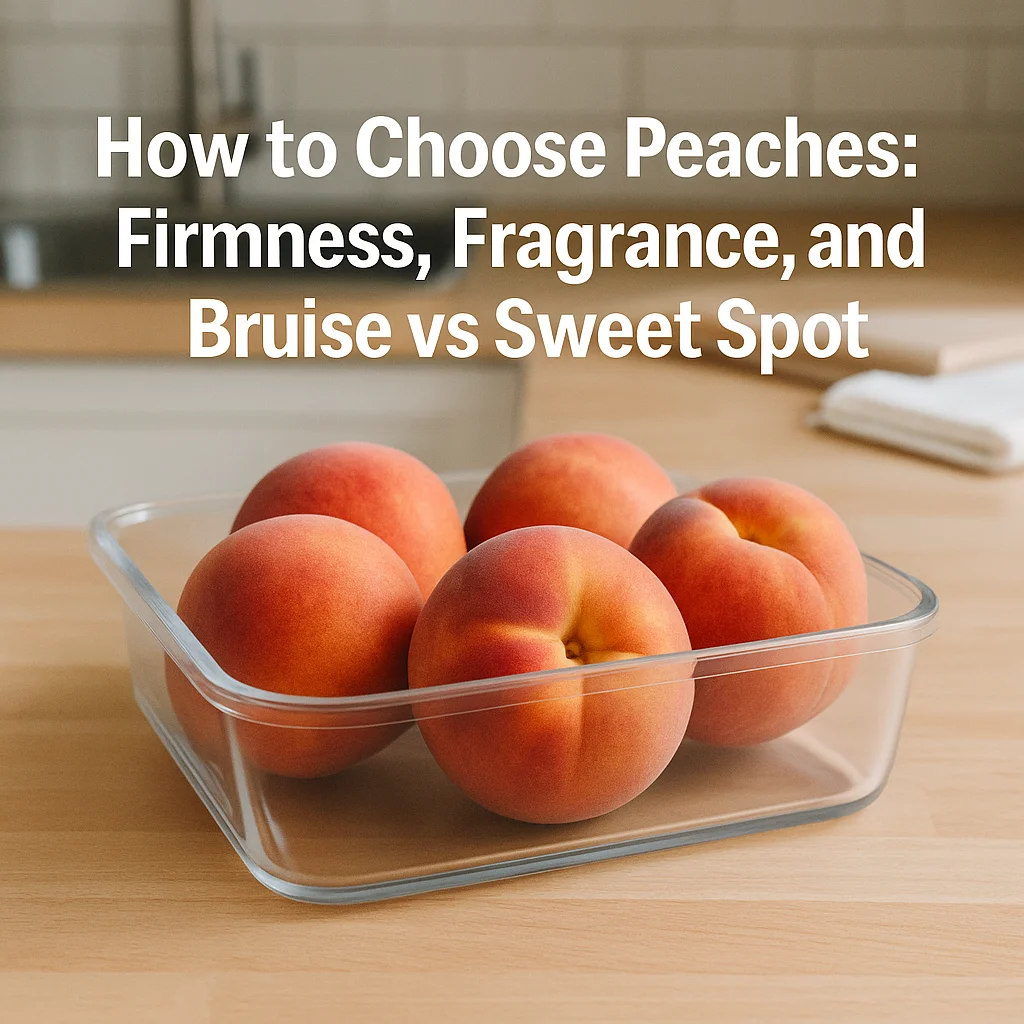
Fast Rules for Picking Perfect Peaches
- Feel for a gentle firmness that might slightly give, but doesn’t mush.
- Smell the peach—it should have a fragrant, sweet aroma.
- Look for vibrant, colored skin without any green tinge.
- Avoid peaches that are rock-hard; they might not ripen properly.
- Check for visible bruises; soft spots are not sweet spots.
- Slight “give” under a gentle squeeze indicates ripeness.
- Uniform size promotes even ripening.
- Choose peaches stored in ventilated crates or shelves, not sealed in bags.
Buying Checklist: Picking Good Peaches at the Store
Choosing the right peaches can make the difference between a joyous bite and a disappointing one. Here’s a simple checklist to help you select great peaches at the market:
- Color: Look for deep hues of yellow or gold. A touch of red is fine, but beware of all green.
- Fragrance: Take a sniff. A sweet, peachy aroma signals ripeness.
- Firmness: Gently squeeze. Avoid hard peaches or those excessively soft.
- Surface: Check for smooth skin without blemishes or mold.
- Weight: Heftiness indicates juiciness.
- Shape: Choose evenly shaped peaches to ensure even ripening.
The Real Fix: Step-by-Step Solution
Our goal is to ensure you select, store, and enjoy peaches at their peak. By following these steps, you can prevent spoilage and enjoy peaches' natural sweetness.
- Inspect Before Buying: Check firmness, fragrance, and color. These are indicators of ripeness and quality.
- Separate Overripe Peaches: At home, keep riper peaches separate as they produce more ethylene gas and speed up ripening of adjacent fruits.
- Refrigerate Strategically: If you won’t consume them immediately, place ripe peaches in the fridge to slow down further ripening. This works by reducing enzymatic activity.
- Use a Vented Container: To prevent moisture buildup and mold, store peaches in a vented container that allows for air circulation.
- Line with Paper Towels: Line the container with paper towels to absorb excess moisture, keeping peaches fresh.
- Mind the Drawer Setting: Use a low-humidity crisper drawer to maintain the right environment, avoiding dehydration.
- If Unripe: To ripen unripe peaches, store them at room temperature away from direct sunlight until they’re ready.
- If Too Soft: Consume immediately or freeze for later use, as softness signals over-ripeness.
- If Condensation Appears: Check fridge temperature and ensure ventilated storage.
- If They’re Moldy: Remove and discard all spoiled fruits to prevent spreading, and check storage conditions.
- If Too Dry: Move to a less dry area of the fridge and consider using a perforated bag.
- If Peaches are Green: Give them time to ripen at room temperature.
15–20 Minute Weekly Prep Routine
To keep your peach situation under control with minimal effort, try this weekly routine:
- Inspect All Peaches: Take a few minutes to inspect each peach for firmness and any changes.
- Sort Peaches into Stages: Separate ripe from unripe to track their progress.
- Re-organize Storage: Place riper peaches in the fridge, ensuring they are in a vented container lined with paper towels.
- Check for Rot or Mold: Remove any signs of spoilage to prevent further waste.
If I only had 2 minutes
- Quickly sort ripe from unripe peaches.
- Transfer ripe peaches to the fridge.
- Spot check for mold.
If your fridge is weird: Adjust settings if things dry out too fast or if the back wall freezes items. Experiment with different shelf levels.
Common Mistakes
- Buying Too Hard: Leads to unripe peaches that may not ripen properly. Check for slight give.
- Ignoring Fragrance: Risk of bland fruit. Only select fragrant peaches.
- Storing in Plastic: Traps moisture and fosters mold. Use vented storage instead.
- Leaving Out Overripe Peaches: Quick spoilage and spreads to others. Refrigerate or consume quickly.
- Ignoring the Ethylene Effect: Leads to uneven ripening. Separate ripe fruits.
- Washing Too Early: Water encourages rot and mold. Rinse right before use.
- Assuming All Peaches are the Same: Different varietals may have different ripening times and firmness. Know what you’re getting.
- Failing to Plan for Use: Overripe waste. Plan recipes or freezing options.
- Refrigerating Unripe Peaches: Stops ripening process. Keep at room temperature until ripe.
Food Safety Notes
Always rinse peaches with cool water just before you plan to use them to remove any residues or bacteria. If you spot mold or large bruises, it's safer to discard the fruit to avoid potential health risks. When in doubt, throw it out.
Quick Table
| Produce | Best Storage | What to Avoid | Typical Problem | Quick Fix |
|---|---|---|---|---|
| Peaches | Vented container in the fridge | Plastic bags, extreme cold | Softness, mold | Refrigerate ripe ones, consume quickly |
FAQ
- How do I know when my peaches are ripe? A slight give when gently pressed and a strong peachy aroma signal ripeness.
- Can I eat peaches with bruises? Small bruises are okay if cut away, but large soft spots might lead to spoilage.
- What is the best way to store peaches? Keep unripe peaches at room temperature and move ripe ones to a vented container in the fridge.
- How can I speed up ripening? Place peaches in a paper bag at room temperature.
- Why should I avoid green peaches? They are unripe and might not sweeten if picked too early.
- What do I do if my peaches get too soft? Eat immediately, or bake or freeze them to prevent waste.
- Is it safe to refrigerate peaches? Yes, once ripe, refrigeration helps prolong their lifespan.
- How do I prevent mold on peaches? Ensure ventilation and remove any spoiled fruits to deter mold spread.
Closing
- Always choose peaches by their aroma and firmness to get the best quality.
- Store them properly to maintain freshness and prevent waste.
- Use any overripe peaches immediately to maximize your investment.
Enjoy the sweet taste of perfectly ripe peaches and save money by treating them right. Happy peach picking!
For more guides like this, check out more detailed posts here or learn the art of selecting and preserving your produce.