How to Choose Onions: Firmness, Neck Check, and Skin Quality
Why Onions Go Bad: A Common Kitchen Frustration
Ever reach into your pantry only to find your onions soft, moldy, or sprouting? It's a common kitchen woe that frustrates many home cooks. But here's the real issue: improper selection can lead to faster spoilage. Choosing the right onions from the start is crucial to preventing waste and disappointment.
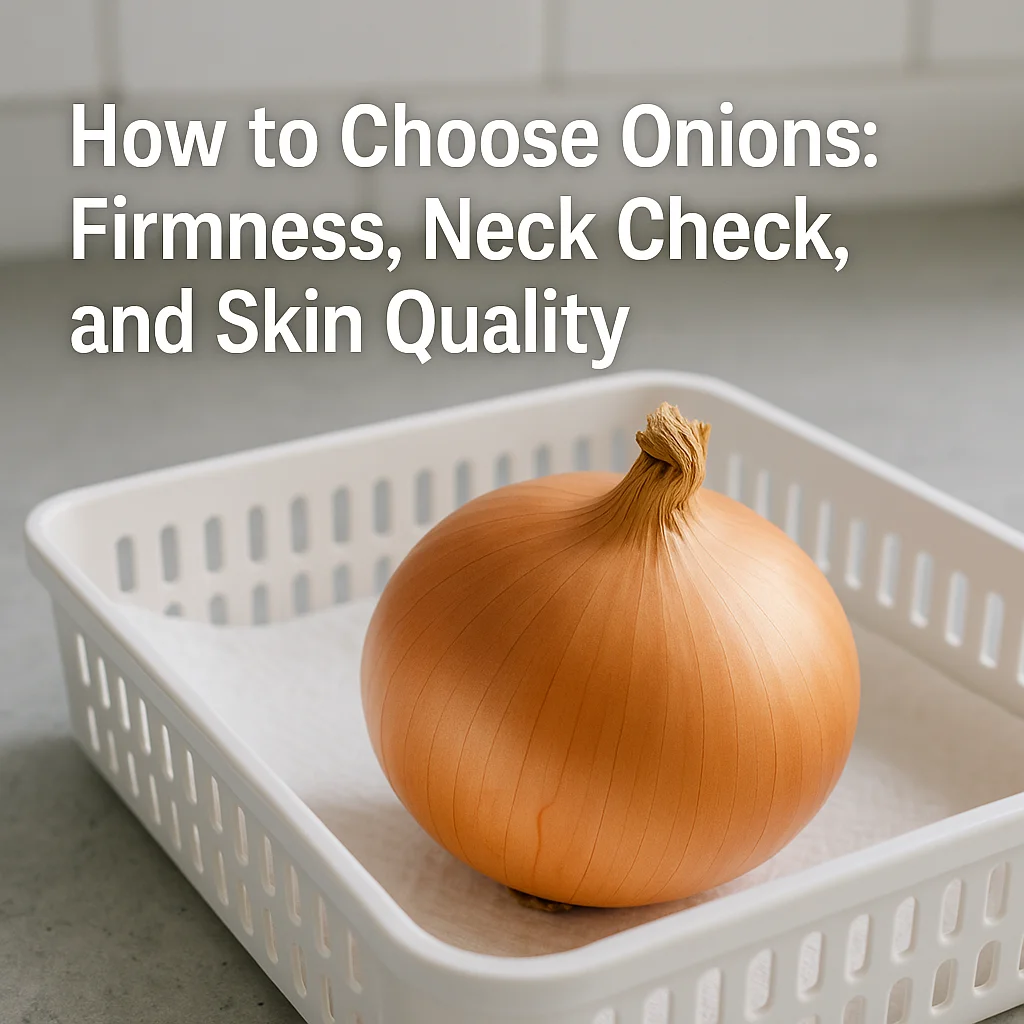
Quick Rules for Picking Onions
- Firmness is key: A fresh onion should feel hard and not squishy.
- Ensure the neck is dry and tight: Moist or loose necks indicate aging.
- Look for even, papery skin: Avoid onions with broken or missing skin.
- Check for uniform color: Any discoloration may signal rot or disease.
- Avoid sprouting onions: Sprouts mean the onion is old and deteriorating.
- Smell the onion: A fresh onion has a subtle aroma, not pungent.
- Feel the weight: Heavier onions indicate freshness and moisture retention.
- Avoid onions with visible mold or soft spots.
- Store separated from potatoes: This prevents ethylene gas from speeding up deterioration.
Buying Checklist: Choose Like a Pro
When you're next in the store, here's what to keep an eye, or rather a hand, on when selecting onions:
- Feel the Onion: Pick it up and gently squeeze; the perfect onion is firm throughout.
- Inspect the Neck: A dry, sealed neck prevents moisture entry, which leads to rot.
- Check the Skin: Smooth and papery skin protects the layers inside.
- Avoid Greens: If you see green sprouts, that onion is trying to plant itself.
- Be Weight-Conscious: Fresh onions should feel heavy, which means more juice and less chance of spoilage.
The Real Fix: Step-by-Step Solution
Goal: Store onions in a cool, dry place to slow spoilage and maintain firmness.
- Choose a well-venilated storage area, like a pantry or cellar. This space should remain consistently cool.
- Place onions in a mesh bag or a basket—not a plastic bag—to allow air circulation, preventing moisture buildup and mold.
- Keep onions away from direct sunlight, which can cause temperature fluctuations, leading to condensation within onion layers.
- Store onions away from potatoes. Potatoes release ethylene gas, which speeds up onion aging.
- Use paper towels to line storage baskets to absorb excess moisture and minimize mold risk.
- Periodically check stored onions for firmness. A soggy spot may mean rot, so use that onion soon.
- If you spot sprouting, accelerate usage or cut and freeze for future cooking.
- For cut onions, use airtight containers in the fridge. This reduces air exposure and delays browning and drying.
- Set fridge crisper drawers to high humidity for cut onions to prevent dehydration.
- Store unripe onions at room temperature to facilitate ripening; once peeled or cut, refrigerate.
- In breathable containers, whole onions will last longer without becoming mushy.
- If onions smell musty → Increase air circulation or reduce storage batch size.
- If onion layers separate easily → It may be overly ripe; prioritize its use.
- If condensation inside container → Reduce humidity or change storage location.
- If skin appears slippery or slimy → Address potential mold; inspect nearby onions.
- If weights feel light despite ripeness → Might be drying out; use promptly.
- If sprouting despite storage → Harvest some onion greens; eat or compost quickly.
- If fridge causes soft spots → Move away from the back wall or mild the setting.
- If onions are particularly small → Check temp; they might be freezing.
15–20 Minute Weekly Prep Routine
- Gather all onions; check each bulb for softness, sprouting or mold.
- Remove any compromised onions for prompt usage.
- Clean remaining onions; wipe dirt and loose skin lightly.
- Align them in storing basket with space in between to ensure air flow.
- Place basket back in the pantry, checking that it remains cool and dry.
- If supermarkets offer onions at weight discounts, pre-slice and freeze extras.
If you only had 2 minutes: Grab onions, inspect five in quick checks (firm, skin intact), set back in basket and on counter.
If your fridge is weird: If too dry, stick cut onions into a partially open container to keep enough moisture; if humid, don't wrap tight so more breathability; too cold and backing is crusty, set onions on middle shelf.
Common Mistakes with Onions
- Storing in plastic bags → Encourages moisture and mold → Use breathable mesh instead.
- Leaving in direct sunlight → Hastens spoilage → Store in cool, dark places.
- Placing next to potatoes → Ethylene from potatoes quickens aging → Keep them separated.
- Ignoring minor mold → Potential cross-contamination → Isolate or discard.
- Leaving cut onions on countertop → Dries them out → Store in fridge immediately.
- Not rotating stock → Older onions might spoil; freshness goes unnoticed → Periodically check and rotate.
- Freezing whole onions → Ineffective as texture ruins quickly → Slice, store in resealable bags.
- Washing onions pre-storage → Initiates rotting → Only wash before use.
- Throwing away slightly soft onions → Miss chance for roasting or soups → Prep as cooked components instead.
- Ignoring green onion offshoots → Fails to utilize new growth → Trim into dish garnishes.
Food Safety Notes
- Wash onions just before use to eliminate impurities.
- Cut onions should be used within a few days for health safety, refrigerated and sealed.
- Discard any onion parts with visible mold or foul scents.
Quick Table: Onion Storage Made Simple
| Produce | Best storage | What to avoid | Typical problem | Quick fix |
|---|---|---|---|---|
| Onion | Cool, dry pantry | Plastic bags, sunlight | Soft spots/mold | Increase ventilation, move location |
FAQ: Choosing and Storing Onions
- What is the best time to buy fresh onions? Early to mid-summer after harvest for varieties that are stored through months.
- How can I tell if an onion has gone bad? It will be soft, sprouting, or have patches of mold or a strong unpleasant smell.
- Should onions be washed before storing? No, washing them may initiate rotting; wash only right before preparation.
- What’s the best way to store cut onions? Airtight containers, in the fridge, for reduced air exposure.
- How to stop onions from making you cry? Chill them for 15 minutes beforehand, which slows enzyme release.
- Are green sprouts on my onions edible? Yes, they are safe to eat; either discard or chop them as garnish.
- What to do if my onions begin rotting? Remove the affected onion, and inspect others for damage.
- How long do onions last in storage? In a cool pantry, they can last weeks to months depending on freshness and storage conditions.
- Is it bad to store onions in the fridge? Whole onions less optimal; refrigeration accelerates softening. Only refrigerate once cut.
- Do onions absorb bad smells in storage? Yes, keep away from overly fragrant items to prevent flavor contamination.
Final Thoughts
- Choose wisely at the store: Firm and weighty are your best indicators of freshness.
- Consistent climate control: Store in a space avoiding moisture, sunlight and ethylene exposure.
- Regular use and rotation: Regularly check and consume the older bunches first.
With these tips and checks, your onions will be fresher and last longer, providing delicious taste in your meals. Feel free to explore more guides by visiting our complete post list or dive into detailed tips about choosing and prepping produce on our site. Happy cooking!