How to Choose Mushrooms: Cap Shape, Gills, and Sliminess Warning Signs
Why Your Mushrooms Go Bad Quickly
We've all opened the fridge, ready for a delicious mushroom dish, only to find a slimy mess instead. The culprit? Often, it's poor selection and storage habits that lead to excess moisture and quick deterioration.
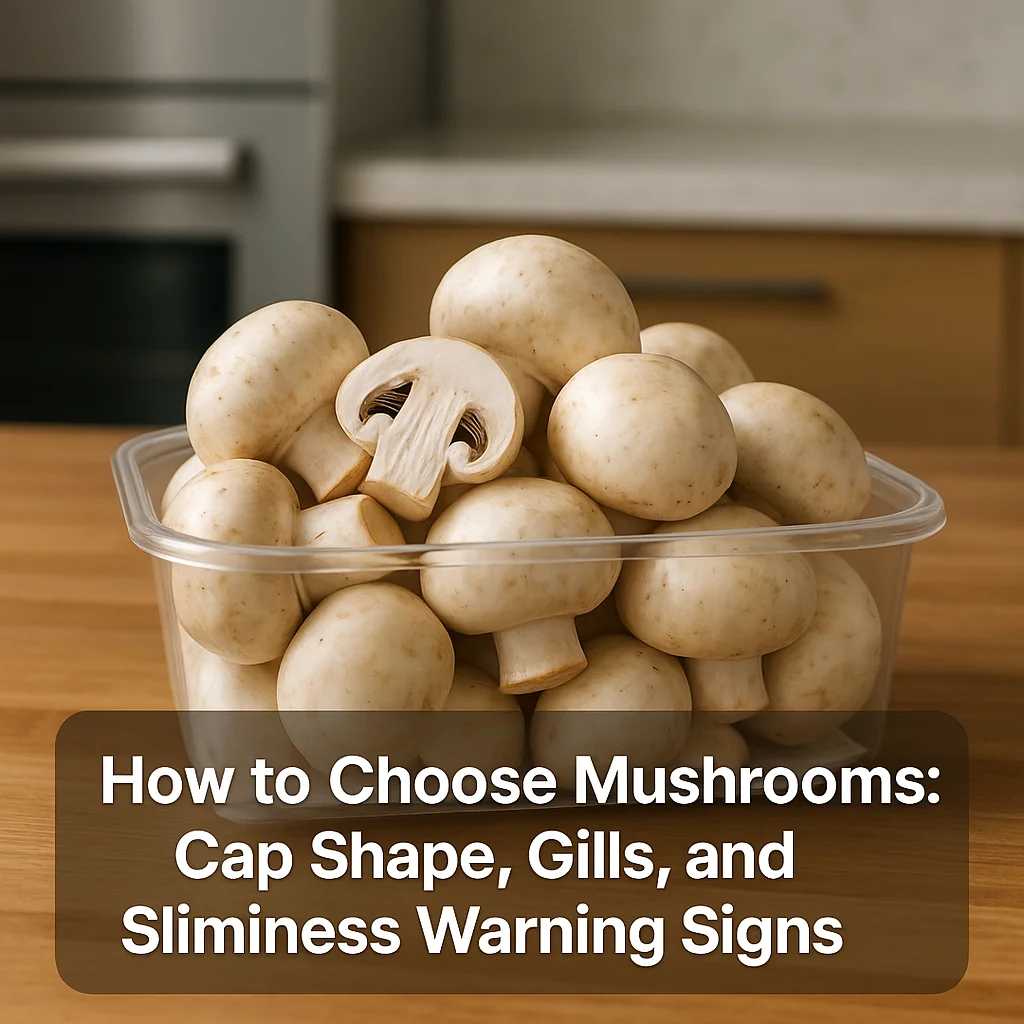
Fast Rules for Mushroom Success
- Choose mushrooms with firm, intact caps.
- Avoid any with dark, shriveled gills.
- Store mushrooms with paper towels to absorb moisture.
- Keep mushrooms in a vented container in the fridge.
- Don’t wash mushrooms until just before use to prevent sliminess.
- Check mushrooms every few days for freshness.
- Discard any mushrooms that have become slimy.
- Use older mushrooms in cooked dishes first.
- Maintain a consistent fridge temperature to avoid condensation.
- Separate mushrooms from ethylene-producing fruits like apples.
Buying Checklist: Choosing Fresh Mushrooms at the Store
When at the store, selecting the right mushrooms can make all the difference in shelf life and usability.
- Firm Caps: Choose mushrooms with firm, unblemished caps. Avoid those with bruises or spots.
- Look Underneath: Check the gills. They should be light in color and not soggy.
- No Sliminess: The caps should be dry, not sticky or slimy.
- Even Color: Opt for mushrooms with a consistent color. Avoid those with darkened spots.
- Smell: Fresh mushrooms should have a neutral, earthy scent. A sour or unpleasant smell indicates spoilage.
The Real Fix: Step-by-Step Solution for Storing Mushrooms
The goal in storing mushrooms is to keep them dry but not dehydrated, preventing excess moisture which speeds up spoilage.
- Check Mushrooms: Before storing, inspect for firmness and dryness. Remove any that feel slimy.
- Paper Towel Wrap: Wrap a few layers of paper towels around the loose mushrooms. This absorbs excess moisture.
- Vented Container: Place wrapped mushrooms in a vented container to allow airflow and prevent condensation.
- Fridge Placement: Store in the middle fridge section where temperature is stable.
- Away from Ethylene: Do not place near fruits like apples or bananas, which emit ethylene gas that accelerates spoilage.
- Regular Checks: Every three days, inspect the paper towels. Replace if damp and check for any slimy mushrooms.
- Cook Older Mushrooms: Prioritize using older mushrooms by cooking them to enhance flavors and mask slight aging.
- Maintain Fridge Temp: Keep your fridge between 32-36°F to prevent condensation.
If your storage routine isn't working, here’s a quick troubleshooting guide:
- If mushrooms get slimy → Increase ventilation and check fridge temp.
- If they dry out → Use fewer paper towels and a more enclosed container.
- If they brown quickly → Ensure they're not near ethylene-producing fruits.
- If they smell musty → Ensure the fridge is clean and dry inside.
- If towels get wet → Increase fridge air circulation, replace towels more often.
- If mushrooms shrivel → Lower the humidity by reducing towel layers.
- If condensation occurs → Adjust fridge temp settings to be consistent.
- If fridge smells → Deep clean and consider baking soda to absorb odors.
15–20 Minute Weekly Prep Routine for Mushrooms
- Start by checking all mushrooms in your fridge, removing any that are questionable.
- Wrap fresh mushrooms in paper towels and place them in a vented container.
- Store them in a consistent temperature zone in the fridge.
- Set aside any that need to be cooked soon and meal plan around those.
- Note which mushrooms are nearing end of life for priorities.
- Consider making a mushroom stock with stems and near-expiry mushrooms.
- Organize your fridge for proper airflow and check for ethylene exposure.
- Replace any damp or saturated towels to ensure freshness.
- Check the fridge thermometer to prevent temperature swings.
If I only had 2 minutes:
- Quickly inspect and remove any obviously slimy mushrooms.
- Replace damp paper towels wrapped around mushrooms.
- Ensure mushroom container is properly vented but not uncovered.
If your fridge is weird (too dry / too humid / freezing back wall):
Fridges vary, so adjust storage based on your unit's quirks. Use additional moisture control methods when needed.
Common Mushroom Mistakes to Avoid
- Buying moist mushrooms → Spoils quickly → Choose dry and firm ones.
- Storing in plastic → Traps moisture → Use vented containers with towels.
- Placing near fruits → Ethylene exposure → Store separately in the fridge.
- Ignoring them for days → Accumulates moisture → Regularly check and rotate.
- Using without inspection → Risk of spoilage → Always inspect before using.
- Washing too early → Makes them soggy → Wash right before cooking.
- Frequent fridge openings → Temperature swings → Keep to central and stable zones.
- Not using paper towels → Moisture buildup → Wrap to absorb excess without dehydration.
- Skipping fridge thermometer checks → Unstable temps → Regular check to ensure right settings.
- Overcrowding container → Restricts airflow → Allow space between mushrooms.
Food Safety Notes: When to Wash & When to Toss
Wash mushrooms only immediately before use to prevent premature spoiling. If mushrooms are slimy or have an off smell, it's safest to discard them rather than risk consumption.
Quick Storage Table
| Produce | Best Storage | What to Avoid | Typical Problem | Quick Fix |
|---|---|---|---|---|
| Mushrooms | Vented container with paper towels in consistent fridge temperature | Plastic bags, moisture-rich areas | Sliminess | Replace towels, keep ventilated |
Frequently Asked Questions
- How can I tell if mushrooms are fresh? Look for firm caps, light gills, and a dry feel.
- Why are my stored mushrooms slimy? Likely due to trapped moisture; ensure ventilation and use paper towels.
- Is it okay to eat mushrooms if they're slightly discolored? Slight discoloration can be okay, but discard if they're slimy or smelly.
- What's the best way to store mushrooms? In a vented container with paper towels in a consistent fridge temperature.
- Why shouldn't I wash mushrooms right after buying? Washing prematurely introduces moisture, leading to sliminess.
- How often should I check mushrooms in the fridge? Every two to three days for freshness and towel moisture.
- Can I store mushrooms in a sealed plastic bag? No, it traps moisture. Use vented containers instead.
- Do mushrooms need to be refrigerated? Yes, to extend their freshness, store in the fridge.
- Should I remove mushroom stems before storing? It's not necessary, but stems can be harder and spoil slower.
- Can I freeze mushrooms? Yes, but it changes texture. Consider cooking first before freezing.
Closing Thoughts
- Choose mushrooms with dry, firm caps.
- Store them in a vented container with paper towels for maximum freshness.
- Avoid ethylene by storing them separately from fruits.
Keep these practices in mind, and you’ll enjoy fresh mushrooms with less waste and fewer slimy surprises!
Check out more guides on how to manage your produce effectively by visiting our comprehensive archive or get more tips on choosing and prepping produce.