How to Choose Broccoli: Tight Florets, Color, and Freshness Signs
Why Waiting Until Dinner Could Mean Wasted Broccoli
Imagine this: you're ready to prepare a healthy dinner, only to pull out a bag of broccoli that's limp, yellowing, and unappealing. It's a common frustration because most people don't know how to choose and store it properly. The real culprit? Simply ignorance about freshness indicators and storage techniques.
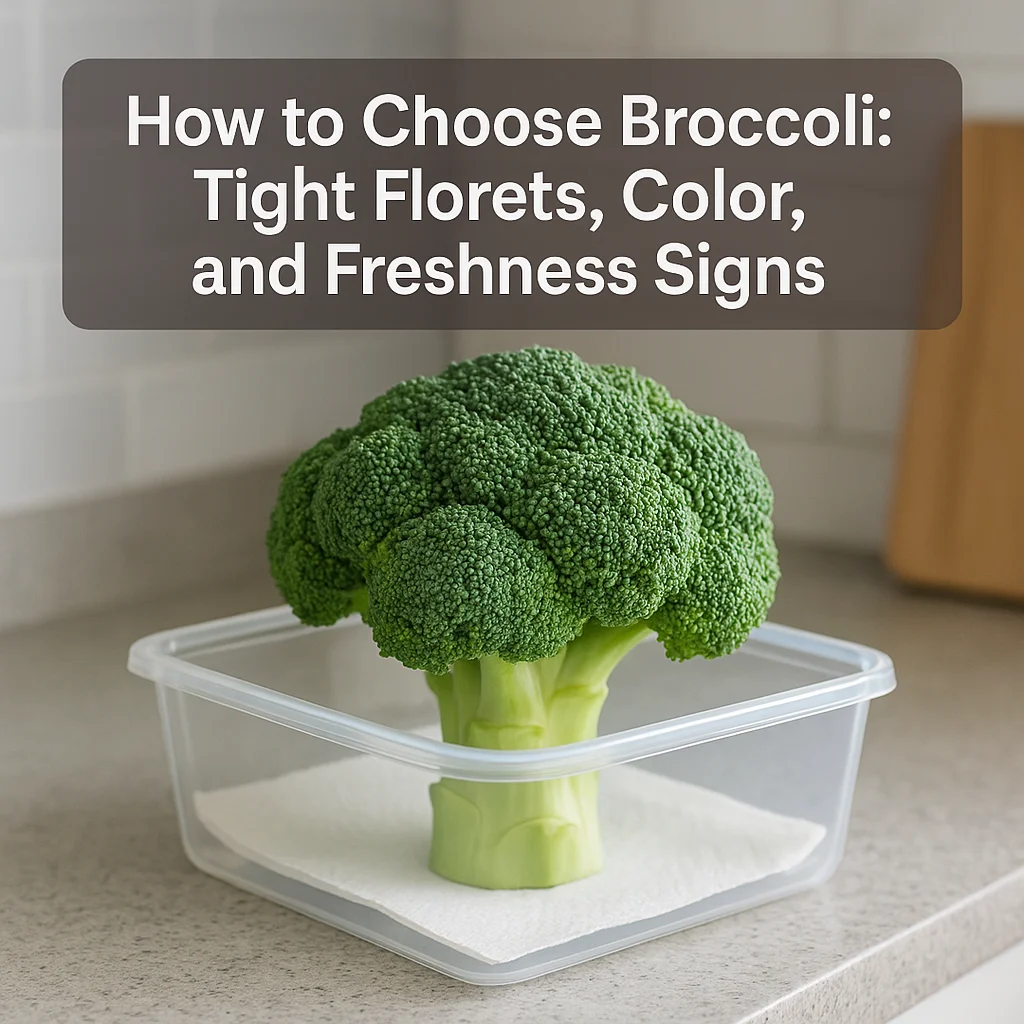
Fast Rules for Picking the Perfect Broccoli
- Choose broccoli with tight, dense florets.
- Look for a uniform deep green color.
- Avoid any yellowing or flowering florets.
- The stalk should be firm, not rubbery.
- Check for a fresh, mild cabbage-like smell.
- Avoid broccoli with mold or excessive moisture.
- Choose broccoli that feels heavy for its size.
- Feel the florets; they should be slightly resistant to pressure.
- Inspect for small insects or larvae—especially underneath the florets.
- Shop early in the day when produce is freshest.
Buying Checklist: What to Look For and What to Avoid
When buying broccoli, focus on finding the freshest heads to ensure a longer shelf life and better flavor. Here's your go-to checklist:
- Look for: Tight, compact florets with a dark green color.
- Avoid: Broccoli with loose, opening florets or a yellow tint.
- Touch test: The stalk should be firm and not rubbery.
- Scent check: Sniff for a fresh, earthy smell; avoid strong or sour odors.
- Weight: A heavier stalk means higher water content and freshness.
The Real Fix: Step-by-Step Solution
The goal for storing broccoli: keep it dry but not dehydrated.
- Preparation: Do not wash before storing to avoid adding moisture, which can speed spoilage.
- Storage location: Store broccoli in the crisper drawer of your refrigerator. This helps control humidity levels.
- Container choice: Use a loosely sealed plastic bag to allow some airflow and prevent moisture buildup.
- Paper towel role: Place a dry paper towel in the bag to absorb any excess moisture, preventing decay.
- Fridge placement: Avoid placing near ethylene-producing fruits like apples; ethylene speeds up broccoli aging.
- Visual check: Inspect for yellowing guns (early ripening) every few days and use promptly.
- Airing out: Leave the bag slightly open at top to prevent condensation from building inside, which leads to rot.
- Rotation: Use older heads first. First in, first out is a good practice to maintain freshness.
- Stay cool: Consistent cold temperature is key. Avoid placing in the fridge door where the temperature fluctuates.
- Check moisture: Replace the paper towel if saturated or showing signs of mold.
- If broccoli feels mushy, it's past its prime—use immediately or compost.
- If dark spots appear, trim them off and use the rest quickly.
- If broccoli smells off or sour, it's best to discard.
- If yellow florets appear, trim and cook immediately.
- If bag condensation builds up, replace the paper towel to absorb excess moisture.
- If florets are opening, cook to use quickly as it's reaching overripe stage.
15–20 Minute Weekly Prep Routine
- Inspect: Quickly check all broccoli heads for signs of aging or decay.
- Trim: Cut off any thick stems or rough leaves.
- Separate: Break into smaller florets for easy use and to check underneath for insects.
- Store: Place in a properly sealed container with a paper towel, ensuring maximum freshness.
- Note: If your fridge is weird (too dry), double wrap with a towel; if it freezes items against the back wall, store upfront.
If I only had 2 minutes
- Quick inspection and removal of yellowing florets.
- Place in a new bag with a paper towel.
Common Mistakes and Their Fixes
Here's how to avoid common broccoli storage mistakes:
- Storing near apples → accelerates aging → keep separate.
- Not using a paper towel → excess moisture → faster mold → replace regularly.
- Washing before storing → encourages spoilage → wash only before cooking.
- Keeping in an airtight container → no ventilation → risk of mushiness → use a breathable bag.
- Ignoring temperature swings → condensation → place away from fridge door.
- Skipping inspections → unnoticed decay → regular check-ups and trimming.
- Rough handling → bruising → handle with care to avoid damage.
- Leaving florets in water → nutrient leaching → use a damp cloth wrap for short term.
- Overtrimming immediately → reduced longevity → only trim before use.
- Low fridge temperature → freezing damage → keep broccoli away from the back of the fridge.
Food Safety Notes
It’s best to wash broccoli just before using it to avoid encouraging mold growth. If you notice sliminess, a strong odor, or visible mold, it's safer to toss it out as these are signs of spoilage.
Quick Storage Table
| Produce | Best Storage | What to Avoid | Typical Problem | Quick Fix |
|---|---|---|---|---|
| Broccoli | Fridge, loose bag, paper towel | Airtight containers | Moisture buildup | Add paper towel |
FAQ
- Why are tight florets important? They indicate freshness and better shelf life.
- Is yellow broccoli safe to eat? It’s safe but less tasty; use it quickly.
- How do I know if broccoli is too old? Check for mushiness and bad odor.
- Can I store broccoli at room temperature? Best stored cold to minimize aging.
- Should broccoli be washed before storing? No, wash before using to prevent mold.
- Why does my broccoli smell weird? It could be spoilage; if sour, discard.
- Can I freeze fresh broccoli? Yes, but blanch before freezing for better texture.
- What causes broccoli to get moldy? Excess moisture and lack of airflow.
- How to keep broccoli fresh after cutting? Store in a closed container with a paper towel.
Closing Thoughts
- Store broccoli in a breathable bag with a paper towel.
- Avoid ethylene-producing fruits like apples.
- Inspect regularly for changes and use quickly.
Keep these three simple rules in mind, and you’ll save both your vegetables and your money. Enjoy the crispness and vibrancy every time you cook with broccoli!