How to Choose a Watermelon: Field Spot, Sound, Weight, and Shape
Watermelon Woes: Why It Happens
We've all been there: slicing into a watermelon only to find it tasteless or mushy inside. This frustration often happens due to choosing the wrong watermelon. Luckily, understanding a few simple cues like field spot, sound, weight, and shape can help you select the best watermelon every time.
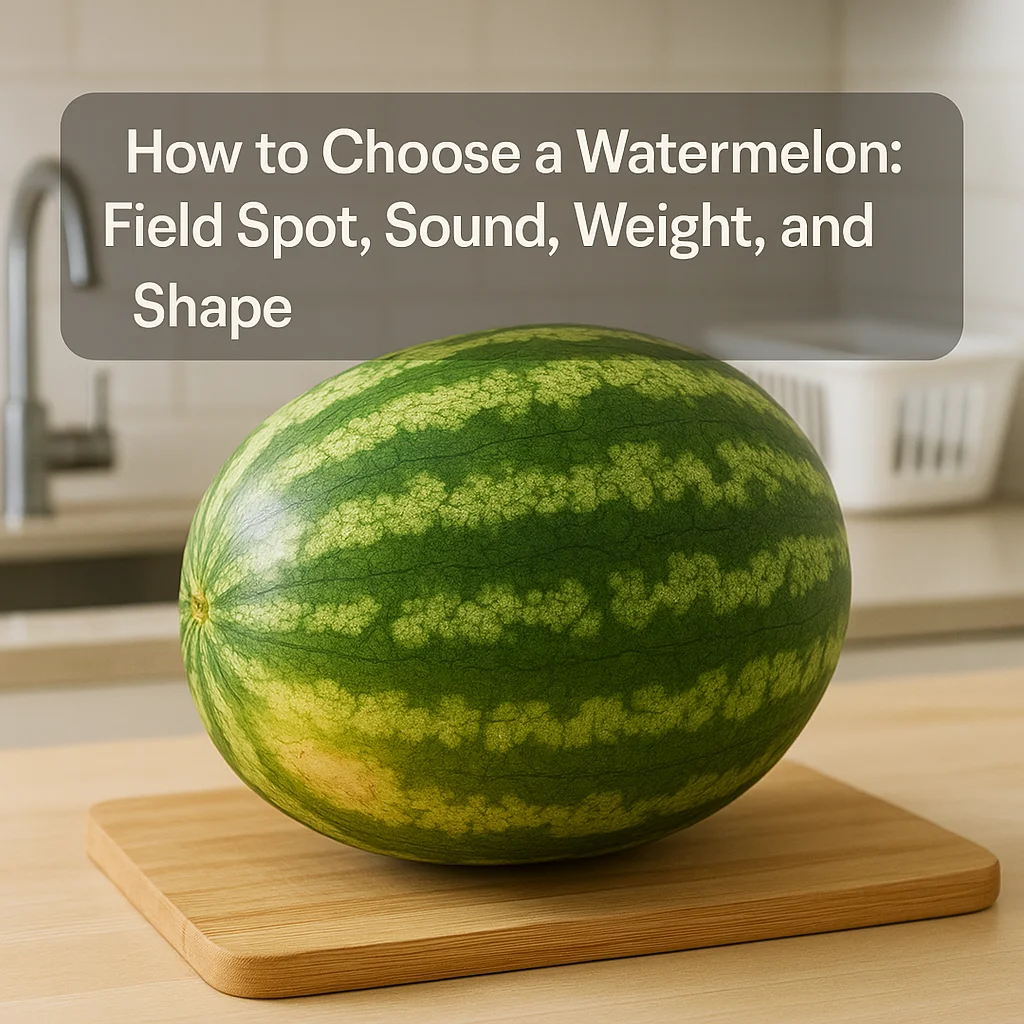
Fast Rules to Remember
- Look for a creamy yellow field spot.
- Tap it; a deep hollow sound means juicy flesh.
- Choose a symmetric, oval or round shape.
- Ensure it feels heavy for its size.
- Avoid melons with dents or irregularities.
- Shiny skin can indicate underripeness.
- Check the stem; a dry stem suggests ripeness.
Buying Checklist: What to Choose and What to Avoid
When shopping for a watermelon, ensure it has:
- A prominent, creamy-yellow field spot.
- A uniform shape, free of dents.
- A heavy feel compared to others of the same size.
- A dry, browned stem indicating maturity.
Avoid watermelons that:
- Have a shiny and glossy appearance.
- Feel light or hollow relative to their size.
- Display soft spots or blemishes.
The Real Fix: Step-by-Step Solution
Goal: Maximize freshness and flavor by choosing wisely and storing correctly.
- Field Spot: Look for a large, creamy-yellow field spot. This indicates it's ripe and sat in the field long enough.
- Sound Test: Tap the watermelon. A deep, hollow sound suggests juicy flesh inside.
- Weight Check: Pick it up. Heaviness compared to size suggests good water content, and thus, juiciness.
- Shape Assessment: Choose a symmetrical, round or oval shape. Uniformity indicates even ripening.
- Texture Touch: Ensure the skin is dull and slightly rough. Shiny skin indicates underripeness.
- Stem Sign: Look for a dry, brown stem. This suggests the watermelon is mature.
- Check for blemishes: Inspect carefully for any cuts or bruises. Surface damage can lead to spoilage.
- Inspect Around: Rotate the watermelon to confirm uniformity on all sides.
- If the sound is dull, the inside might be mushy.
- If the field spot is white, it might be underripe.
- If it feels light, it could be dehydrated inside.
- If the skin is shiny, it might not be ready yet.
- If the stem is green, it's likely still growing.
15–20 Minute Weekly Prep Routine
- Unwrap the watermelon and inspect for freshness using the methods above.
- Store it in a cool, dark place if uncut, or refrigerate once cut.
- Place cut pieces in an airtight container to prevent moisture loss.
- Use a paper towel at the bottom of the container to absorb excess moisture.
If I only had 2 minutes:
- Check for a prominent yellow field spot.
- Give it a quick tap for that deep sound.
If your fridge is weird (too dry / too humid / freezing back wall), try adjusting the drawer setting or keep containers away from the back wall.
Common Mistakes
- Choosing a shiny watermelon → underripe → seek a dull finish.
- Ignoring the field spot → underripe → look for creamy-yellow.
- Not tapping it → missing sound test → aim for a hollow sound.
- Skipping weight comparison → less juicy → pick the heavier one.
- Not checking the shape → uneven ripeness → choose symmetrical ones.
- Buying one with a green stem → still growing → find a dry stem.
- Ignoring surface damage → quicker spoilage → inspect thoroughly.
- Storing with fruits that produce ethylene → faster ripening → keep separate.
- Cutting just after washing → potential bacteria → dry well first.
Food Safety Notes
Always wash the watermelon just before cutting to reduce bacteria spread. If in doubt about its freshness, it's safer to discard it.
Quick Table
| Produce | Best storage | What to avoid | Typical problem | Quick fix |
|---|---|---|---|---|
| Watermelon | Cool place or fridge for cut pieces | Damaged skin, shiny appearance | Underripe or mushy | Check field spot and weight |
FAQ
- How to pick a good watermelon? Check field spot and sound.
- What does a hollow sound indicate? Juiciness inside.
- Should I store cut watermelon in the fridge? Yes, in an airtight container.
- How to tell if a watermelon is ripe at the store? Look for a dry stem and heavy weight.
- Can I eat underripe watermelon? Yes, but it might lack sweetness.
- Why does my watermelon have white seeds? It's normal; these are immature seeds.
- Is it safe to eat watermelon rind? Yes, but wash thoroughly.
- How long does watermelon last uncut? About 1-2 weeks in a cool place.
Closing
- Pick the heaviest watermelon for increased juiciness.
- Ensure a creamy-yellow field spot for ripeness.
- Store cut pieces in airtight containers to retain moisture.
Incorporate these tips into your watermelon picking routine, and you'll enjoy sweet, juicy slices every time. Check out our complete guide on produce selection here and more detailed buying checklist tips here.