Freezer Prep Guide: Blanching Broccoli/Spinach + What to Freeze Raw
Hook: Conquer the Frustration of Freezer Burn
If you've ever found a packet of vegetables in your freezer covered in icy crystals and devoid of flavor, you're not alone. Freezer burn happens because air exposure and enzymes break down the texture and flavor. The key to avoiding this lies in proper preparation and freezing techniques.
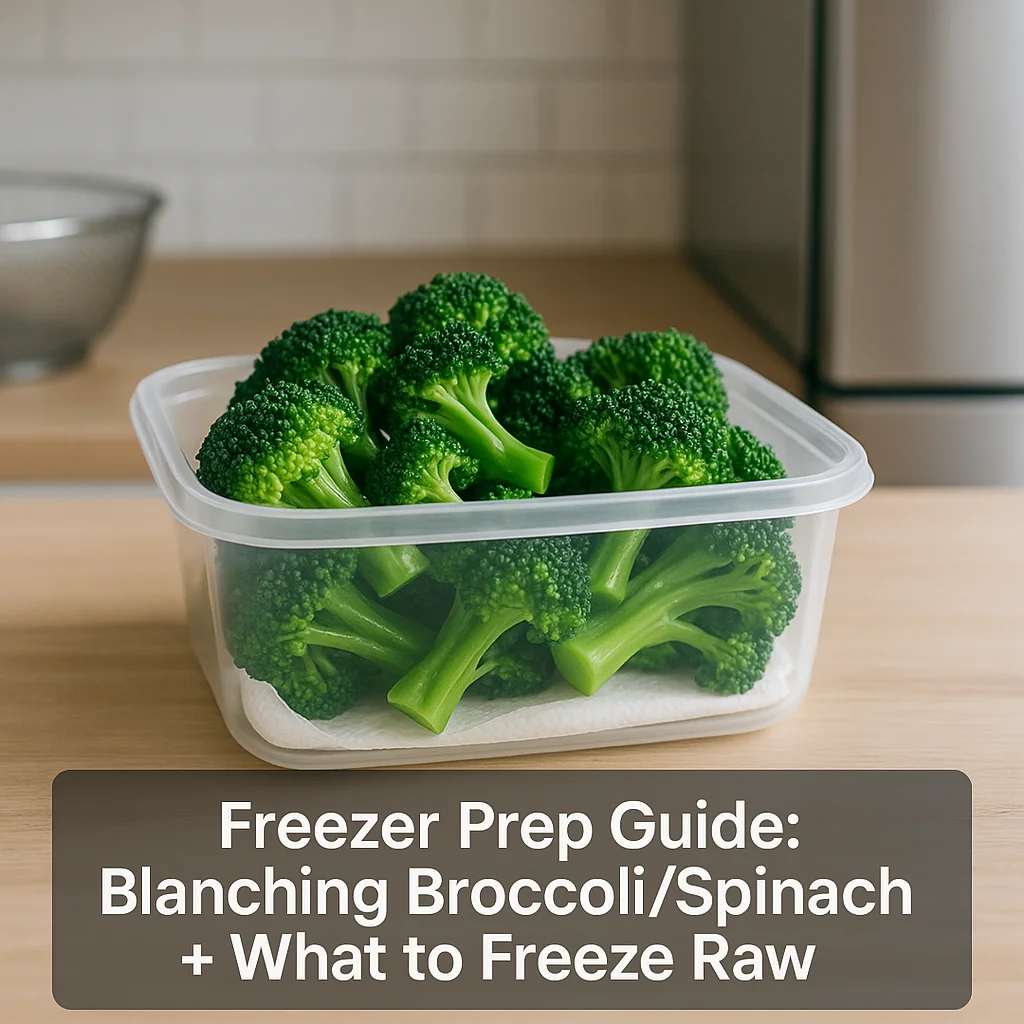
Fast Rules: Quick Tips to Freeze Success
- Always blanch broccoli and spinach before freezing.
- Cool blanched vegetables quickly to stop cooking.
- Use airtight containers or heavy-duty freezer bags.
- Label containers with date and content for easy identification.
- Avoid overstuffing bags to prevent breakage and air pockets.
- Consider vacuum-sealing for long-term storage.
- Some veggies like bell peppers can be frozen raw.
Buying Checklist: Picking the Best Produce
To maximize the quality of your frozen vegetables, start with the best fresh produce.
- Broccoli: Look for firm, tight florets with a deep green color. Avoid yellowing stalks.
- Spinach: Opt for crisp, dark green leaves with no wilting or yellowing.
- Bell Peppers: Choose firm, glossy peppers with taut skin, avoiding soft spots.
- Avoid produce stored near ethylene-producing fruits like apples and bananas, which cause premature spoilage.
The Real Fix: Step-by-Step Solution
Goal: Preserve nutrients and flavor by controlling enzyme activity and avoiding freezer burn.
- Fill a large pot with water and bring it to a rolling boil. This will start the blanching process quickly.
- Rinse broccoli and spinach under cold water to remove any dirt. Clean produce will blanch evenly.
- For broccoli, cut into uniform florets to ensure even cooking. Spinach leaves can stay whole.
- Prepare an ice bath by filling a large bowl with ice and cold water. This halts cooking instantly, preserving color and texture.
- Once water is boiling, add broccoli florets and spinach in batches. Blanch broccoli for 3 minutes and spinach for 2 minutes.
- Immediately transfer blanched vegetables to the ice bath for the same duration they were boiled. This sets their vibrant color.
- Drain vegetables thoroughly to eliminate excess moisture, which can form ice crystals.
- Spread vegetables on a baking sheet in a single layer and pat dry with paper towels. This prevents clumping during freezing.
- Place baking sheet in the freezer for 1-2 hours to flash freeze the vegetables, locking in freshness.
- Transfer frozen vegetables to airtight containers or heavy-duty freezer bags. Remove as much air as possible.
- Label containers and store in the freezer — avoid the door where temperature fluctuations can occur.
- If fridge runs too hot, keep veggies in the middle or back where it's coldest.
- If veggies have an off smell, they might be starting to spoil; check labels and dates.
- If veggies have ice crystals: Use a thicker freezer bag or airtight container.
- If broccoli is mushy: Reduce blanching time, or cool more rapidly.
- If spinach loses color: Ensure a quick transfer to ice bath.
- If veggies are bland: Use them in cooked dishes where texture loss is less noticeable.
15–20 Minute Weekly Prep Routine
Keep your freezer stocked and organized with a simple routine.
- Gather supplies: fresh produce, pots, ice, freezer bags, labels.
- Wash and sort vegetables by type for efficient processing.
- Blanch and cool in batches, starting with firmer vegetables like broccoli.
- Flash freeze on baking sheets to prevent clumping.
- Transfer to labeled bags, removing air for optimal storage.
- If I only had 2 minutes:
- Pick usable produce and rinse quickly.
- Blanch just one vegetable type.
- Ice bath, dry, and store in an emergency bag.
- If your fridge is weird, keep it calibrated. Check seals and temperature (ideally just above freezing).
Common Mistakes
- Skipping the ice bath → loss of crispness → Always ice bath immediately.
- Over-blanching → mushy texture → Stick to recommended timing.
- Freezing wet vegetables → ice crystal formation → Drain and pat dry thoroughly.
- Using thin storage bags → freezer burn → Switch to heavy-duty bags.
- Storing at the freezer door → temperature swings → Place deeper in the freezer.
- Overcrowding → uneven freezing → Lay in single layer before final storage.
- Not labeling → forgetting usage duration → Always date containers.
- Failing to remove air → more frost → Use bags with vacuum sealing if possible.
- Ignoring smell checks → eating spoiled food → If in doubt, throw it out.
- Not checking fridge seals → inconsistent freezing → Regularly inspect and maintain fridge components.
Food Safety Notes
Always wash produce before blanching to remove surface bacteria. If your vegetables smell off, have visible mold, or feel slimy after defrosting, it's safer to discard them to avoid health risks.
Quick Table
| Produce | Best storage | What to avoid | Typical problem | Quick fix |
|---|---|---|---|---|
| Broccoli | Blanched and frozen | Storing wet | Mushy texture | Reduce blanching time |
| Spinach | Blanched and frozen | Skipping ice bath | Discoloration | Immediate cooling |
| Bell Peppers | Raw, sliced, and frozen | Cutting unevenly | Uneven texture | Uniform slices |
| Carrots | Blanched and frozen | Freezer door storage | Freezer burn | Deep freezer placement |
FAQ
- Can you freeze broccoli raw? It's best to blanch it first to preserve texture and nutrients.
- What raw veggies can you freeze? Bell peppers, onions, and celery freeze well raw.
- How long can blanched veggies last in the freezer? Properly stored, they can last up to 12 months.
- Why does my frozen spinach taste weird? Improper blanching or air exposure can affect taste.
- Do I need special bags for freezing? While not mandatory, heavy-duty bags or vacuum sealing are ideal.
- What's the best way to thaw frozen vegetables? Use directly in cooking or thaw in the fridge for a gradual defrost.
- Can I refreeze vegetables? It's not recommended as it can degrade texture and flavor.
- How do I avoid ice crystals on my veggies? Ensure vegetables are dry before freezing and use airtight storage.
- Does blanching affect the nutrients? Minimal nutrient loss occurs, but it retains more than freezing raw.
- Should I salt my blanching water? You can, as it may help maintain color, but it's not necessary.
Closing
- Blanch and freeze promptly to prevent spoilage and waste.
- Invest in quality storage bags for longer-lasting fresh taste.
- Label everything for smart rotation and use.
Remember, a little preparation goes a long way in preserving your veggies. Happy storing and enjoy your tasty, waste-free meals!
Explore more tips and guides at our full post list.
For advice on the perfect buying checklist and washing techniques, check out our comprehensive guide.