Why Strawberries Get Moldy Quickly + A Simple Prevention Routine
Hook: Frustration Over Moldy Strawberries
We've all been there: you bring home a carton of fresh strawberries, only to find them moldy just a couple of days later. This common, frustrating kitchen dilemma often stems from high moisture levels, unintentional bruising, and improper storage, all of which create the perfect environment for mold growth.
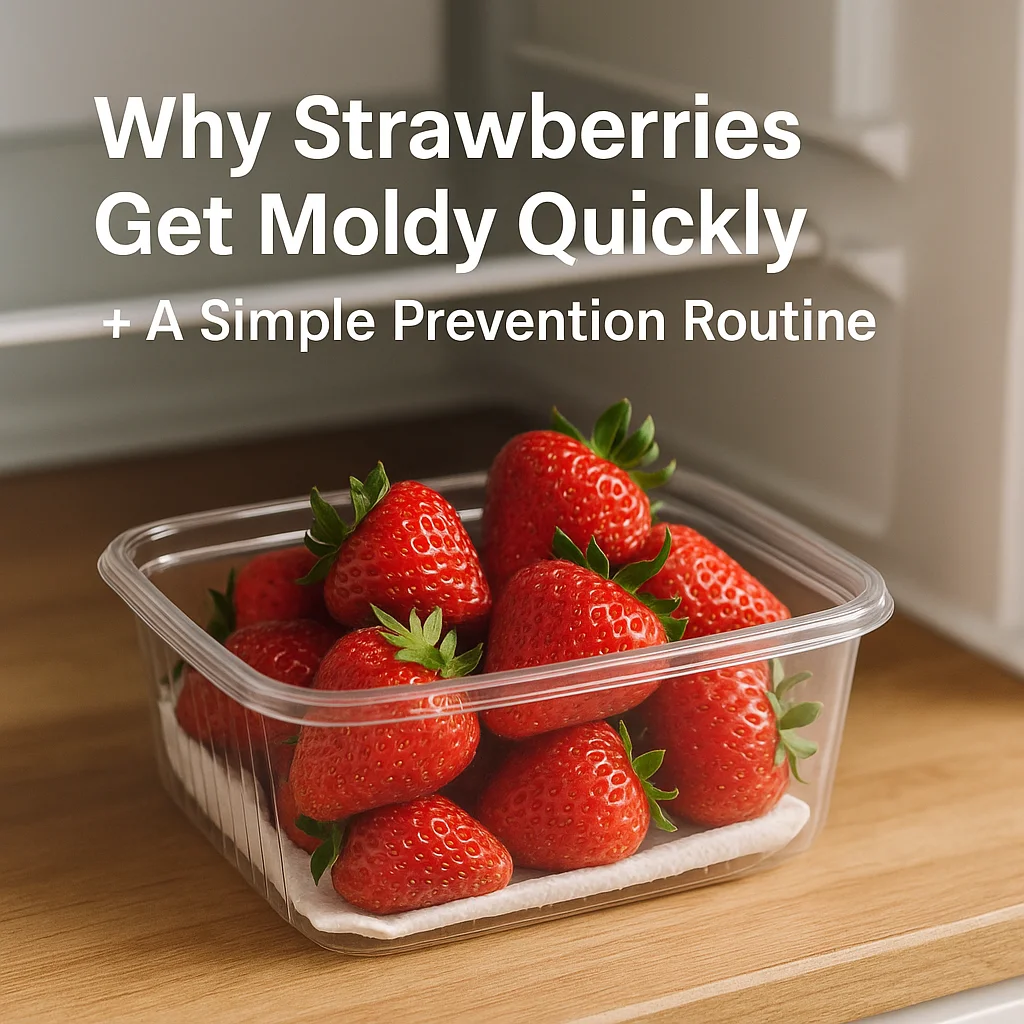
Fast Rules for Storing Strawberries
- Keep strawberries dry to prevent mold.
- Avoid washing until ready to eat.
- Store unwashed in an airtight container lined with paper towels.
- Refrigerate away from ethylene-producing fruits like apples.
- Inspect daily for spoiled berries to remove them immediately.
- Avoid temperature swings that can cause condensation inside containers.
- Buy ripe but firm strawberries for better longevity.
- Handle strawberries gently to reduce bruising.
- If in doubt, freeze excess strawberries as a backup plan.
Buying Checklist: Choose the Best Strawberries
When selecting strawberries, opt for bright red, firm berries without dull or dark spots. Avoid berries that feel mushy or show signs of molding. Check underneath the carton for hidden mold or spoilage.
The Real Fix: Step-by-Step Solution
The goal here is to keep strawberries dry, ventilated, and free from temperature swings. This slows down the growth of spoilage organisms and preserves their freshness longer.
- Inspect and discard any moldy berries immediately: Mold spreads quickly.
- Line a shallow vented container with a paper towel: This absorbs excess moisture.
- Place strawberries in a single layer: Promotes air circulation.
- Cover loosely with another paper towel: Further absorbs moisture without trapping air.
- Seal container with lid or plastic wrap if not vented: Keeps them fresh but not suffocated.
- Store in the fridge, but not in a drawer: Upper shelves are usually colder and more stable.
- Check daily for any rotten berries: Remove promptly to prevent spreading.
- If washing is necessary, dry thoroughly before storing: Wet berries mold faster.
- If berries are very ripe, consume within 2 days: Maximum flavor and texture.
- If you have unpredictable fridge humidity, consider adjusting vent settings or using silica gel packs.
If/Then troubleshooting:
- If you see moisture in the container → change paper towels as needed.
- If strawberries seem mushy → check your fridge's temperature settings.
- If mold persists → consider storing with silica gel packs for added moisture control.
- If the container has an off smell → clean and dry thoroughly before reusing.
- If strawberries aren't eaten quickly enough → make a fresh strawberry sauce and freeze.
15–20 Minute Weekly Prep Routine
- Remove strawberries from original packaging upon bringing them home.
- Inspect and discard any berries that show signs of mold or bruising.
- Prepare storage container as outlined in the step-by-step guide above.
- Store the strawberries in the fridge and perform daily checks.
- Plan meals or desserts that include strawberries if not eaten within 3-4 days.
If I only had 2 minutes:
- Quickly inspect and remove bad berries.
- Line original container with paper towel and cover loosely.
- Place container on a higher shelf in the fridge.
If your fridge is weird: Too dry? Consider adding an open bowl of water. Too humid? Use additional paper towels and change often. Freezes at the back? Store strawberries towards the front.
Common Mistakes
- Washing before storing → Increases moisture → Only wash berries before eating.
- Leaving in original packaging for long → Limits ventilation → Transfer to a breathable container.
- Ignoring moldy strawberries → Speeds up spoilage → Remove moldy ones immediately.
- Storing with ethylene producers → Accelerates aging → Separate from items like bananas and apples.
- Placing at the back of the fridge → Risk of freezing → Keep towards the front.
- Overpacking the fridge → Restricted air flow → Ensure proper circulation.
- Using a drawer without proper settings → Could damage texture → Recommended for stable temperature areas.
- Leaving moisture unchecked → Speeds mold growth → Change paper towels often.
- Going for visual appeal over function → Mold grows faster if not practical → Always prioritize function.
- Failing to plan for consumption rate → Leads to waste 💭 Plan your meals!
Food Safety Notes
Wash strawberries just before eating, not before storing, to decrease the risk of mold. If even a single strawberry shows mold, it’s safest to discard it and any directly touching it. Berries that smell fermented or have excessive mushiness should also be thrown away.
Quick Storage Table
| Produce | Best Storage | What to Avoid | Typical Problem | Quick Fix |
|---|---|---|---|---|
| Strawberries | Vented container with paper towel in fridge | Washing before storage | Mold growth | Remove mold, keep dry |
FAQ
- Why do strawberries mold so fast?
Moisture and lack of ventilation accelerate mold growth. - Should I wash strawberries right after buying?
It's best not to wash them until you're ready to eat. - Can I freeze strawberries to prevent molding?
Yes, freezing is a great way to preserve strawberries. - Do strawberries belong in the fridge?
Yes, but keep in a vented container for optimal longevity. - What causes condensation in strawberry containers?
Temperature swings cause condensation; keep consistent fridge climates. - Can I store strawberries with other fruits?
Avoid storing with ethylene producers like apples. - How long will strawberries last using this method?
Up to a week if stored properly. - Is it safe to cut off moldy parts and eat the rest?
No, it's best to discard the entire berry. - What's the best container for storing strawberries?
A shallow, vented plastic or glass container works well. - Can strawberries stay fresh without refrigeration?
They are best stored in the fridge for maximum shelf life.
Closing Thoughts
- Keep strawberries dry by removing moisture as you store them.
- Inspect and remove spoiled berries often to prevent mold spread.
- Avoid washing strawberries until just before you plan to eat them.
By following these simple steps, you'll enjoy fresher strawberries longer with far less waste—giving you more deliciousness per carton. Happy storing!
For more tips, check out our full post list.
Explore comparisons and substitutions on our dedicated page.