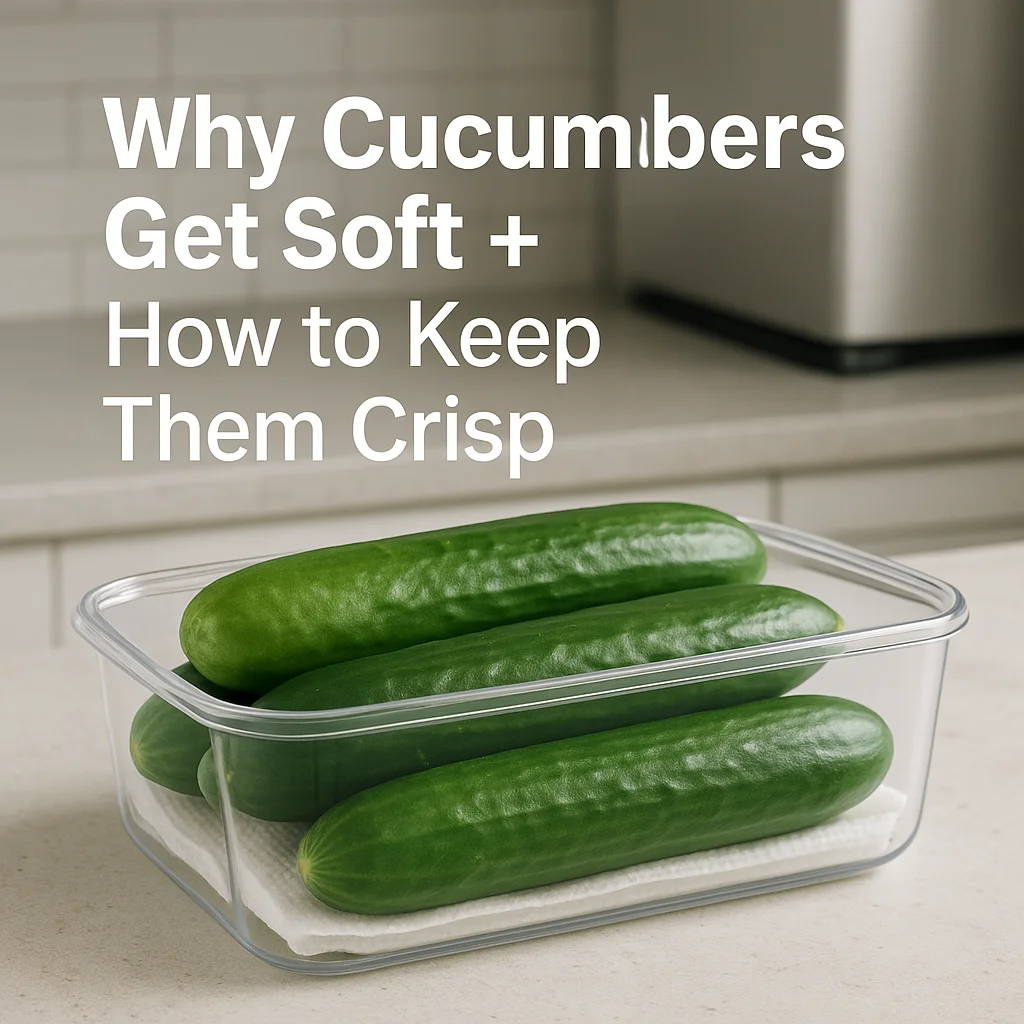
Why Cucumbers Get Soft + How to Keep Them Crisp
Frustrated with Soggy Cucumbers? You're Not Alone!
We've all been there: you buy a fresh, crisp cucumber, only to find it limp and slimy a few days later. The culprit is usually excess moisture leading to faster mold growth and softening. Temperature swings and improper storage can exacerbate the problem, leaving you with vegetables you can't use. Understanding the reasons behind this can help us make cucumbers last longer.
The Fast Rules: Keeping Cucumbers Crisp
- Store cucumbers in the fridge, but away from the coldest parts.
- Avoid sealing them in airtight bags; they need to breathe.
- Use a paper towel in storage to absorb excess moisture.
- Keep cucumbers separate from ethylene-producing fruits like bananas and apples.
- Refrigerate unripe cucumbers only for a short period.
- Check for condensation frequently and wipe it away.
- Use cucumbers within a week for optimal freshness.
- Firmness is key; a firm cucumber is a fresh cucumber.
- Avoid washing cucumbers before storage; wash just before use.
- Select cucumbers that are dark green and blemish-free.
Buying Checklist: Pick the Perfect Cucumbers
Choosing the right cucumber at the store can extend its shelf life considerably. Here's what I recommend at home:
- Color: Choose dark green cucumbers. Avoid those with yellow spots.
- Firmness: Ensure they are firm to the touch.
- Texture: A slightly bumpy skin is natural; avoid if too smooth or slick.
- Size: Medium-sized cucumbers tend to have fewer seeds and more uniform texture.
- Blemishes: Avoid any cucumbers that show cuts or soft spots.
The Real Fix: Step-by-Step Solution to Keeping Cucumbers Crisp
The goal: Maintain a dry yet airy environment for your cucumbers.
- Remove any plastic wrapping from store-bought cucumbers. Plastic traps moisture which leads to faster spoilage.
- Place cucumbers in a perforated or vented container. Allows airflow which prevents condensation.
- Add a dry paper towel inside the container. Absorbs excess moisture to keep the cucumbers dry.
- Store in the crisper drawer but set to low humidity. Minimizes moisture accumulation in the container.
- Keep cucumbers away from ethylene-producing fruits like tomatoes. Prevents premature ripening.
- Check every few days for signs of condensation or spoilage. Early intervention can save your produce.
- Wipe away any visible condensation and replace the paper towel if damp.
- If soft spots are developing, use those cucumbers first to avoid waste.
- Use cucumbers at their peak ripeness for salads and dishes when firm and deep green.
- Avoid placing cucumbers near the fridge's freezing back wall, which can cause texture damage.
- If cucumbers feel slick: Remove and dry them; replace paper towel.
- If cucumbers are overripe: Use immediately for smoothies or chilled soups.
- If mold is present: Discard the affected cucumber to prevent spreading.
- If you see yellowing: Use soon or plan for a recipe that doesn’t mind less crispness.
- If the cucumber smells sour: Discard immediately—it's beyond saving.
- If refrigerator condensation increases: Check the seal or lower the temperature slightly.
15–20 Minute Weekly Prep Routine
- Inspect all stored cucumbers for firmness and discoloration. Replace any outdated paper towels.
- Wipe down the crisper drawer to remove excess moisture.
- Organize cucumbers for better air circulation — do not stack tightly.
- Consider pre-cutting one cucumber for easy snacking; store it with a damp towel to prevent drying.
- If I only had 2 minutes:
- Quickly check for any soft spots on cucumbers in the drawer.
- Replace damp paper towels in storage.
- Slightly open the fridge drawer if moisture seems high.
If your fridge is weird: If it's too dry, consider a humidifier to even out the environment. If it's too humid or the back wall freezes, ensure no produce is directly touching the back, and adjust your fridge settings accordingly.
Common Mistakes with Cucumbers
- Keeping cucumbers sealed in plastic → Excess moisture → Softening. Use vented containers.
- Storing with bananas → Ethylene exposure → Rapid ripening. Store separately.
- Placing nearby freezing areas → Texture changes → Softening. Avoid fridge back wall.
- Washing before storing → Excess moisture → Quick spoilage. Wash just before use.
- Ignoring yellowing → Overripeness → Flavor loss. Use soon or discard.
- Overloading crisper → Poor air circulation → Condensation build-up. Re-organize for airflow.
- Forgetting to check them → Delayed intervention → More waste. Regular inspection is key.
- Ignoring slimy textures → Spoilage ignored → Cross-contamination. Remove spoiled cucumbers promptly.
- Using expired produce bags → Poor storage conditions → Faster rot. Replace old containers/bags.
- Leaving cucumbers in sunlight → Temperature swings → Quick aging. Keep cool and shaded.
Food Safety Notes: Be Cautious
Always wash cucumbers right before you eat them, not when you store them, to avoid adding extra moisture. Dispose of cucumbers with any signs of mold or an off smell immediately. When in doubt, it’s better to be safe than sorry.
Quick Reference Table
| Produce | Best Storage | What to Avoid | Typical Problem | Quick Fix |
|---|---|---|---|---|
| Cucumbers | Perforated container with paper towel | Sealed plastic bags | Softening & Ripening | Adjust storage to allow airflow |
FAQ: Your Cucumber Questions Answered
- Q: Why do cucumbers go soft in the fridge?
A: Excess moisture and lack of airflow lead to softening. - Q: Can overripe cucumbers be saved?
A: Use them for smoothies or soups before they spoil further. - Q: Should cucumbers be refrigerated?
A: Yes, but keep them away from the coldest areas. - Q: How long do cucumbers usually last?
A: Ideally, use them within a week. - Q: Are yellow cucumbers safe to eat?
A: They’re safe, but overripe; use them quickly. - Q: How to know when a cucumber is bad?
A: Check for a sour smell, sliminess, or soft spots. - Q: Why should cucumbers be away from apples?
A: Apples produce ethylene, which speeds up ripening. - Q: Should I wash cucumbers before storing?
A: No, wash them right before use to avoid extra moisture. - Q: What if a cucumber smells off?
A: It’s probably spoiled; discard it to be safe. - Q: How can I ensure proper humidity in the fridge?
A: Monitor and adjust the crisper settings; use paper towels.
Closing Thoughts
- Store cucumbers in breathable conditions to keep them crisp longer.
- Regularly check stored produce to catch spoilage early.
- Keep them away from ethylene-producing fruits like apples and bananas.
Armed with these tips, you'll be well on your way to reducing waste and enjoying fresh, crispy cucumbers all week long. Happy munching!
Looking for more produce storage tips? Visit our full post list or check out our comparisons and problem-solving posts.