Why Basil Turns Black + The Correct Way to Store Basil
Why Does Basil Turn Black? Frustrations at Home
Picture this: you’ve bought a fresh bunch of basil for your homemade pesto. As you pull it out of the fridge a few days later, half the leaves are turning black and limp. This frustrating experience is all too common and boils down to simple factors: moisture, temperature swings, and handling damage.
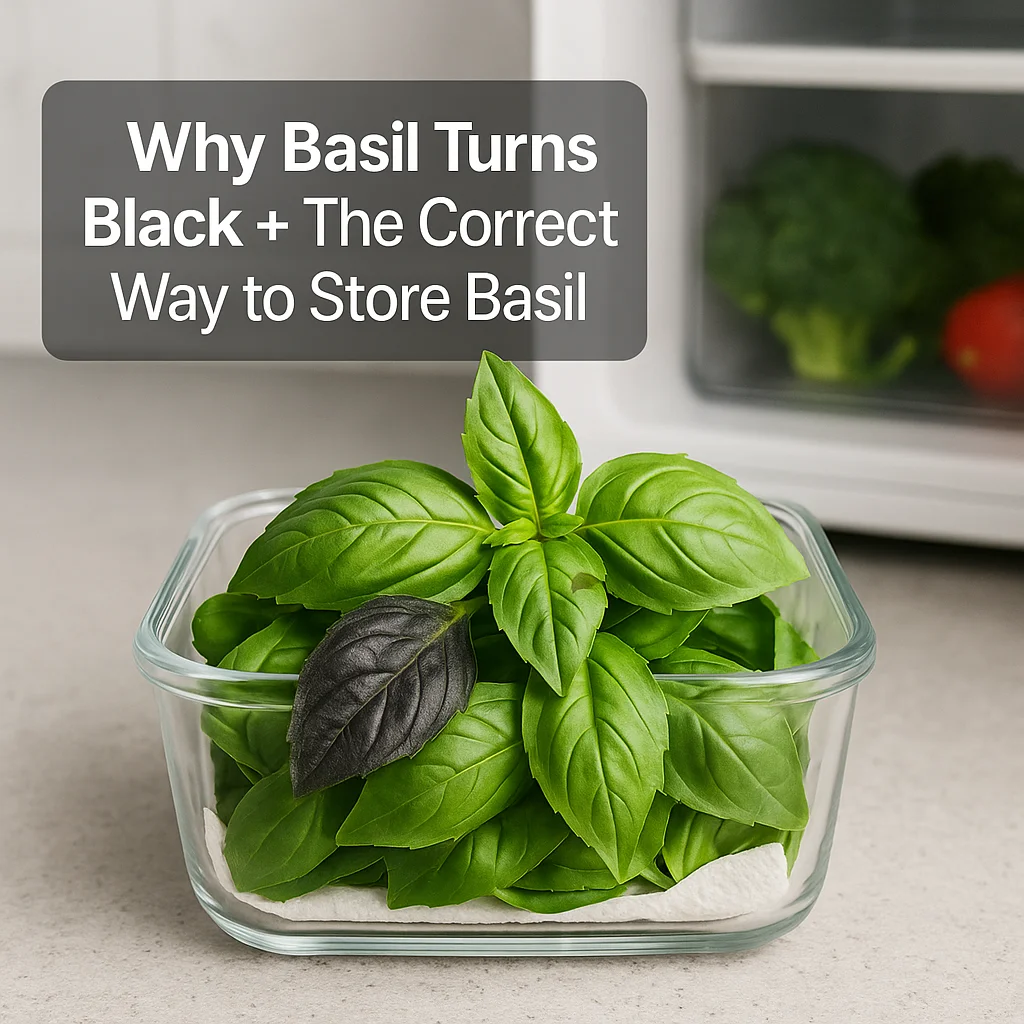
Fast Rules to Keep Basil Fresh
- Keep basil out of the fridge if it's not overly hot indoors.
- Store basil stems like flowers—in a glass of water.
- Avoid moisture on leaves; remove condensation if it forms.
- Don't squash the leaves; handle them gently.
- Keep basil away from ethylene-producing fruits.
- Avoid direct sunlight to prevent withering.
- Change water in the glass every few days to prevent bacterial growth.
Your Basil Buying Guide
To get basil that will last, you need to start with the best bunch:
- Choose fresh, vibrant green leaves: Avoid any bunches with black or yellowing spots.
- Check for firmness: Stems and leaves should feel firm to the touch, not limp or wilting.
- Smell for freshness: The aroma should be strong and sweet, not sour or off-putting.
- Avoid excess moisture: The presence of wet leaves can lead to quicker spoilage and blackening.
The Real Fix: Step-by-Step Solution for Storing Basil
The main goal when storing basil is to keep it dry, preserve moisture in the stems, and avoid temperature swings.
- Trim the stems slightly: This refreshes the ends and helps them absorb water more efficiently.
- Place stems in a jar with water: Like you would cut flowers, to keep them hydrated and vibrant.
- Cover with a plastic bag: Loosely cover to protect from air and maintain subtle humidity without creating condensation.
- Store on a counter: Keep it away from direct sunlight and away from appliances—basil hates cold and prefers room temperature.
- Change the water every 2-3 days: This prevents bacterial buildup which can cause stems and leaves to degrade.
- Check daily: Remove any leaves that start to blacken or wilt to prevent them from affecting the rest.
- Smell and touch: Regular checks for freshness help determine if storage conditions need adjusting.
- For fridges: If room temperature is too high, move the jar to the lower front part of your fridge, loosely wrapped.
- If black spots appear immediately, reassess the placement or amount of moisture.
- If leaves are wilting despite water, try refreshing them by misting gently with cold water.
- If leaves are turning black quickly, reduce moisture contact.
- If stems aren’t drawing water, trim them again.
- Replace the bag if you notice excess moisture inside.
- If you find a funky smell, swap to fresh water immediately.
15–20 Minute Weekly Prep Routine
A regular routine helps keep your basil at its peak:
- Trim stem ends of any fresh produce you’ve bought.
- Prepare the water jars with fresh water and a gentle plant food.
- Inspect each leaf for black spots, tear away, and discard damaged leaves.
- Place new bunches in jars and cover them. Change the water schedule based on room conditions.
- If I only had 2 minutes: Replace the water and inspect for spotty leaves then bag and place back on the counter or fridge.
- If your fridge is weird: Too dry? Simplify to loosely closed bags. Too humid? Check and wipe away excess condensation frequently.
Common Mistakes with Basil (And Their Fixes)
- Black or slimy leaves from condensation: Avoid airtight bags; switch to loose covering.
- Wilted leaves from fridge cold: Keep basil at room temperature when possible.
- Fast spoilage when stored with fruits: Store separately from ethylene-releasing foods.
- Neglecting water changes: Leads to stem rot; change water consistently.
- Handling too roughly: Leads to bruising; handle with care.
- Direct sunlight exposure: Causes wilting; store in a shaded area.
- Ignoring initial black spots: Spreads faster; inspect and trim regularly.
- Wrong storage temperature: Keep consistent, cool (not cold) conditions.
- Not covering unexpectedly dry homes: Adding a bag creates essential humidity.
- Forgetting to check basil condition: Regular assessments prevent spoilage.
Food Safety Notes
- Wash basil leaves only just before use to prevent mold.
- Toss any basil that smells off, feels slimy, or has extensive blackening.
Quick Storage Table for Basil
| Produce | Best Storage | What to Avoid | Typical Problem | Quick Fix |
|---|---|---|---|---|
| Basil | Room temp in water | Cold/closed bags | Black leaves | Trim & re-store |
FAQ: Storing and Using Basil
- Can basil be stored in the fridge? Only if too warm outside.
- Why do basil leaves turn black? Commonly due to moisture and cold.
- Should I wash basil before storing? No, wash before use.
- How often should I change the water? Every 2–3 days for freshness.
- Can I freeze basil? Yes, but it changes texture—use for cooked dishes.
- Is basil still good with black spots? Remove spotted leaves for longevity.
- What's the best way to store leftover basil? Wrapped loosely with damp paper towel in the fridge.
- How do I revive wilted basil? Trim and change water, reduce sunlight exposure.
- How can I prevent rapid basil spoilage? Control humidity and avoid temperature swings.
- Does basil really need room temperature? Ideally, as it thrives in mild environments.
Closing Thoughts on Storing Basil
- Store at room temp whenever possible to save the most money.
- Handle gently to prevent bruising and subsequent blackening.
- Regular water replacement prevents stem spoilage.
Enjoy the fresh taste of basil with these tips, and for more storage solutions, visit our full list of guides. For deeper dives, explore our advanced techniques. Happy cooking and storing!