Recipe Substitutions: Spinach vs Kale vs Swiss Chard (Easy Swap Guide)
Why Your Greens Are Going to Waste
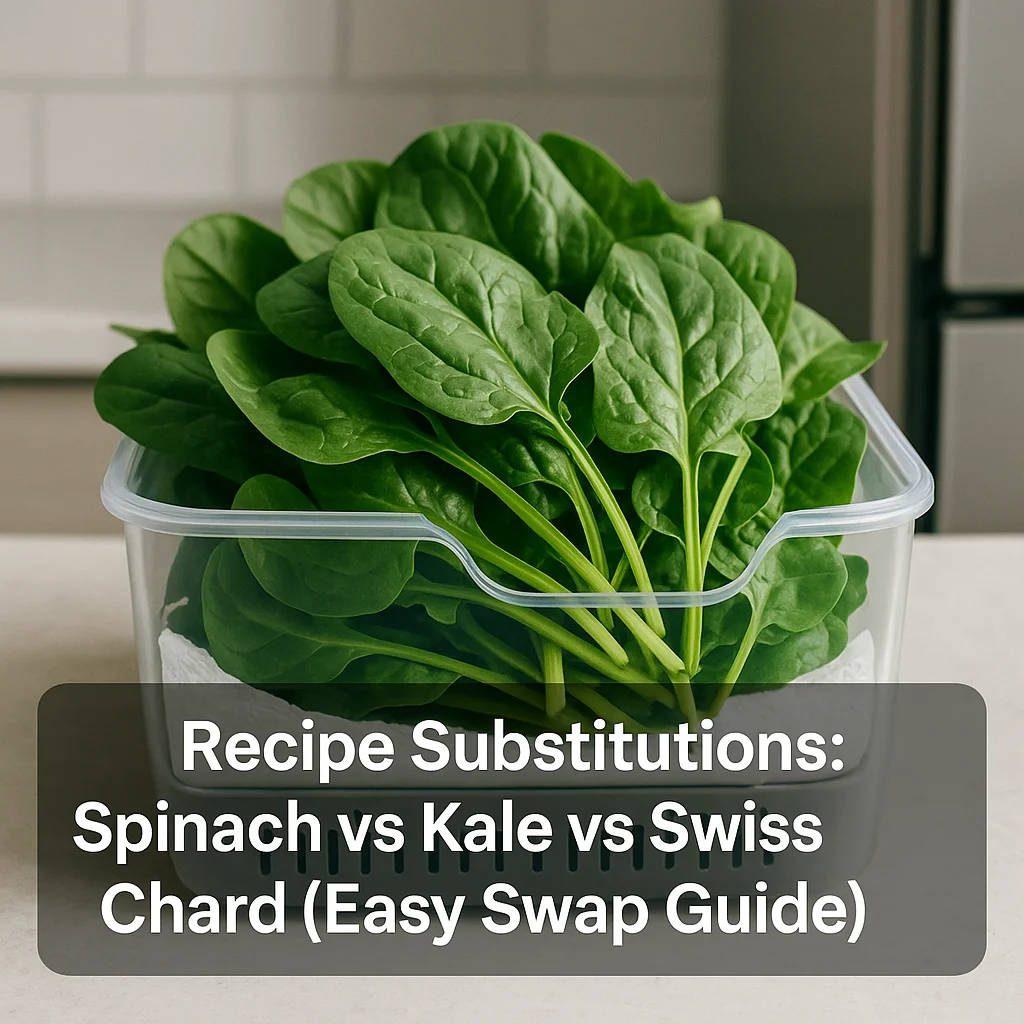
Have you ever bought a bag of spinach only to find it wilted and slimy in the fridge a few days later? It probably sat in too much moisture, speeding up its spoilage. Spinach, kale, and Swiss chard all have their quirks in storage, but they can be versatile in recipes if you manage them right!
Fast Rules for Subbing Greens
- Swap equal amounts: Use the same volume of kale or Swiss chard as you would spinach.
- Adjust cooking times: Kale and Swiss chard may need a minute or two longer on heat.
- Flavor tweaking: Swiss chard has a slight beet taste; consider seasoning changes.
- Texture differences: Kale is more robust; consider finer chopping for even cooking.
- Use raw or cooked: All three can be used raw in salads and cooked in dishes.
- Balance toughness: Kale's toughness holds well in soups; chop smaller for salads.
- Leverage stalks: Swiss chard stalks can be cooked like celery in your dishes.
- Mind color: Spinach wilts to a deep green, kale keeps its dark hue, Swiss chard colors shine through.
Selecting the Best Greens
When buying your greens, here's what to consider:
- Spinach: Look for vibrant green leaves without yellowing or wilting.
- Kale: Choose firm, crisp leaves with moist but not watery stems.
- Swiss Chard: Go for bright leaves and firm, non-slimy stalks.
- Watch for sliminess, it indicates spoilage and signals ethylene exposure.
A Step-by-Step Storage Solution
Keep your greens fresh and ready for any recipe. The goal: keep them dry but not dehydrated!
- Check first: Remove any damaged or yellowed leaves before storing to prevent ethylene buildup.
- Dry thoroughly: Pat greens with a paper towel to absorb moisture, minimizing condensation risk.
- Use a vented container: Store in a loosely closed, vented bag or container to allow excess moisture to escape.
- Add a paper towel: Place one inside the container to absorb moisture and maintain humidity balance.
- Position optimally: Store in the crisper drawer, a consistent zone in the fridge that avoids temperature swings.
- Check moisture regularly: Swap out wet paper towels to prevent mold growth.
- Choose the right drawer: Opt for low humidity settings if available, ideal for leafy greens.
- Handle gently: Avoid bruising which can lead to faster spoilage and browning.
- If sliminess appears → time to toss.
- If leaves turn yellow → they may still be used in cooked dishes.
- If outer leaves wilt → refresh in a bowl of cold water before using.
- If kale is tough → try massaging with oil to soften.
- If spinach turns limp → perfect for a quick wilted spinach dish!
- If chard is rubbery → cook to soften or use in soups.
15-20 Minute Weekly Prep Routine
- Rinse and sort: Spend a few minutes rinsing your greens and removing any damaged leaves.
- Dewater: Use a salad spinner to remove excess water efficiently.
- Pre-chop: Chop and mix greens to your liking for a quick grab-and-use solution all week.
- Store smart: Split into meal-sized servings and place in lined containers.
If I only had 2 minutes:
- Quick rinse and shake off excess water.
- Pat dry with a paper towel and place in a vented container.
If your fridge is weird: If it runs too dry, add a damp paper towel for humidity. If it sometimes freezes, avoid the back wall and use door compartments.
Common Mistakes to Avoid
- Washing and storing wet: Leads to faster mold and decay. Always dry thoroughly.
- Sealing containers airtight: Causes moisture buildup, promoting mold. Use vented storage.
- Storing in the warmest spot: Speeds up wilting. Use the vegetable drawer.
- Ignoring expiration dates: Always check prior to buying to ensure freshness.
- Leaving on counter: Shortens lifespan substantially; best stored in the fridge.
- Overcrowding: Compresses leaves, leading to bruising and spoilage. Store loosely.
- Refrigerating ethylene-emitting produce with greens: Causes premature aging. Separate them.
Food Safety Notes
- Wash before use, not before storage: This prevents the excess moisture problem and reduces nutrient leaching.
- Discard any leaves with fuzzy, moldy spots; they risk contaminating the rest.
- Handle with care: Damaged leaves spoil faster due to exposed surfaces.
Quick Reference Table
| Produce | Best Storage | What to Avoid | Typical Problem | Quick Fix |
|---|---|---|---|---|
| Spinach | Vented container in fridge | Wet leaves | Turns slimy | Remove and discard slimy parts |
| Kale | Low humidity drawer | Bruising | Gets tough | Massage with oil |
| Swiss Chard | Fridge drawer | Wilted leaves | Rubbery texture | Saute or use in stews |
FAQ Regarding Spinach, Kale, and Swiss Chard Substitutions
- Can I use frozen spinach for fresh kale? Yes, adjust for moisture by draining well.
- Is there a taste difference between these greens? Yes, kale is earthy, spinach is mildest, and chard has a beet-like note.
- Which green has the longest shelf life? Kale tends to last the longest due to its sturdier texture.
- Can spinach replace chard in cooked dishes? Absolutely, though the texture will be softer.
- How do I combat bitterness in kale? Massage with olive oil to neutralize its toughness.
- What can I substitute if I’m out of all three? Try arugula for spicy notes or collard greens for heartiness.
- Should I adjust seasonings when swapping greens? Yes, taste and adjust as needed.
- What recipes work best for all three? Smoothies, sautées, and casseroles are versatile.
- How do I store leftover cooked greens? Airtight containers for 3-5 days in the fridge.
Closing Thoughts
- Always store dry and vented to combat spoilage.
- Manage your inventory to reduce waste.
- Adjust cooking prep to match the green’s texture.
By turning these simple practices into habits, you'll not only keep your greens fresh longer but also always have the right substitution on hand. Visit our full post list for more guides like this, or learn about tackling high intent substitutions here. Enjoy the versatility of your greens!