How to Ripen Avocados Faster (and How to Slow Them Down)
When Your Avocados Are Just Not Cooperating
We've all been there: you plan a meal around perfectly ripe avocados, only to find them rock-hard when you want them soft, or way too mushy when you expected them firm. The frustration of timing avocados is mostly due to the powerful influence of ethylene gas, which can be both a friend and a foe in avocado ripening.
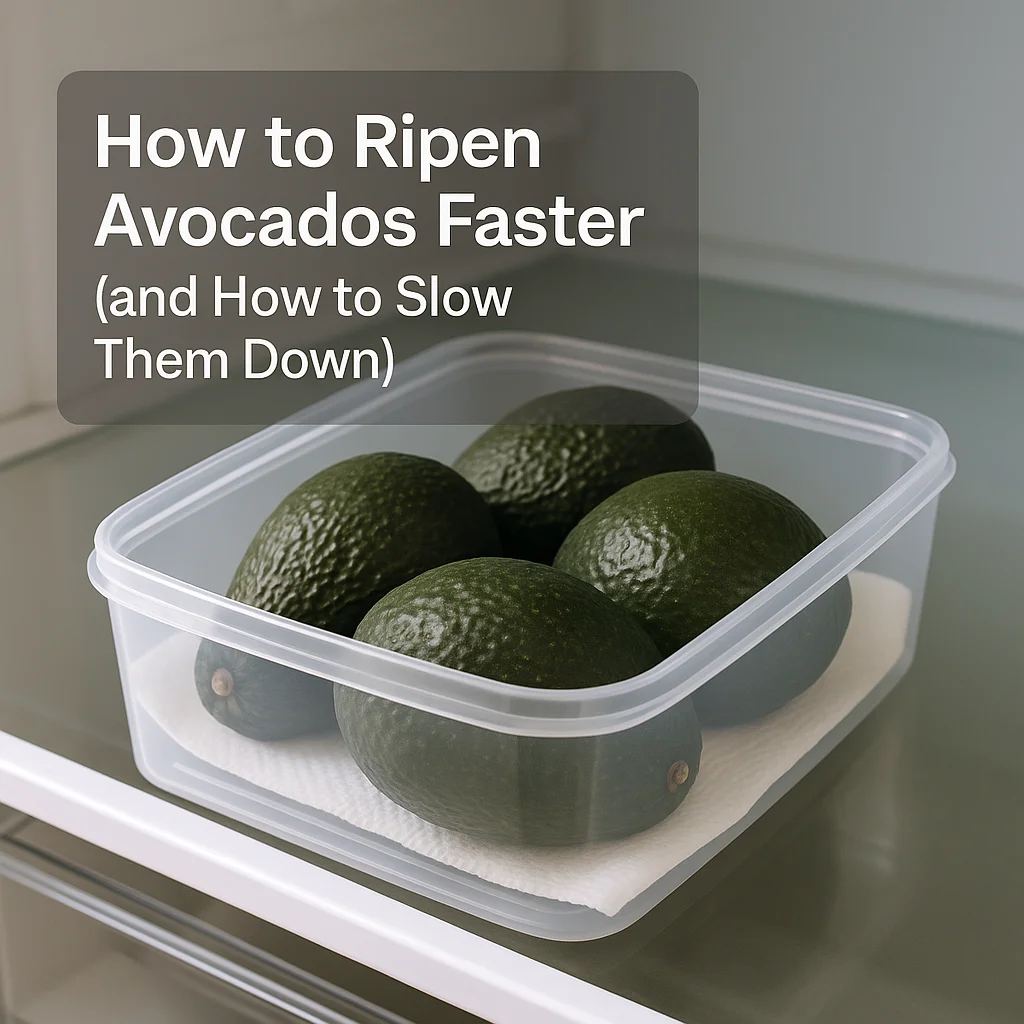
Fast Rules for Ripening Success
- Use a paper bag to trap ethylene gas and speed up ripening.
- Add a banana or apple to the bag for extra ethylene production.
- Keep avocados at room temperature for consistent ripening.
- To slow ripening, refrigerate avocados once they reach desired ripeness.
- Avoid moisture: keep avocados dry to prevent mold.
- Steer clear of storing avocados near onions, which release sulfur and can spoil them quickly.
- For overripe avocados, use them for spreads or smoothies, not slices.
- If cut, brush with lemon juice or vinegar to prevent browning.
Choosing Good Avocados and What to Avoid
When selecting avocados, look for ones that are uniformly green and have a slight give when gently pressed. Avoid avocados with dark spots, deep indentations, or those that are overly firm. A slight shake should not produce a rattling sound, indicating internals that are intact and fresh.
The Real Fix: Ripen and Store Your Avocados Right
The key to perfect avocados is controlling ethylene exposure and temperature consistency.
- Check initial firmness: A gentle squeeze can indicate the ripeness stage. Firmness suggests they're still unripe.
- For fast ripening, place avocados in a paper bag. This traps ethylene gas.
- To accelerate further, add a banana or apple to the bag—these fruits emit extra ethylene.
- Inspect daily; look for softening and a change to darker green.
- Once ripe, move avocados to the fridge to slow further ripening.
- If you're storing cut halves, wrap them tightly in plastic wrap after brushing with lemon juice.
- Store avocados where the temperature doesn't fluctuate, like a middle fridge shelf, not the door.
- Use a vented container to prevent condensation while in the fridge.
- If dealing with several ripeness stages, prioritize use from most to least ripe.
- Do not wash avocados before storing, or if you must, dry them thoroughly before.
- If mold appears, discard avocados; it's indicative of irreversible spoilage.
- Watch for blackened ends or shriveled skin as signals of deteriorating quality.
If/Then Troubleshooting:
- If avocados are maturing too quickly, then separate them immediately.
- If they aren't softening, then add another ethylene-producing fruit.
- If a cut avocado turns brown, then try brushing with lemon juice.
- If condensation forms, then switch to a vented container.
- If skin is black, then they may be overripe—use for spreads.
- If the inside is stringy, then try mashing—it’s likely age-related.
- If flesh is grayish, then discard due to improper storage.
- If the fridge is too cold, then adjust the dial to avoid texture damage.
Your Weekly Avocado Routine
- Check current avocado ripeness on store day.
- Plan uses for each ripeness stage: ripe today → guacamole; near-ripening → slicing in evenings.
- Store unripe avocados in a paper bag; monitor daily.
- If ripe, transfer to fridge to extend viability by a few days.
- Set aside 15 minutes on shopping day for sorting and storing.
- If I only had 2 minutes: Choose a bag for ripening at room temperature, check one we're keeping for today's meal.
- If your fridge is weird: Keep avocados away from the back wall to avoid freezing or overly dry spots—balance if possible.
Common Mistakes
- Bag without closing → slow ripening → wrap tightly
- Left on warm countertop → overripe fast → monitor daily
- Stored next to onions → off-flavors → keep separate
- Fridge door placement → bruises from cold air → try main shelf
- Ignore ethylene principles → inconsistent ripening → embrace companion fruits
- Handling too roughly → bruises → handle gently
- Failure to dry after washing → mold → always dry before storing
- Using metal knife → brown faster → prefer ceramic or plastic
- Storing cut avocado open → fast browning → wrap well each time
- Ignoring skin cues → unexpected spoilage inside → be visually vigilant
Food Safety and Avocado Care
Always wash avocados before cutting to remove potential pathogens hiding on the skin. Dispose of any avocados with mold, odd smells, or significant blackening, to ensure safe consumption.
Quick Avocado Storage Table
| Produce | Best Storage | What to Avoid | Typical Problem | Quick Fix |
|---|---|---|---|---|
| Avocado | Paper bag (counter) until ripe | Fridge door, moisture | Mold, uneven ripening | Ethylene pairing |
Your Avocado Questions Answered
- How fast can avocados ripen in a paper bag? 1 to 3 days, depending on temperature.
- Can I freeze avocados? Not whole, it alters texture; but puree can be frozen.
- What if an avocado has a slight smell? It could be starting to spoil; check inside before use.
- How long do avocados last once ripe? In the fridge, 3 to 5 days.
- Why is my avocado stringy? It might be from an older fruit; consider modifying usage.
- Can an avocado be too ripe to use? For raw eating, yes; but it's great for spreads or baking.
- Should avocados be cold before being cut? Room temperature gives the best texture for cutting.
- How do I know when an avocado is bad? Significant discoloration, odor, or complete mushiness.
- What if my avocados won’t ripen? Check environmental factors—temperature and ethylene presence.
- Can cut avocados be stored in the fridge? Yes, with lemon juice and plastic wrap.
In Conclusion
- Store avocados with ethylene awareness to control ripening speed.
- Mind your fridge's quirks for optimal texture preservation.
- Always keep avocados dry before and after use to avoid mold.
Mastering the art of ripening and slowing down avocados is rewarding and saves money in the long run. To continue exploring more produce-solving know-how, check out our full list of posts and explore comparisons and problem-solving for all your produce needs.