🍓 White Sapote: Season, Storage, Nutrition, and Cooking Guide
The white sapote is a tropical fruit with a creamy texture and a sweet, custard-like flavor. Often overshadowed by more well-known tropical fruits like mangoes and pineapples, the white sapote is a hidden gem with much to offer in terms of nutrition, versatility in the kitchen, and sheer enjoyment of its taste. In this guide, we'll explore the unique aspects of this fruit, including its characteristics, benefits, origin, harvest season, varieties, and more. Let's dive in and discover everything there is to know about the delightful white sapote.
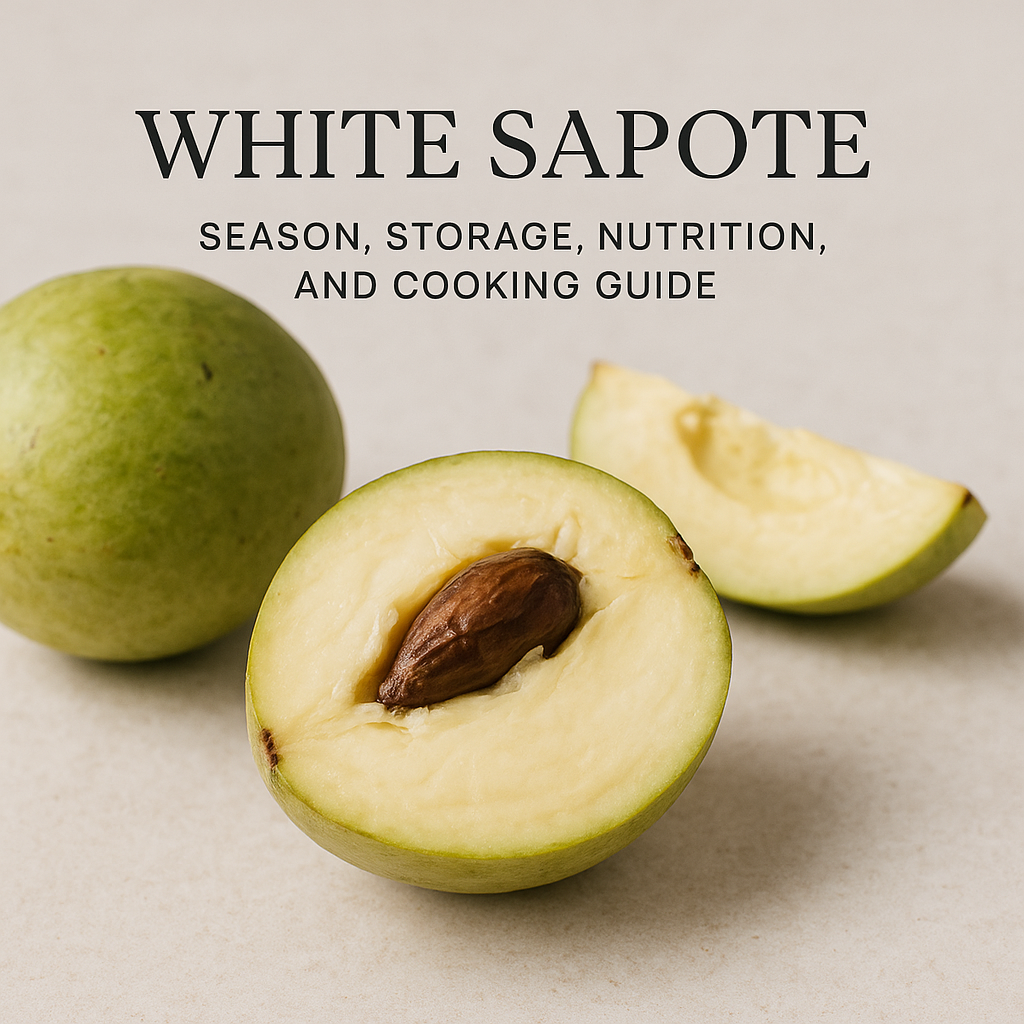
✨ Characteristics
The white sapote, scientifically known as Casimiroa edulis, is a member of the Rutaceae family. The fruit varies in shape from round to oval, typically ranging from 5 to 15 centimeters in diameter. It has a green to yellowish skin that may be smooth or slightly rough, depending on the variety. Inside, the flesh is creamy white, with a texture similar to that of an avocado, and surrounds several large seeds.
The flavors of the white sapote are nuanced and rich, often described as a cross between a banana and a peach, with subtle notes of vanilla. This fruit is generally consumed ripe, and its luscious texture makes it a popular ingredient in smoothies, desserts, and salads.
💪 Benefits
The white sapote is more than just a delicious fruit; it is also packed with essential nutrients. Known for its high vitamin content, especially vitamin C, it can play a role in bolstering immune health. Additionally, it contains several B vitamins, including thiamin and riboflavin, which support energy metabolism.
Dietary fiber, found in the flesh of the white sapote, aids in maintaining a healthy digestive system. Furthermore, the fruit contains potassium, which contributes to heart health by helping to manage blood pressure levels. It’s important to note that while the flesh is nutritious, the seeds should not be consumed as they contain compounds that can be toxic if ingested.
🌍 Origin
The white sapote hails from Central America and Mexico, where it has been cultivated and enjoyed for centuries. It thrives in tropical to subtropical climates, finding the ideal conditions to grow in regions that do not experience frost. Historically, the fruit was cherished by indigenous populations, who appreciated both its nutritional value and delectable taste.
Today, the white sapote has spread beyond its native region and is cultivated in various parts of the world, including the United States, particularly in Florida and California, as well as in parts of Australia and the Mediterranean.
📅 Harvest Season
White sapotes generally have a long harvest season, which varies slightly depending on the region and climate. In Mexico and Central America, the fruit typically ripens from late summer to early winter. In subtropical regions like Southern California, the harvest can extend from late autumn through spring, thanks to the favorable growing conditions.
This extended season allows for a continual supply of fresh fruit, making it easier for consumers to find fresh white sapotes in local markets during these times of the year.
🧺 Varieties
Several varieties of white sapote exist, each bringing its unique characteristics to the table. Some of the most notable varieties include:
- Suebelle: A popular cultivar in California, known for its smooth skin and sweet, flavorful flesh.
- Pike: Noted for producing large fruits with excellent flavor but requiring more care in cultivation.
- Denzler: Yields a high-quality fruit with a smooth, creamy texture and delightful sweetness.
Each variety may vary slightly in terms of size, taste, and skin texture, but all share the characteristic custardy, delectable interior.
🛒 How to Choose (Checklist)
When selecting white sapotes, consider the following checklist to ensure you choose the best fruit:
- Select fruits with a bright color and even hue; avoid those with brown spots or blemishes.
- A ripe white sapote will yield slightly to gentle pressure, similar to a ripe avocado.
- Look for a fragrant aroma near the stem—an indication of ripeness.
- Avoid fruits that are overly soft or show signs of shriveling, indicating over-ripeness.
🍽 Cooking & Eating Methods
The white sapote’s creamy texture and sweet flavor make it a versatile ingredient in various culinary applications. Here are some popular ways to enjoy this fruit:
- Raw: Simply cut open and scoop out the flesh with a spoon, enjoying its natural sweetness as a snack or dessert.
- Blended: Add to smoothies for a rich, creamy base that pairs well with bananas, berries, and leafy greens.
- Desserts: Incorporate into pies, ice creams, or custards for a unique twist on traditional recipes.
- Salads: Dice and toss with citrus, mint, and a sprinkle of chili powder for a refreshing fruit salad.
❄ Storage Tips
Proper storage of white sapotes ensures they retain their flavor and texture until you are ready to enjoy them:
- Store unripe sapotes at room temperature until they reach the desired ripeness, which can take several days.
- Once ripe, place them in the refrigerator to extend their shelf life up to a week.
- If you have an abundance of ripe fruit, consider freezing the prepared flesh in airtight containers for later use in smoothies and baked goods.
❓ FAQ (3 questions)
- Can I eat the seeds of the white sapote?
It is not recommended to eat the seeds, as they contain compounds that can be toxic if consumed. - How can I tell if a white sapote is ripe?
A ripe white sapote will be slightly soft to the touch and have a pleasant aroma. - Is white sapote suitable for people with dietary restrictions?
White sapote is generally safe for most people but always consult with a healthcare professional if you have specific dietary concerns or allergies.