🍓 Watermelon: Season, Storage, Nutrition, and Cooking Guide
Watermelon is one of summer's most iconic fruits, known for its refreshing sweetness and vibrant interior. Rich in water content, it offers a hydrating snack option during warmer months. This guide will provide insights into watermelon’s characteristics, benefits, origin, harvesting season, and much more.
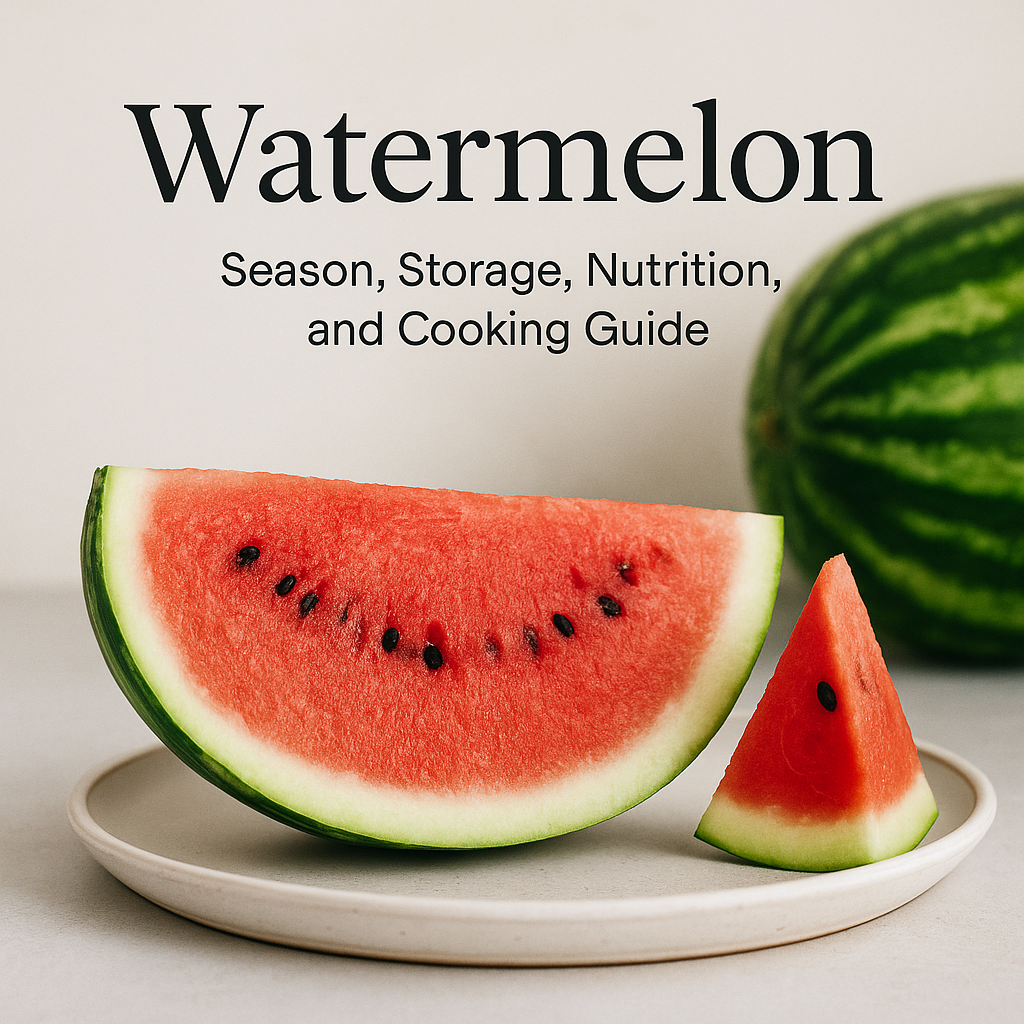
✨ Characteristics
Watermelon, scientifically known as Citrullus lanatus, is a member of the Cucurbitaceae family, which includes cucumbers, pumpkins, and squash. It is primarily composed of water—about 92%, making it an excellent hydrating fruit. Typically, watermelon has a distinctively tough, green rind and a fleshy, juicy interior that's usually red or pink with black seeds, although seedless varieties are popular. The exterior can also have varying shades of green stripes or spots.
💪 Benefits
Watermelon is not only a refreshing treat but also packs several nutritional benefits. It is low in calories yet rich in essential vitamins such as A, C, and B6, and minerals like magnesium and potassium. Its high lycopene content, a powerful antioxidant, is known for supporting heart health and reducing inflammation. Additionally, the amino acid citrulline found in watermelon may aid in improving blood flow and reducing muscle soreness.
🌍 Origin
Watermelon is believed to have originated in Africa, where it grew wild and was first domesticated for cultivation. Archaeological evidence suggests that watermelon was already being cultivated in the Nile Valley as far back as 2000 B.C. Over time, this succulent fruit made its way to various parts of the world through trade routes and evolving agricultural practices, eventually becoming a staple in many tropical and sub-tropical regions.
📅 Harvest Season
In general, watermelon thrives in warm conditions and is primarily harvested during the summer months. In the United States, the peak watermelon season runs from June to August, although this can vary slightly depending on the climate of specific regions. In warmer climates, such as in parts of the southern hemisphere, watermelons may be harvested year-round.
🧺 Varieties
Watermelons come in numerous varieties, each with distinct features:
- Seedless Watermelon: While not completely devoid of seeds, these watermelons contain small, nearly invisible seeds and are incredibly popular for their convenience and sweet flavor.
- Pikapika Watermelon: Known for having a rich, juicy flesh that's sweeter than typical varieties, often with a deep red or pink interior.
- Yellow Watermelon: Similar in flavor to the traditional red variety but with a bright yellow flesh, offering a unique twist on appearance and taste.
- Mini Watermelon: Also known as personal-sized watermelons, these are perfect for small households and tend to be sweeter due to their compact size.
🛒 How to Choose (Checklist)
Selecting the perfect watermelon often relies on visual cues and feel. Here's a checklist to guide your selection:
- Shape: Opt for a symmetrical and uniform shape, avoiding any lumps or irregularities.
- Color: Look for a dull rather than shiny exterior, indicating ripeness.
- Field Spot: Check for a creamy yellow spot, known as the field spot where it rested on the ground; a darker field spot typically indicates ripeness.
- Sound: Tap the watermelon and listen for a deep, hollow sound, which suggests a juicy interior.
- Weight: Watermelons should feel heavy for their size, indicating a high water content.
🍽 Cooking & Eating Methods
While watermelon is traditionally eaten fresh in slices, it can be enjoyed in various other ways:
- Salads: Watermelon pairs well with feta cheese, mint, and arugula for a refreshing summer salad.
- Grilled: Grilling watermelon provides an intriguing flavor contrast as it carmelizes the sugar in the fruit, creating a sweet and savory dish.
- Smoothies and Juices: Blend watermelon with lime juice for a hydrating, tasty beverage perfect for hot days.
- Desserts: Use watermelon to make sorbets, popsicles, or include it as a centerpiece in fruit salads.
- Pickled Rind: The rind can be pickled for a tangy, crunchy addition to dishes.
❄ Storage Tips
Proper storage is key to extending the freshness of watermelon:
- Whole: Store uncut watermelon at room temperature to maintain its flavor and nutritional properties. It can last approximately a week when kept out of direct sunlight.
- Cut: Once cut, keep the watermelon in the refrigerator, tightly covered in plastic wrap or an airtight container to prevent it from absorbing other fridge odors. It should be consumed within 3 to 5 days.
❓ FAQ
Q: Can I eat watermelon seeds and rind?
A: Yes, both the seeds and rind of watermelon are edible. Toasted seeds can be a crunchy snack, while the rind can be pickled or used in cooking.
Q: Is watermelon good for hydration?
A: Absolutely. With its high water content, watermelon is excellent for hydration, especially during hot weather or after physical activities.
Q: How can I tell if a watermelon is overripe?
A: An overripe watermelon typically exhibits a mushy texture and may have a fermented smell. Its rind may also be too soft, indicating it is past its prime.