🍓 Ugli Fruit: Season, Storage, Nutrition, and Cooking Guide
Ugli fruit, a unique member of the citrus family, offers a vibrant blend of flavors and a plethora of uses in the kitchen. This comprehensive guide will delve into its distinct characteristics, nutritional benefits, and how best to enjoy and store this fruit.
✨ Characteristics
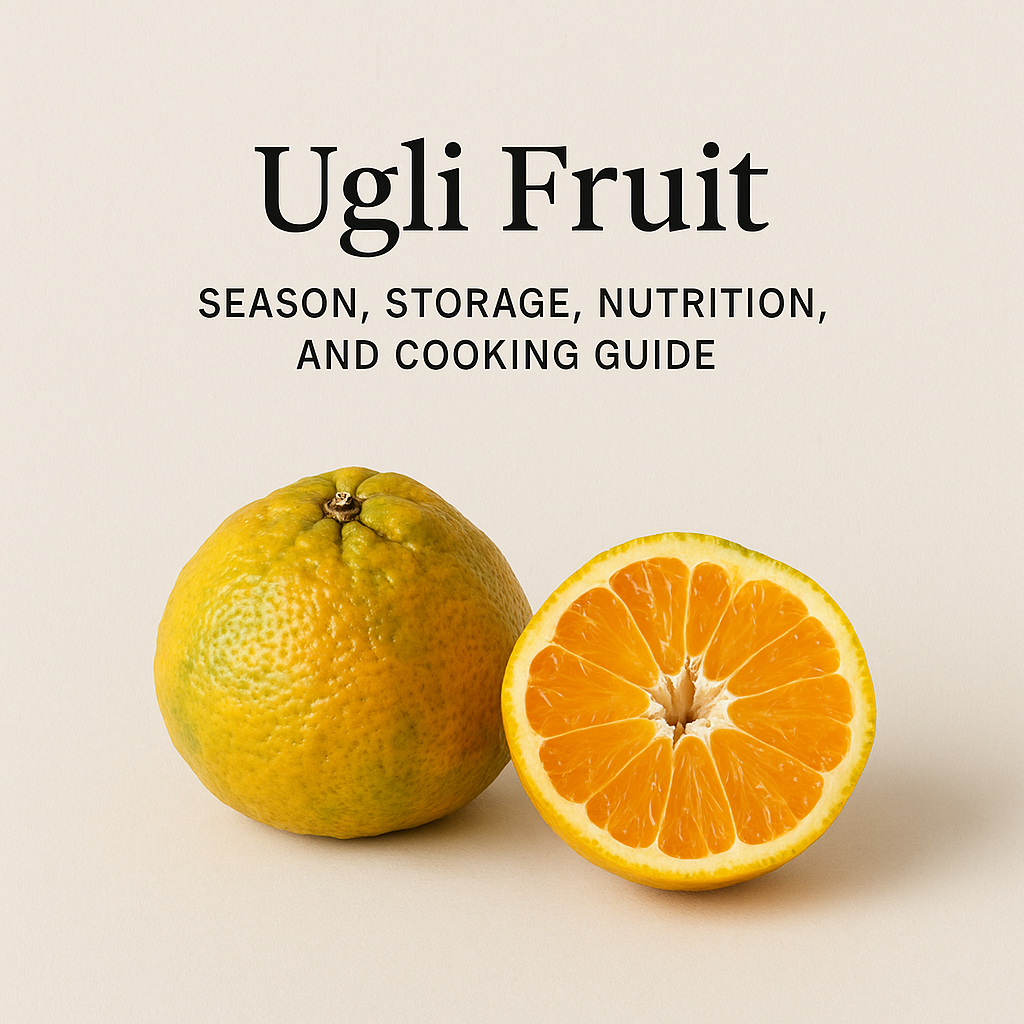
The ugli fruit, often mistaken due to its less than glamorous appearance, is anything but unappealing when it comes to flavor. It is a hybrid between a grapefruit, orange, and tangerine, characterized by its thick, rough, wrinkled skin that is easy to peel. The inside yields juicy segments that pack a sweet and tangy punch. Unlike other citrus fruits, the ugli fruit is larger, with a typical size similar to a grapefruit and a vibrant orange flesh that contrasts with its greenish-yellow exterior.
💪 Benefits
Ugli fruit not only offers an exceptional taste but also boasts an impressive nutritional profile. It is a noteworthy source of vitamin C, contributing to your daily antioxidant needs which play a key role in immune support. Additionally, the fruit contains dietary fiber, crucial for digestive health, and a range of other vitamins and minerals including vitamin A, calcium, and potassium. Incorporating ugli fruit into your diet can be a refreshing way to support overall health while enjoying a delicious treat.
🌍 Origin
The ugli fruit has an intriguing origin story that traces back to the lush landscapes of Jamaica. It was discovered growing wild in the early 20th century and has since been cultivated and exported due to its appealing flavor and unique characteristics. The name "ugli" was coined by the creators as a playful nod to its unconventional exterior, cementing its place as a curious yet delightful member of the citrus family in produce markets worldwide.
📅 Harvest Season
The ideal time to enjoy ugli fruit is during its peak season, which typically spans from December to April. This period allows for the optimal enjoyment of its sweet and tangy flavor when its juices are at their most abundant and the zest is bursting with aromatic oils. Ensuring your ugli fruit is purchased during this window will enhance the culinary and nutritional experience.
🧺 Varieties
While the ugli fruit itself does not have distinct varieties like other citrus fruits, subtle variations in its size and color can occur based on specific growing conditions. These variations do not significantly affect the flavor profile but may influence the juiciness and sweetness levels, allowing for a unique experience with each fruit encountered.
🛒 How to Choose (Checklist)
- Check for a vibrant greenish-yellow hue as a sign of ripeness.
- Gently squeeze to ensure the fruit yields slightly to pressure, indicating juiciness.
- Inspect the skin for any blemishes or soft spots, which may indicate overripeness.
- Ensure the fruit feels heavy for its size, reflecting a high water content.
- Avoid fruits with dry, shriveled skin as they are likely past their prime.
🍽 Cooking & Eating Methods
The versatility of ugli fruit in cooking allows it to be a star in both sweet and savory dishes. Its segments can be enjoyed fresh as a standalone snack or added to fruit salads for a citrusy twist. Juicing ugli fruit is another popular method, offering a refreshing beverage that can also be used in cocktails and smoothies. For a savory touch, consider adding ugli fruit zest and juice to dressings or marinades, bringing a burst of flavor to seafood or chicken dishes. Baking enthusiasts can explore using it in cakes, tarts, and sorbets, offering a tropical aroma that transfers beautifully into desserts.
❄ Storage Tips
Proper storage of ugli fruit prolongs its shelf life while maintaining its taste and nutritional value. The fruit can be stored at room temperature if consumed within a few days; however, for longer storage, it is best kept in a refrigerator. Place the fruit in a mesh bag or open container to allow air circulation and prevent moisture buildup. Ugli fruit can remain fresh for up to two weeks when stored in cool, dry conditions. Additionally, to prolong usability, consider freezing the juice or zest in ice cube trays for future cooking endeavors.
❓ FAQ
Q1: Can ugli fruit be used as a substitute for other citrus fruits in recipes?
A1: Yes, ugli fruit can be a wonderful substitute for other citrus fruits such as oranges, grapefruits, and tangerines in most recipes, imparting a unique flavor profile that enriches both sweet and savory dishes.
Q2: Is the skin of ugli fruit edible?
A2: While the skin is not typically consumed due to its rough texture and slightly bitter taste, the zest of the ugli fruit can be used to add flavor to a variety of culinary creations.
Q3: How can I tell if an ugli fruit is overripe?
A3: An overripe ugli fruit will often have a dry texture and may develop soft spots or a fermented smell. Its appearance might turn from a vibrant hue to a dull, blemished exterior.