🍓 Tamarind: Season, Storage, Nutrition, and Cooking Guide
Tamarind, a fruit that derives from the tamarind tree (Tamarindus indica), is an intriguing component of various culinary traditions globally. Its unique sweet and tangy flavor adds depth to many dishes, making it a favored ingredient in regions ranging from South Asia to Latin America. In this article, we'll explore the essential aspects of tamarind, including its characteristics, benefits, origins, seasonality, varieties, selection tips, cooking uses, storage methods, and common questions.
✨ Characteristics
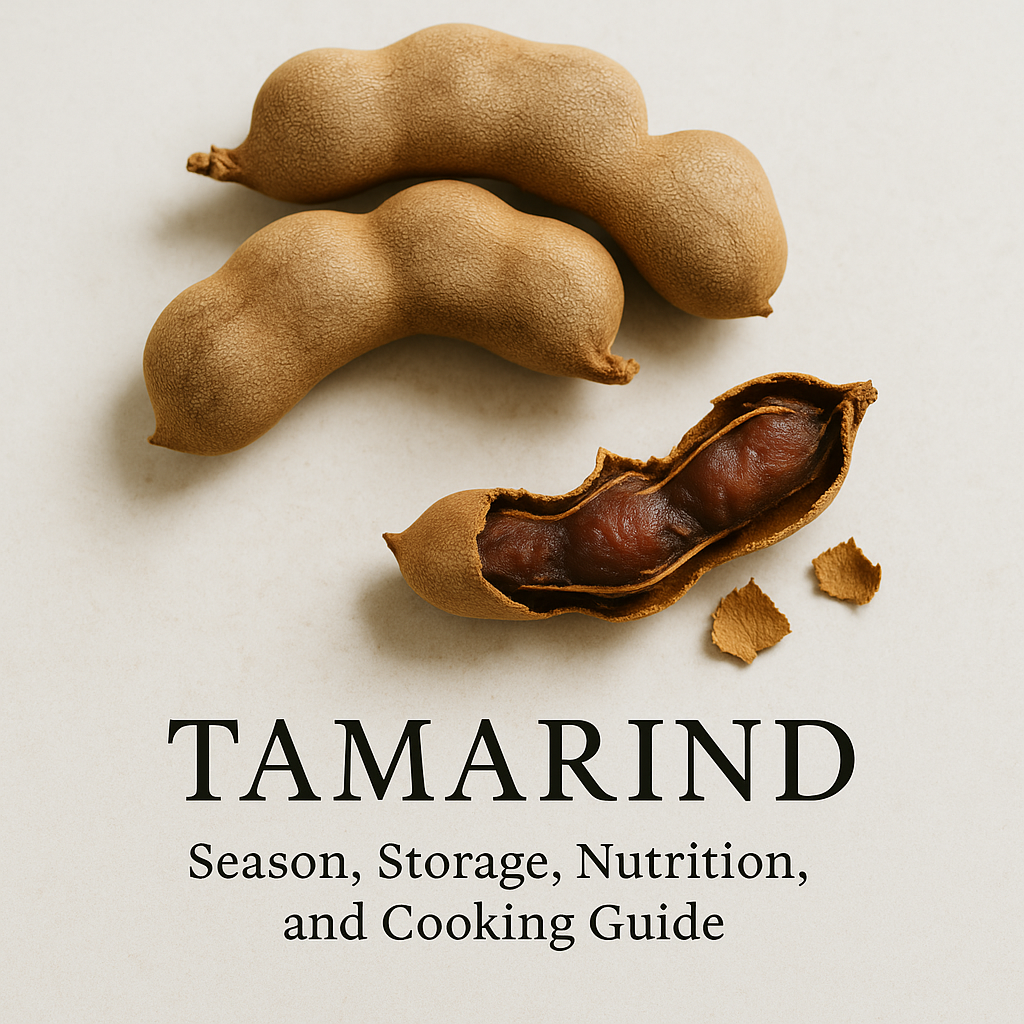
Tamarind is a leguminous tree that grows abundantly in tropical climates. The fruit itself is encased in a brown shell and contains a sticky, edible pulp with a distinctively tangy taste, coupled with seeds. This pulp is widely used in various culinary applications, acting as both a flavor additive and a preservative. The visual appearance of tamarind can vary from short, plump pods to longer, thinner versions depending on the variety.
💪 Benefits
Tamarind is not only valued for its flavor but also for its nutritional components. It is rich in various nutrients, including vitamin C, calcium, potassium, and magnesium. Additionally, tamarind is known for its diet-friendly attributes, being a fruit with low saturated fat and cholesterol content. Antioxidants present in tamarind can contribute to cellular health, although the extent of health benefits is best discussed with a nutrition specialist.
🌍 Origin
The tamarind tree is native to tropical Africa, but its cultivation has spread extensively throughout Asia and South America due to its versatility and ease of growth in warm climates. Tamarind has become an integral part of the culinary traditions in countries such as India, Mexico, and Thailand, where it serves as a primary seasoning, used in chutneys, beverages, sauces, and as a natural food preservative.
📅 Harvest Season
The optimal harvest period for tamarind differs by geographical region. In general, tamarind is harvested in tropical and subtropical regions towards the end of the dry season, from December to April. During this time, the pods are mature and typically dry on the tree, ready for collection and processing or sale.
🧺 Varieties
Tamarind contributes to culinary diversity through its various forms and hues. Primarily, tamarind is categorized by the sweetness or sourness of its taste. The two main types are:
- Sour Tamarind: Predominantly found in Asian recipes, these pods are tart and considered essential in tangy dishes.
- Sweet Tamarind: More common in Southeast Asia and considered a delicacy for its sweeter taste suitable for direct consumption.
🛒 How to Choose (Checklist)
When selecting tamarind, consider the following checklist to ensure you are getting the best quality:
- Check the pods: They should be brittle and easy to crack open.
- Examine pulp: Look for moist yet firm pulp that is free of mold.
- Color: Opt for dark brown pulp that indicates ripeness.
- Aroma: Fresh tamarind should emit a fruity, sweet-tangy scent.
🍽 Cooking & Eating Methods
Tamarind's culinary versatility allows it to play various roles in global kitchens. It is often used to:
- Flavorful Additions: Tamarind paste can be added to marinades, sauces, and curries to enhance flavor complexity.
- Beverages: Tamarind is popular in refreshing drinks and iced teas, providing a tangy kick.
- Deserts and Candies: In its sweet form, tamarind makes a delightful ingredient for candies and desserts.
- Condiments: Tamarind puree can be mixed to make chutneys and sauces that pair well with meats and vegetables.
❄ Storage Tips
Proper storage can extend the shelf life of tamarind and maintain its signature flavor. Here are essential tips to store tamarind effectively:
- Whole Pods: Keep in a cool, dry location away from sunlight to preserve their shape.
- Pulp without seeds: Refrigerate in an air-tight container; it can last up to three months.
- Freezing: Tamarind pulp can be frozen. Divide it into portions before storing it in the freezer for easy access.
❓ FAQ
1. Can tamarind be consumed raw?
Yes, tamarind can be eaten raw, especially the sweet variety, which is often consumed directly out of the pod.
2. Is tamarind suitable for vegans?
Absolutely, tamarind is a plant-based food and fits well within a vegan diet due to its natural origin and nutrient density.
3. Does tamarind have any common culinary substitutes?
If tamarind is unavailable, lime juice or vinegar with a touch of sugar can mimic its tanginess in recipes. However, each substitute may slightly alter the intended flavor profile.