🍓 Sugar Apple: Season, Storage, Nutrition, and Cooking Guide
The sugar apple, also known as 'sweetsop' or 'custard apple,' is a unique tropical fruit that intrigues both the taste buds and the senses. Its scaly appearance and creamy texture combine to offer a truly delightful experience for fruit lovers. In this guide, we'll explore everything you need to know about sugar apples, from their growth season and nutritional benefits to storage tips and culinary uses.
✨ Characteristics
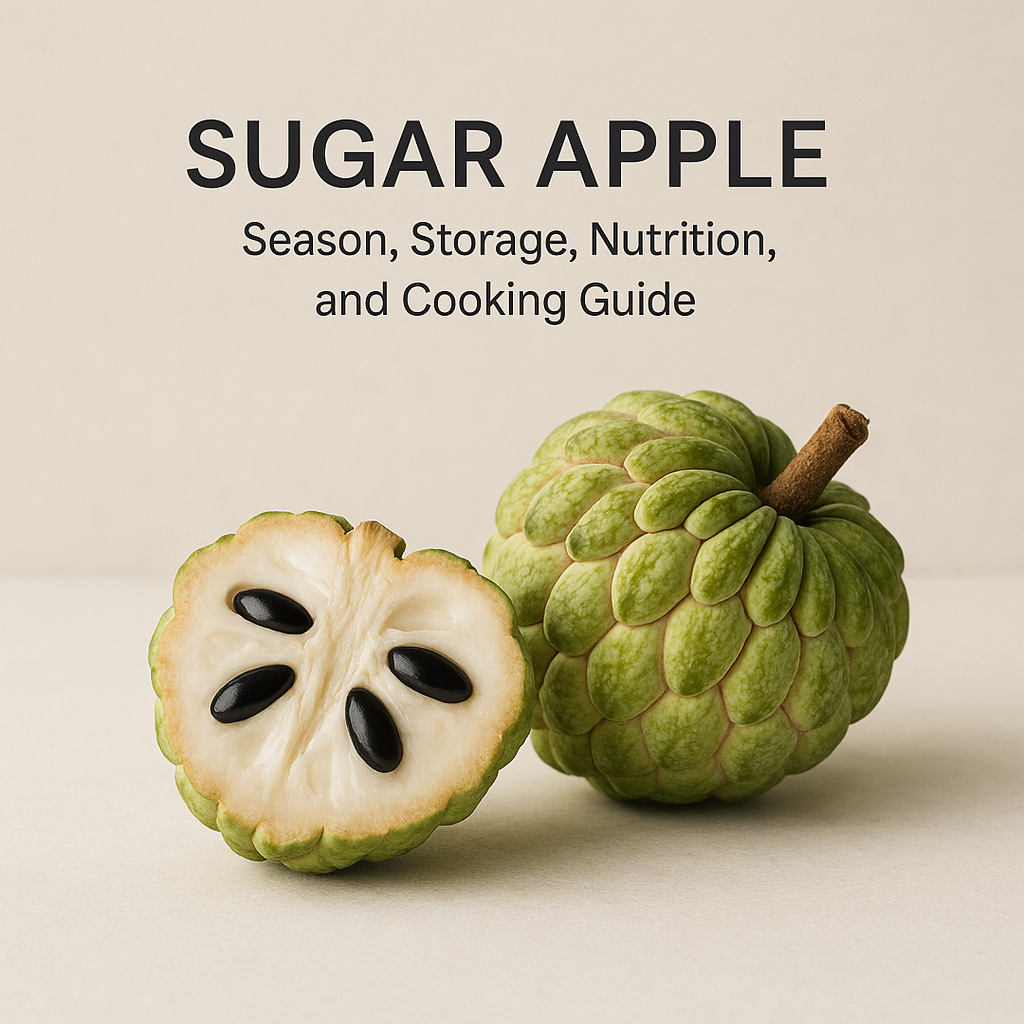
The sugar apple is an oblong or conical fruit covered in a rough, scaly texture. Inside, you'll find segmented, soft, and creamy flesh that surrounds inedible black seeds. Its taste can be likened to a sweet, custard-like blend of peach, banana, and pear, which is why it is often referred to as 'custard apple'.
💪 Benefits
Sugar apples are not only delicious but also packed with nutrients. They are a good source of vitamin C, which aids in immune function and skin health. Additionally, sugar apples provide dietary fiber and several essential minerals like potassium and magnesium, contributing to heart health and proper muscle function.
🌍 Origin
Native to tropical regions of the Americas and the West Indies, the sugar apple is now widely cultivated in countries with warm climates, including parts of Asia, Africa, and the Caribbean. Its adaptability to different environments has enabled its spread beyond its native habitat, making it a popular fruit in tropical agriculture.
📅 Harvest Season
The sugar apple is a seasonal fruit, primarily available during the late summer and early fall months. In areas closer to the equator, sugar apples may have extended seasons and sometimes multiple harvests throughout the year, depending on climatic conditions.
🧺 Varieties
While the general characteristics of the sugar apple remain consistent, there are several varieties with subtle differences. Common variants include the African Pride, Pink Mammoth, and Geffner, each with slight variations in texture, sweetness, and size.
🛒 How to Choose (Checklist)
When selecting sugar apples, consider the following:
- Look for fruits with unblemished skin and a consistent green color.
- Gently squeeze the fruit; it should yield slightly to pressure without being overly soft.
- Avoid fruits with dark spots or cracks, as these are indicators of overripeness or spoilage.
- Choose fruits that feel heavy for their size, signifying a good amount of juicy flesh inside.
🍽 Cooking & Eating Methods
Sugar apples can be enjoyed in various ways: fresh, in juices, desserts, or savory recipes. To eat fresh, simply cut the fruit open, scoop out the creamy flesh with a spoon, and remove any seeds. Sugar apples can also be blended into smoothies for a tropical twist or used to sweeten desserts.
Baking enthusiasts can incorporate sugar apple pulp into cakes and pastries for a unique flavor profile. For a simple treat, try grilling sugar apple segments until caramelized and serve with a drizzle of honey or a sprinkle of cinnamon.
❄ Storage Tips
Proper storage ensures that sugar apples remain fresh for consumption. At room temperature, they can last a few days, but refrigeration is recommended for prolonged freshness. Store whole fruits in the refrigerator inside a plastic bag to prevent them from absorbing odors. Once cut, consume sugar apples within 24 hours for the best taste and texture. Avoid freezing, as it negatively affects the fruit's creamy consistency.
❓ FAQ (3 questions)
Q1: Are sugar apples related to other types of apples?
No, despite the name, sugar apples are not related to traditional apples. They belong to a different family of fruits known as Annonaceae.
Q2: Can sugar apples be grown in temperate climates?
Sugar apples require a tropical climate with warm temperatures year-round. Growing them in temperate regions is challenging without greenhouse facilities that replicate their native environment.
Q3: What can I do with overripe sugar apples?
Overripe sugar apples can be pureed and used in smoothies, sorbets, or as a natural sweetener in baking recipes. Preserve the flavor by using them in recipes quickly after ripening.