🍓 Strawberry: Season, Storage, Nutrition, and Cooking Guide
Strawberries are not only a delicious and versatile fruit but also a symbol of summer and sunshine. This comprehensive guide explores everything there is to know about strawberries, from their seasonal characteristics to storage tips and culinary uses, allowing you to enjoy this vibrant fruit to its fullest potential.
✨ Characteristics
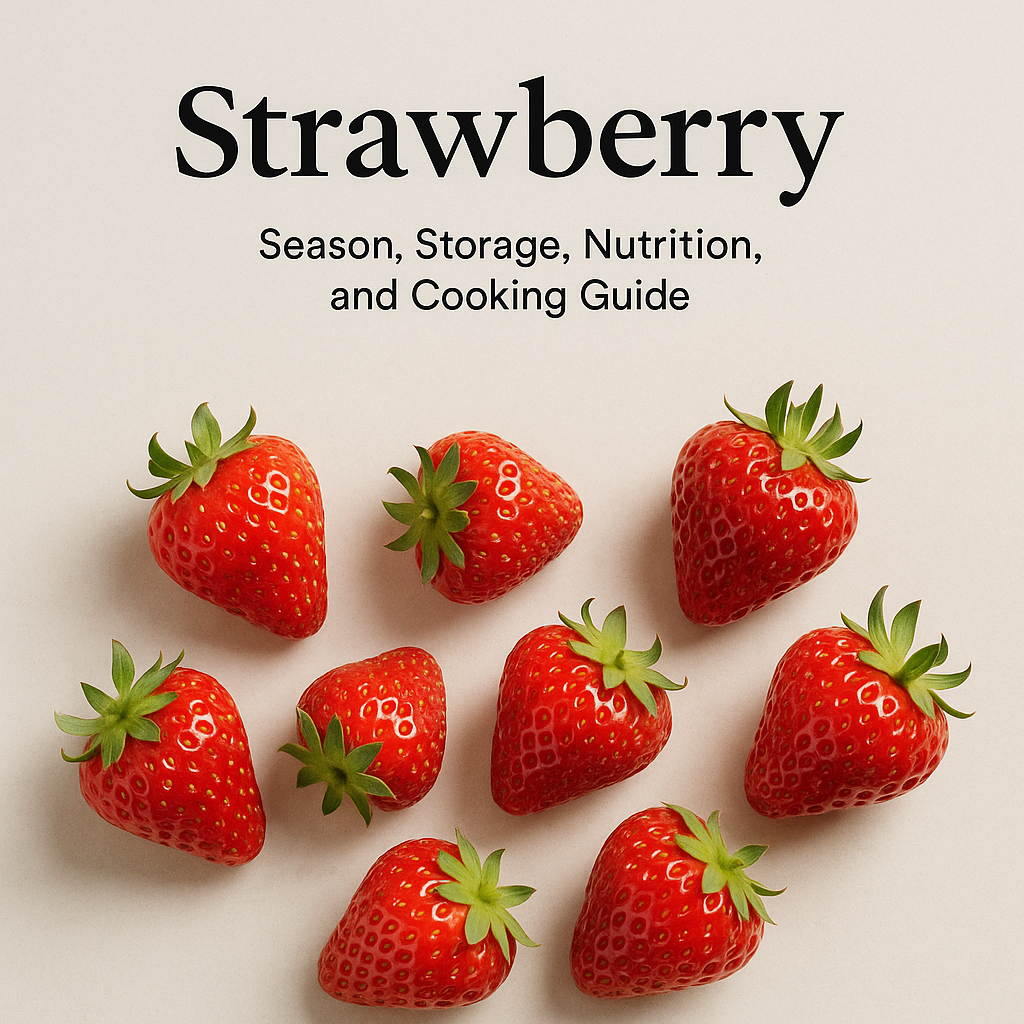
Strawberries are small, bright red fruits adorned with tiny seeds on their surface. They possess a distinct heart shape and are celebrated for their juicy texture and sweet, slightly tangy flavor. Belonging to the Rosaceae family, alongside roses and apples, strawberries have a seductive aroma that entices many during the peak harvest season.
💪 Benefits
While strawberries are cherished for their delightful flavor, they are also packed with essential nutrients. Rich in vitamin C, strawberries support the immune system and promote healthy skin. Additionally, their high antioxidant content aids in combating free radicals, making them a valuable addition to a balanced diet. Fiber in strawberries supports digestive health, while their potassium content contributes to maintaining healthy blood pressure levels.
🌍 Origin
While strawberries are enjoyed worldwide today, their history is deeply rooted in both American and European soils. Ancient records trace the cultivation of wild strawberries back to Roman times. The modern strawberry, characterized by its larger size compared to wild varieties, was developed from hybridization efforts in France during the 18th century. Today, various countries contribute to the global strawberry market, with significant production occurring in the United States, Mexico, and Spain.
📅 Harvest Season
The best time to relish strawberries is during their natural harvest season, which typically spans from late spring to early summer. This period may vary slightly based on geographic location and local climate conditions. In warmer climates, strawberries can be harvested as early as March, while cooler regions might witness harvests well into July. Therefore, for maximum flavor and freshness, it is always wise to opt for locally-sourced strawberries when they are in season.
🧺 Varieties
A multitude of strawberry varieties exist, each boasting unique flavor profiles and characteristics. Some popular types include:
- Albion: Known for its consistent size, sweetness, and aroma, this variety is often found in farmers' markets.
- Seascape: Offers a perfect balance of sweetness and tartness, appreciated by those who favor a slightly more tangy taste.
- Chandler: Especially popular in California, Chandler strawberries are renowned for their juicy nature and vibrant color.
- Camino Real: A late-season variety, Camino Real strawberries are known for their durability during transport, making them a staple in many grocery stores.
🛒 How to Choose (Checklist)
When selecting strawberries at the market, use the following checklist to ensure premium quality:
- Look for a uniform bright red color without any white or green patches.
- Choose berries with a glossy sheen and vibrant, fresh green caps.
- Opt for strawberries that exude a fragrant aroma.
- Avoid berries that are mushy or have visible mold.
- Check that the packaging is dry and free from any signs of moisture or juice leaks.
🍽 Cooking & Eating Methods
Strawberries offer immense versatility in culinary applications. Here are some popular methods to enjoy them:
- Fresh: Eat strawberries fresh for a simple yet refreshing snack.
- Smoothies: Blend strawberries with bananas, yogurt, and a splash of orange juice for a creamy smoothie.
- Salads: Enhance salads by adding sliced strawberries alongside mixed greens, walnuts, and feta cheese.
- Desserts: Use strawberries in desserts like shortcakes, tarts, or chocolate-dipped treats.
- Salsas: Mix diced strawberries with jalapeños, lime, and cilantro for a sweet and spicy salsa.
❄ Storage Tips
Proper storage can extend the shelf life of strawberries and retain their flavorful characteristics:
- Store unwashed strawberries in their original packaging or a shallow container in the refrigerator.
- Utilize paper towels to line the storage container and absorb excess moisture.
- For long-term storage, freeze strawberries by washing, hulling, and placing them in a single layer on a baking sheet. Once frozen, transfer them to a freezer-safe bag or container.
❓ FAQ
Can strawberries trigger allergies? Yes, some individuals may experience allergic reactions to strawberries, which can manifest as skin rashes, itching, or gastrointestinal discomfort. It is advisable to consult a healthcare professional for personalized advice if allergies are a concern.
What are some alternatives to strawberries in recipes? For those seeking a substitute, raspberries or blueberries can be excellent replacements in most recipes. Both offer similar textures and flavor profiles.
What is the best way to wash strawberries? To clean strawberries effectively, rinse them under cold running water without soaking, as this can affect their texture and flavor. Gently pat dry before consumption or storage.