🍓 Starfruit: Season, Storage, Nutrition, and Cooking Guide
Starfruit, also known as carambola, is a tropical delight that intrigues many food enthusiasts with its unique shape and refreshingly tart flavor. This guide delves into understanding starfruit's journey from the orchard to your kitchen, ensuring you savor its taste and benefits to the fullest.
✨ Characteristics
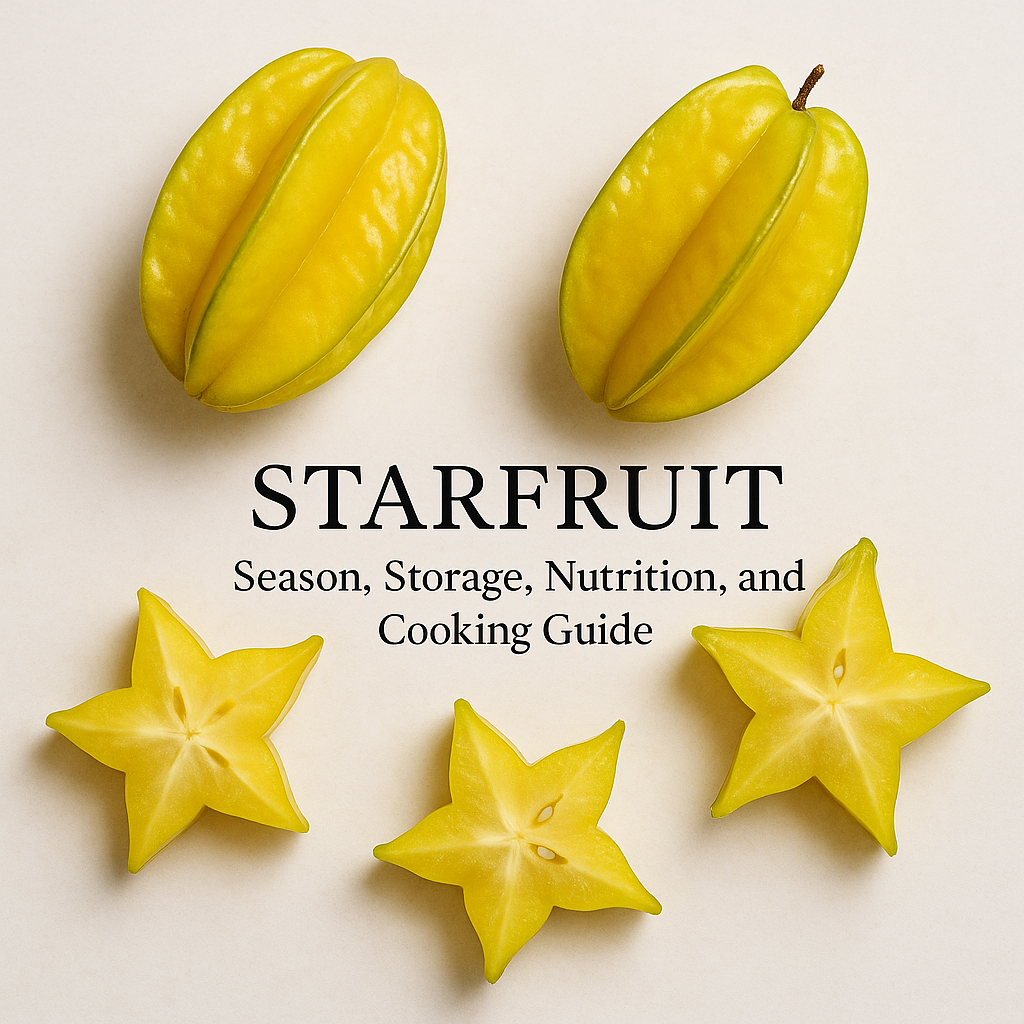
Starfruit is quite distinctive due to its star-like shape when sliced cross-sectionally. It typically has a waxy, yellow-green to golden skin with two to six ridges running from pole to pole. Its flesh is crunchy, succulent, and often compared to citrus fruits for its tartness, with certain varieties having a hint of sweetness.
💪 Benefits
Starfruit offers a plethora of benefits beyond its tantalizing appearance. It is a low-calorie fruit, making it an ideal addition to weight-conscious diets. Additionally, it is rich in dietary fiber, which aids in digestion, and vitamin C, which supports the immune system. The fruit also contains flavonoids, which contribute to various health-promoting properties.
🌍 Origin
Native to Southeast Asia, starfruit has a storied history of cultivation in countries like Malaysia, the Philippines, and Indonesia. Over time, it spread across tropical regions and is now grown in parts of India, the Caribbean, South America, and tropical Australia. Its adaptability to warm, humid climates makes it a favorite among tropical fruit growers.
📅 Harvest Season
The harvest season for starfruit usually depends on the growing region's climate. In general, starfruit trees can bear fruit multiple times a year under the right conditions. Most often, the peak season falls between late summer and early winter. However, in equatorial regions, starfruit may be available all year round, providing a continuous supply to local and global markets.
🧺 Varieties
Starfruit varieties can be broadly categorized based on their flavor profiles—sweet and sour. The sweetest varieties often have larger, thinner skin, whereas the tart ones are smaller and firmer. Popular varieties include the widely grown 'Fwang Tung' and 'Maher Dwarf', known for their sweet taste, and the 'Golden Star', appreciated for its bright color and tartness.
🛒 How to Choose (Checklist)
- Look for firm fruit with smooth, glossy skin.
- Avoid starfruits with brown spots or shriveled edges.
- The peak ripeness of starfruit is indicated by a vibrant yellow color with slightly brown tips.
- The fruit should feel heavy for its size, indicating juiciness.
🍽 Cooking & Eating Methods
Starfruit is versatile and can be eaten raw or cooked. Here are some methods to enjoy its delightful flavor:
- Raw: Wash thoroughly and slice into star-shaped pieces. Enjoy it as a snack or in salads.
- Juices & Smoothies: Blend with other fruits for a refreshing drink.
- Salsas: Dice and mix with herbs and spices for a zesty condiment.
- Desserts: Use as a topping for cakes or incorporate into fruit tarts.
- Cooked Dishes: Starfruit can also be used in stews and curries, where it adds a tangy twist to the flavors.
❄ Storage Tips
Proper storage can extend the shelf life of starfruit, allowing you to enjoy its flavor a bit longer:
- Store unripe starfruit at room temperature until they ripen.
- Ripe starfruit should be kept in the refrigerator, ideally in a crisper drawer, where they can remain fresh for up to two weeks.
- If you have more starfruit than you can consume quickly, consider slicing and freezing them for future use in smoothies or baked dishes.
❓ FAQ
Q1: Can I eat starfruit if I have kidney issues?
Individuals with kidney conditions should consult with a healthcare professional before consuming starfruit. It contains oxalates, which may not be suitable for those with such conditions.
Q2: How do I know if a starfruit is rotten?
Rotten starfruit will often have a sour smell, a mushy texture, and skin that appears excessively brown or shriveled.
Q3: Is starfruit safe for pets?
It's best to keep starfruit away from pets, especially dogs and cats, as the fruit contains compounds that could potentially be harmful to them.