🍓 Soursop: Season, Storage, Nutrition, and Cooking Guide
Soursop, a tropical fruit that boasts an array of distinctive flavors, holds a special place in culinary traditions across the globe. Known for its rich, creamy texture and sweet-tart taste, soursop is not just a delight for the taste buds but also an intriguing fruit with an interesting profile. From learning about its seasonality to how it can fit into your diet, this guide offers an in-depth exploration into the world of soursop.
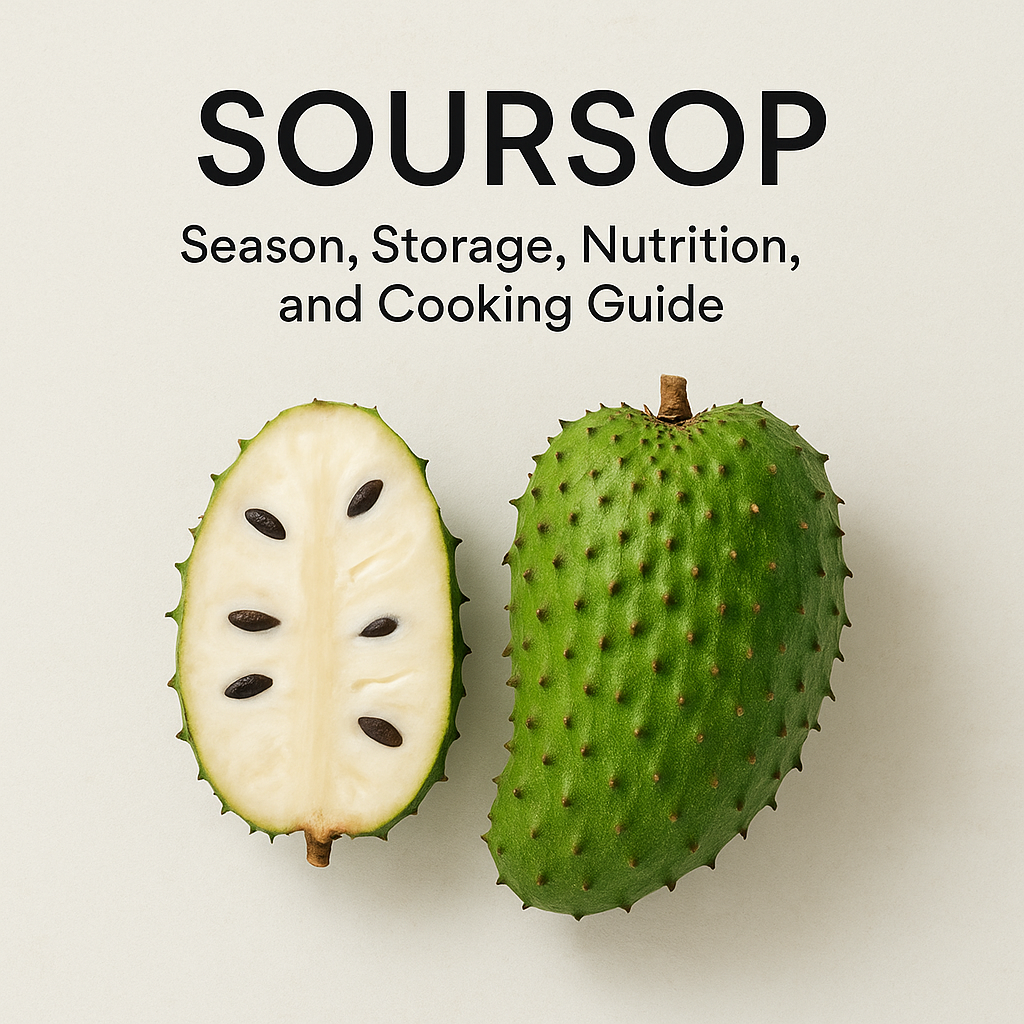
✨ Characteristics
Soursop, scientifically known as Annona muricata, belongs to the Annonaceae family. This heart-shaped fruit is covered in a spiky green skin and can weigh up to 15 pounds. On the inside, it has a creamy, white pulp speckled with shiny black seeds. Its flavor, a unique amalgamation of pineapple and banana, is truly one-of-a-kind.
💪 Benefits
Soursop is not just a culinary delight but is also loaded with nutritional benefits. It is a good source of dietary fiber, vitamin C, and several B vitamins like thiamine, riboflavin, and folate. It also contains some essential minerals such as calcium, magnesium, and potassium. While it's enjoyed worldwide for its taste, soursop's nutrient profile makes it a valuable addition to a healthy diet.
🌍 Origin
Native to the tropical regions of the Americas, soursop has been grown for centuries, primarily in the Caribbean, Central America, and northern South America. Over time, its cultivation has spread to other tropical regions such as Southeast Asia, where the climate and soil conditions are favorable for its growth.
📅 Harvest Season
Soursop thrives in warm climates and typically blooms throughout the year. However, the peak harvest season depends largely on the region. In countries like Jamaica and the Dominican Republic, its prime time is generally from June to September. Meanwhile, in southern parts of Asia, the harvesting period might differ slightly due to varying climatic conditions.
🧺 Varieties
While there is only one primary species of soursop, its cultivation across diverse regions has led to subtle variations that can affect the fruit's size, flavor, and texture. Different cultivation methods and growing conditions result in varietal differences, although these are not formally classified into categories.
🛒 How to Choose (Checklist)
Selecting the right soursop is crucial for ensuring flavor and texture. Here's a quick checklist to guide you:
- Opt for fruits that are large, plump, and emit a subtle sweet fragrance.
- Ensure the skin has glossy green color with a few dark blemishes – signs that it is ripening.
- Press gently - the fruit should yield slightly, indicating it's ripe and ready to eat.
🍽 Cooking & Eating Methods
Soursop can be enjoyed in an array of culinary preparations. Traditionally, it is consumed fresh by simply scooping out the flesh. It is also a popular ingredient in smoothies, juices, and desserts owing to its creamy consistency and sweet flavor. Another versatile use is to incorporate it into making ice creams, sorbets, or tropical cocktails, where it lends both its unique taste and texture.
❄ Storage Tips
For optimal freshness, store unripe soursop at room temperature, allowing it to ripen naturally. Once ripe, it can be kept in the refrigerator for up to two days or frozen for longer preservation. Before freezing, scoop out the pulp and store it in airtight containers or freezer bags to protect its flavor and nutrition.
❓ FAQ
- Can soursop be consumed raw? Yes, the most common way to enjoy soursop is to eat the pulp raw, after removing the seeds.
- What's the best way to store soursop pulp? Once extracted from the fruit, the pulp can be stored in the refrigerator for immediate use or frozen for extended preservation.
- Are there any culinary pairings to avoid? Soursop is versatile with many tropical flavors; however, avoid overly spicy pairings that might overshadow its delicate taste.