🍓 Sapodilla: Season, Storage, Nutrition, and Cooking Guide
Sapodilla, also known as Manilkara zapota, is a tropical fruit that boasts a unique flavor profile and a wide array of nutritional benefits. This guide explores everything you need to know about sapodilla: its characteristics, benefits, origin, harvest season, and much more. Whether you want to learn how to choose the best sapodillas or explore various ways to incorporate them into your meals, this comprehensive guide has got you covered.
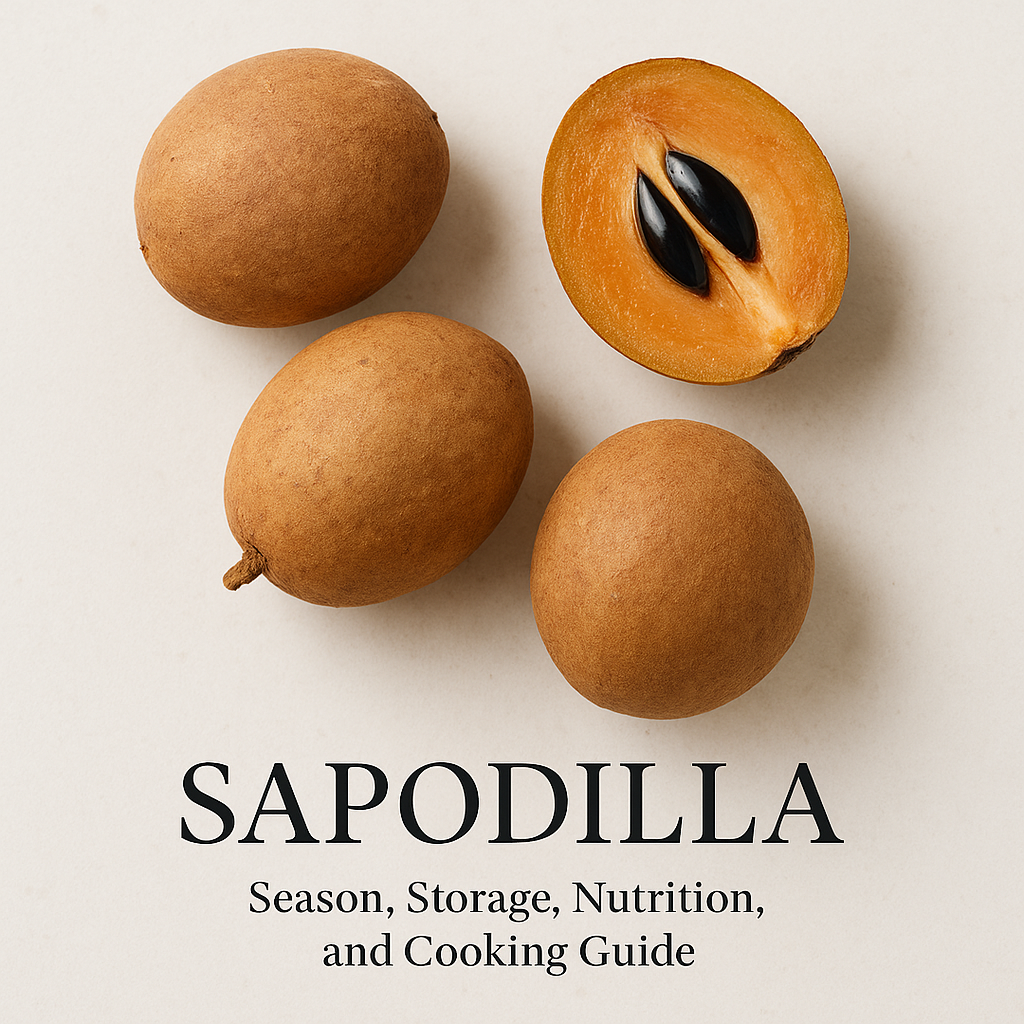
✨ Characteristics
Sapodillas are small, round to oval-shaped fruits with a rough, brown skin that resembles a potato. The fruit’s flesh is sweet with a malt-like flavor, and it often contains a few small, black seeds. The texture is somewhat gritty, similar to a pear, making it a delight to bite into. Sapodillas mature on evergreen trees that can grow up to 30 meters tall, often found in tropical climates.
💪 Benefits
While particularly known for their delightful taste, sapodillas are also packed with a host of nutrients. They're an excellent source of dietary fiber, thus aiding in digestion and promoting gut health. Sapodillas are also rich in vitamins, including vitamin A and vitamin C, which support vision and immune function. These fruits are a good source of carbohydrates, providing energy for daily activities. Additionally, sapodillas contain minerals such as iron, calcium, and potassium, which contribute to the overall functioning of the body.
🌍 Origin
The sapodilla tree is native to Southern Mexico, Central America, and the Caribbean. From these regions, the fruit spread to other parts of the world, including Southeast Asia, the Indian subcontinent, and certain regions of Africa. The sapodilla tree thrives in tropical and subtropical climates, making it a popular choice for orchards in warm regions. Historically, sapodillas have been valued not only for their fruit but also for their latex, which is used to produce chewing gum.
📅 Harvest Season
The exact harvest season for sapodilla can vary depending on the growing region, but generally, it is available throughout the year in tropical climates. In most regions, peak harvesting times fall between May and September. However, in some areas, two harvest seasons occur: one from December to March and another from February to May. Sapodillas ripen best when left on the tree until maturity.
🧺 Varieties
There are several popular varieties of sapodilla, each with its unique flavor and texture. Some of the notable ones include:
- Prolific: Known for its large fruit size and high yield, the Prolific variety is favored by commercial growers.
- Alano: A small to medium-sized fruit, the Alano is renowned for its exceptionally sweet taste and smooth texture.
- Silas Woods: This variety is prized for its sweet flavor and is commonly grown in home gardens.
- Hasya: The Hasya variety is another large sapodilla known for its pleasing flavor and abundance of flesh.
🛒 How to Choose (Checklist)
When selecting sapodillas at the market, look for the following characteristics to ensure you're getting the best quality fruit:
- Firmness: Gently squeeze the fruit. It should yield slightly under pressure but not feel mushy.
- Color: Choose fruits with smooth, bruise-free skin. The color should be a consistent brown.
- Smell: Ripe sapodillas exude a sweet, fragrant aroma from the stem end.
- Size: While size can vary by variety, opt for fruits that are uniformly sized within their group.
- Absence of blemishes: Ensure there are no signs of cracks or mold on the fruit's surface.
🍽 Cooking & Eating Methods
Sapodillas can be enjoyed in a variety of ways, whether fresh or as an ingredient in various dishes. Here are some popular methods of cooking and enjoying sapodilla:
- Fresh: Simply slice open the sapodilla and scoop out the flesh with a spoon. Discard the seeds.
- Smoothies: Blend ripe sapodilla pulp with milk or yogurt for a creamy, sweet smoothie.
- Desserts: Use sapodilla in cakes, puddings, or jams for a tropical twist.
- Salads: Add chunks of sapodilla to fruit salads for additional sweetness and texture.
- Sorbets and Ice Creams: Process sapodilla pulp into refreshing sorbets or incorporate it into ice cream recipes.
❄ Storage Tips
Storing sapodilla properly will ensure that you enjoy its flavor at its peak. Here are some storage tips to help maintain the quality of your fruit:
- Ripening: If the sapodilla is not fully ripe, leave it at room temperature to ripen naturally.
- Refrigeration: Once ripe, store sapodillas in the refrigerator to prolong freshness. They can last up to a week when refrigerated.
- Freezing: For longer storage, freeze sapodilla pulp. Scoop out the flesh, remove the seeds, and place it in an airtight container before freezing.
❓ FAQ
Q: Can sapodilla seeds be eaten?
A: No, sapodilla seeds are not edible. They are hard, black, and should be discarded.
Q: Do sapodillas continue to ripen after being picked?
A: Yes, sapodillas can continue to ripen after harvest, similar to bananas. Leave them at room temperature until they reach the desired ripeness.
Q: Is sapodilla suitable for baking?
A: Yes, ripe sapodilla can be used in various baking recipes, such as cakes and pies, to add natural sweetness.