🍓 Salak: Season, Storage, Nutrition, and Cooking Guide
Known for its unique, snake-like skin that encases a deliciously juicy and pleasantly tangy interior, salak is a fascinating tropical fruit. This article explores everything you need to know about salak—from its distinct characteristics to various cooking techniques, ensuring you can enjoy this fruit at its best.
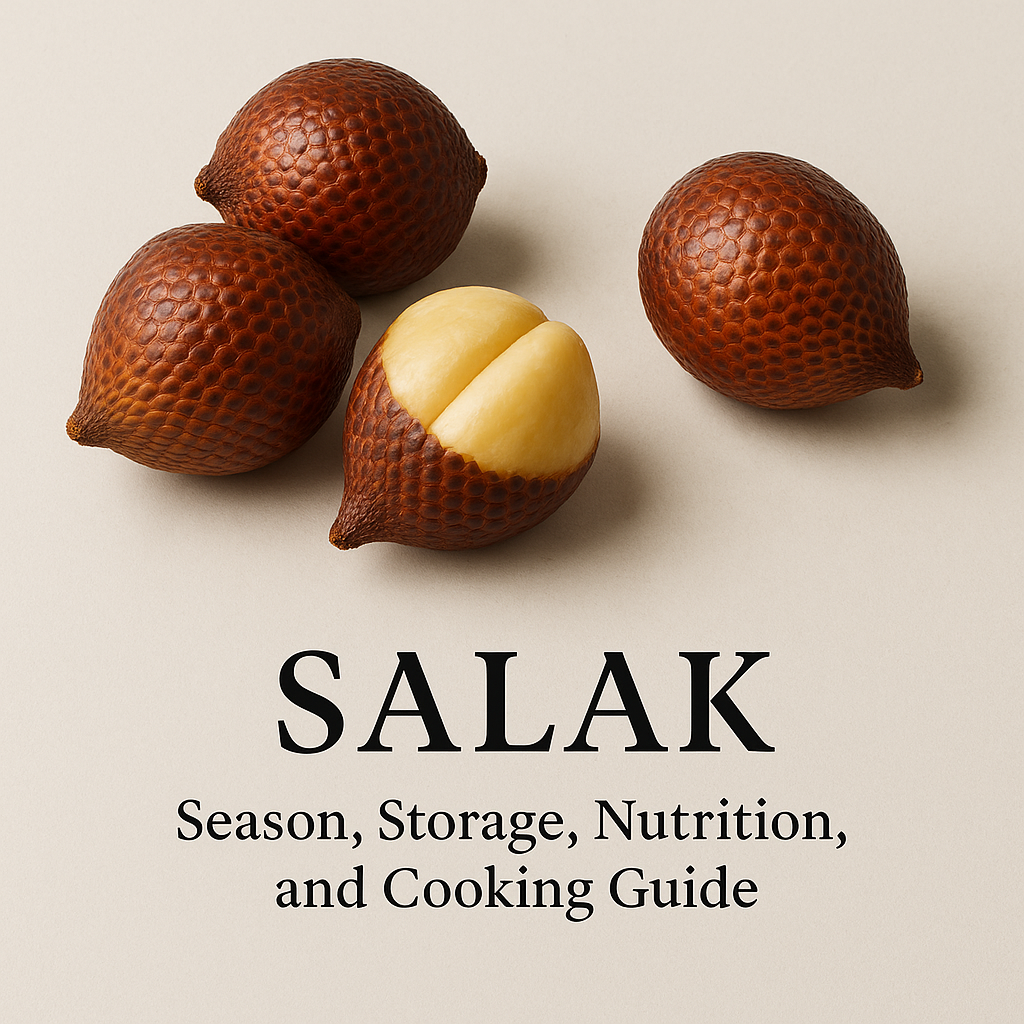
✨ Characteristics
The salak fruit, often referred to as "snake fruit," is native to Indonesia and bears a rough, scaly exterior that closely resembles the skin of a snake. The inside reveals a sweet and tart flesh that's firm, crisp, and juicy, akin to a mix of apple, banana, and pineapple flavor. Its unique appearance and delightful taste make it a distinctive and worthy addition to your fruit palate.
💪 Benefits
Salak is not only prized for its taste but also for its nutritional benefits. Although not a purpose-specific detox food, incorporating salak into a varied diet can contribute to essential nutrient intake.
- Rich in Fiber: Salak provides a good source of dietary fiber, which supports healthy digestion and helps maintain a balanced diet.
- Antioxidants: The presence of antioxidants in salak helps to combat free radicals, which are effective in maintaining overall health.
- Vitamins and Minerals: Salak is packed with several vitamins and minerals, such as vitamin C, iron, and calcium, that are essential to robust body functions.
🌍 Origin
Salak traces its origin to Indonesia, particularly in the region of Bali and Java, where it grows abundantly. Today, it's cultivated in several other Southeast Asian countries, including Thailand and Malaysia, due to its increasing popularity. The fruit is a delightful component of the region's lush food arrays and is often appreciated both fresh and as part of local culinary specials.
📅 Harvest Season
Salak thrives in tropical climates and typically has multiple harvest seasons throughout the year. It's primarily gathered in two major periods; first between December and February and then again from May to July. Its year-round availability in tropical countries makes it a reliable option if seeking exotic fruit experiences at varying times of the year.
🧺 Varieties
Although many salak varieties exist, three main types make frequent appearances in markets:
- Salak Pondoh: Known for its sweet flavor with a minimal tang, this variety originates from Java and is one of the most popular types both locally and abroad.
- Salak Bali: As the name suggests, this variety hails from Bali and is celebrated for its balanced sweetness and acidity, often preferred for salads and dessert toppings.
- Salak Gading: Recognized for its yellow coloring differing from the typical brownish salak, this variety offers a unique taste that is both sweet and sour.
🛒 How to Choose (Checklist)
- 🟢 Look for salak fruits with tight and shiny scales. A dull appearance may indicate overripe or stale fruit.
- 🟢 Press gently to check firmness. The fruit should give slightly, indicating it's ripe but not mushy.
- 🟢 Smell the salak; ripe, fresh ones emit a fragrant aroma.
- 🟢 Avoid fruits with visible mold or softened scales to ensure quality and freshness.
🍽 Cooking & Eating Methods
The culinary versatility of salak allows for several preparation methods:
- Raw: Enjoy the fruit fresh by peeling the scaly skin and eating the inner flesh, often seasoned with a bit of salt or chili powder to enhance flavor.
- Salads: Chop into pieces and add to fruit salads for a tropical twist, offering a delightful blend of sweet and tart flavors.
- Preserves and Pickles: Preserve in sugar syrup or vinegar to enjoy salak all year round.
- Desserts: Integrate into desserts—like pies and tarts—for its unique taste and texture.
- Juices and Smoothies: Blend salak with other tropical fruits for a refreshing beverage, naturally enhancing the drink with its zesty notes.
❄ Storage Tips
Storing salak appropriately extends its shelf life and maintains its quality:
- At Room Temperature: Keep unpeeled salak in a cool, dry place for 1 to 2 days if you plan to consume it soon. Exposure to high heat and light should be minimized to prevent spoilage.
- Refrigeration: Store the fruit in the refrigerator for longer shelf life, lasting up to a week without significant quality loss. Use a perforated plastic bag to preserve freshness.
- Frozen Storage: For extended storage, freeze the peeled fruits on a tray before transferring them to airtight bags. This method maintains quality over several months.
❓ FAQ (3 questions)
- Q1: Can I grow salak at home?
- Q2: Is salak safe for children to eat?
- Q3: What dishes pair well with salak?
A1: While growing salak at home is an intriguing endeavor, it requires a tropical climate similar to its native environment, alongside substantial space due to its sprawling growth habits.
A2: Yes, salak can be a healthy addition to a child’s diet as it offers various nutrients. However, it is advisable to remove seeds before consumption and introduce it gradually to assess any possible allergic reactions.
A3: Salak pairs excellently with tropical fish, chicken dishes, and a variety of desserts where its distinct texture and flavor can act as a compelling contrast or complement to other ingredients.