🍓 Rose Apple: Season, Storage, Nutrition, and Cooking Guide
The rose apple, not widely known as other fruits, offers a fascinating exploration into the world of nutritious and versatile fruit choices. Join us as we delve into the details of the rose apple, dissecting its characteristics, nutritional benefits, origin, and the many ways it can be enjoyed in your kitchen.
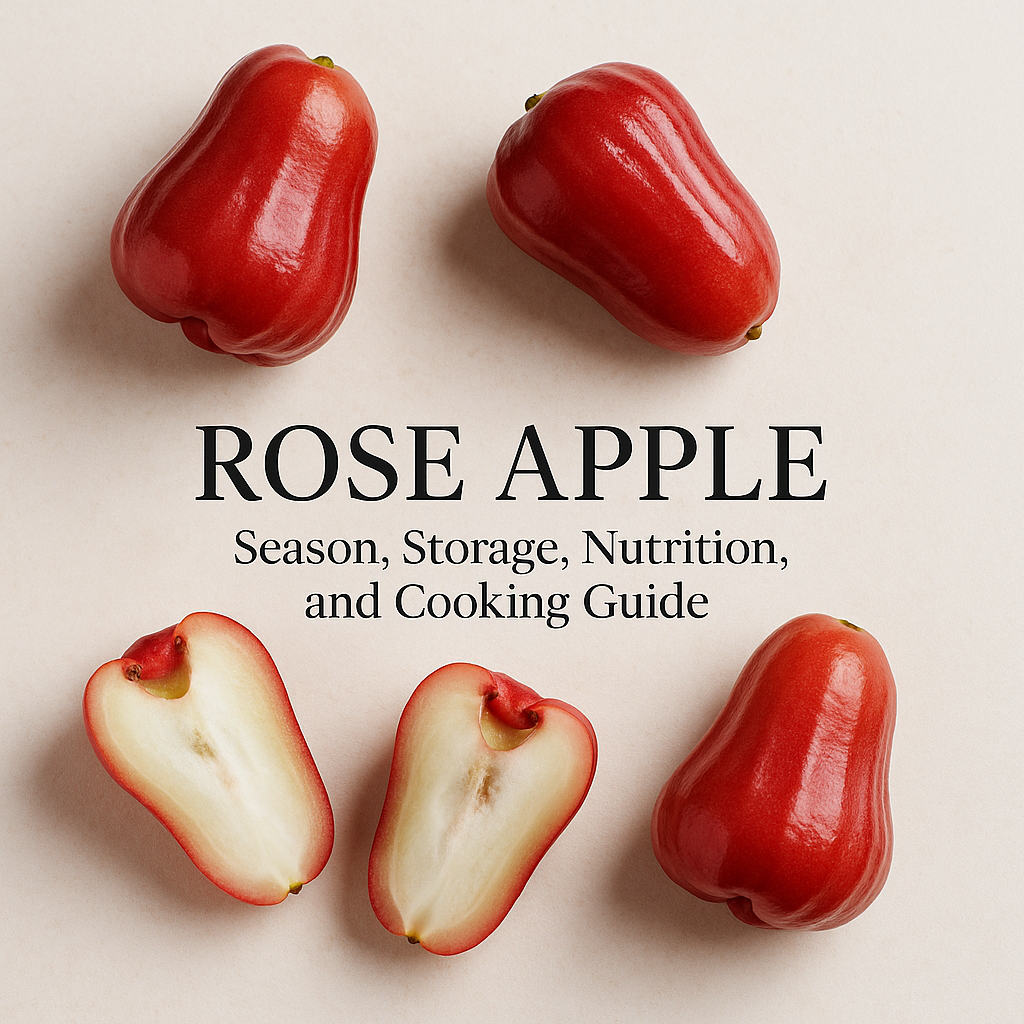
✨ Characteristics
Rose apples, scientifically named Syzygium jambos, belong to the Myrtaceae family. They are not actual apples but bear a resemblance to their namesake due to their shape and a hint of rose aroma. Rose apples typically have a bell shape, varying shades of pink or red skin, and crisp flesh that gives way to juicy sweetness. The fruit measures about an inch or two in diameter and boasts a stunning floral fragrance that is often mirrored by its taste.
The center of the fruit contains a small number of seeds surrounded by a mildly thick, cottony layer. The outer skin is thin and edible, while the interior flesh is crunchy and moist. Its distinctive flavor is a mix of sweet and tart, with floral notes that are both refreshing and light.
💪 Benefits
Beyond its charming taste and aroma, the rose apple is a storehouse of essential nutrients that significantly contribute to a balanced diet. It is rich in vitamins A, C, and a range of B vitamins, supporting skin health, immunity, and energy production.
High in dietary fiber, rose apples encourage digestive health, helping to regulate bowel movements and maintain intestinal health. Its antioxidants help combat free radicals, promoting cellular health and youthfulness.
Additionally, the fruit is low in calories, making it an excellent snack for weight-conscious individuals. It also contains a modest amount of minerals like calcium, iron, and magnesium, which are pivotal for bone density, blood circulation, and muscle function.
🌍 Origin
The rose apple has its origins in Southeast Asia and India, flourishing in tropical climates. Over time, it has traversed the globe, finding homes in diverse regions, including parts of the Pacific and the Caribbean.
Due to its adaptability, the rose apple tree is now cultivated in several tropical and subtropical areas worldwide, where it often grows as an ornamental plant. With varying local names and cultural significance, the fruit has been integrated into numerous culinary traditions.
📅 Harvest Season
The typical harvest season for rose apples varies depending on the region of cultivation. Generally, they are available in late spring through the summer. In areas like Florida and Hawaii, they might be found as early as April and extending into July or August.
The availability aligns with their favorable growing conditions, requiring warm climates and an adequate rainfall pattern. Being a seasonal fruit, the rose apple's market presence can be fleeting but is eagerly anticipated during the warmer months.
🧺 Varieties
Although the rose apple itself refers primarily to Syzygium jambos, it is essential to recognize that the Syzygium genus includes numerous varieties with slight differences in color and flavor.
Some commonly found varieties include:
- Jambu Air: Usually found in Indonesia, characterized by a bright pink exterior and a refreshingly watery taste.
- Malabar Plum: Known for its deep red hue, often found in the Indian subcontinent with a slightly tart flavor.
- Water Apple: Mostly grown in Malaysia and Thailand, noted for its more mild flavor and pale color.
🛒 How to Choose (Checklist)
When selecting rose apples, consider the following checklist to ensure you pick the best quality:
- Look for a firm texture; the fruit should not be too soft or bruised.
- The skin should be vibrant and consistent in color, without any spots or discoloration.
- Check for a fresh, rosy aroma, indicating ripeness and flavor.
- Avoid overly large fruits, as they may be less flavorful; a medium size is often ideal.
- Inspect the skin for any signs of decay or holes.
🍽 Cooking & Eating Methods
Rose apples offer diverse culinary applications thanks to their unique taste and texture. They can be enjoyed fresh as a healthy snack, sliced into salads, or even used in desserts. Their floral aroma adds an exciting dimension to various dishes without being overpowering.
Common culinary uses include:
- Fresh Eating: Simply wash and eat; great for picnics and lunchboxes.
- Salads: Add thin slices to fruit salads for a refreshing twist.
- Jams and Jellies: Cooked with sugar, rose apples make delicious preserves.
- Cocktails and Mocktails: Muddled rose apple adds a delicate flavor to drinks.
- Baking: Incorporate them in pies and tarts for a unique filling.
The fruit can be paired with both sweet and savory dishes and is known to complement flavors like citrus, berries, and cardamom.
❄ Storage Tips
Proper storage of rose apples ensures their longevity and flavor preservation. If not consumed immediately, follow these tips:
- Refrigeration: Store rose apples in the refrigerator to extend their freshness. They can typically last up to two weeks in a cool environment.
- Ventilation: Avoid airtight containers; instead, use a breathable bag to allow air circulation.
- Separate from Ethylene Emitters: Keep away from fruits like bananas and apples that release ethylene gas, which can hasten ripening.
- Freezing: While not recommended for whole fruits due to texture changes, slices can be frozen for use in beverages or cooking.
❓ FAQ
What are the other names for rose apple?
Rose apple is commonly referred to as jamun in some regions, and it can also be called jambu, water apple, or wax apple, depending on local vernacular and species variations.
Are rose apples similar to regular apples?
While both are fruits, rose apples and regular apples are different in taste and texture. Rose apples are lighter, with a floral fragrance and crispness that contrasts the denser, sweeter flesh of regular apples.
Can rose apples be used in savory dishes?
Yes, rose apples can feature in savory dishes. They add an interesting contrast and flavor to dishes like salsas, curries, and chutneys thanks to their subtle sweet and tart notes.