🍓 Raspberry: Season, Storage, Nutrition, and Cooking Guide
Raspberries, the delightful red berries, have long been a favorite among fruit enthusiasts. Their sweet-tart flavor and juicy texture make them a versatile ingredient in a variety of dishes. This fruit not only tantalizes the taste buds but also comes packed with health benefits. From understanding their origins to nailing down the perfect storage tips, this guide is your go-to resource for everything raspberry-related.
✨ Characteristics
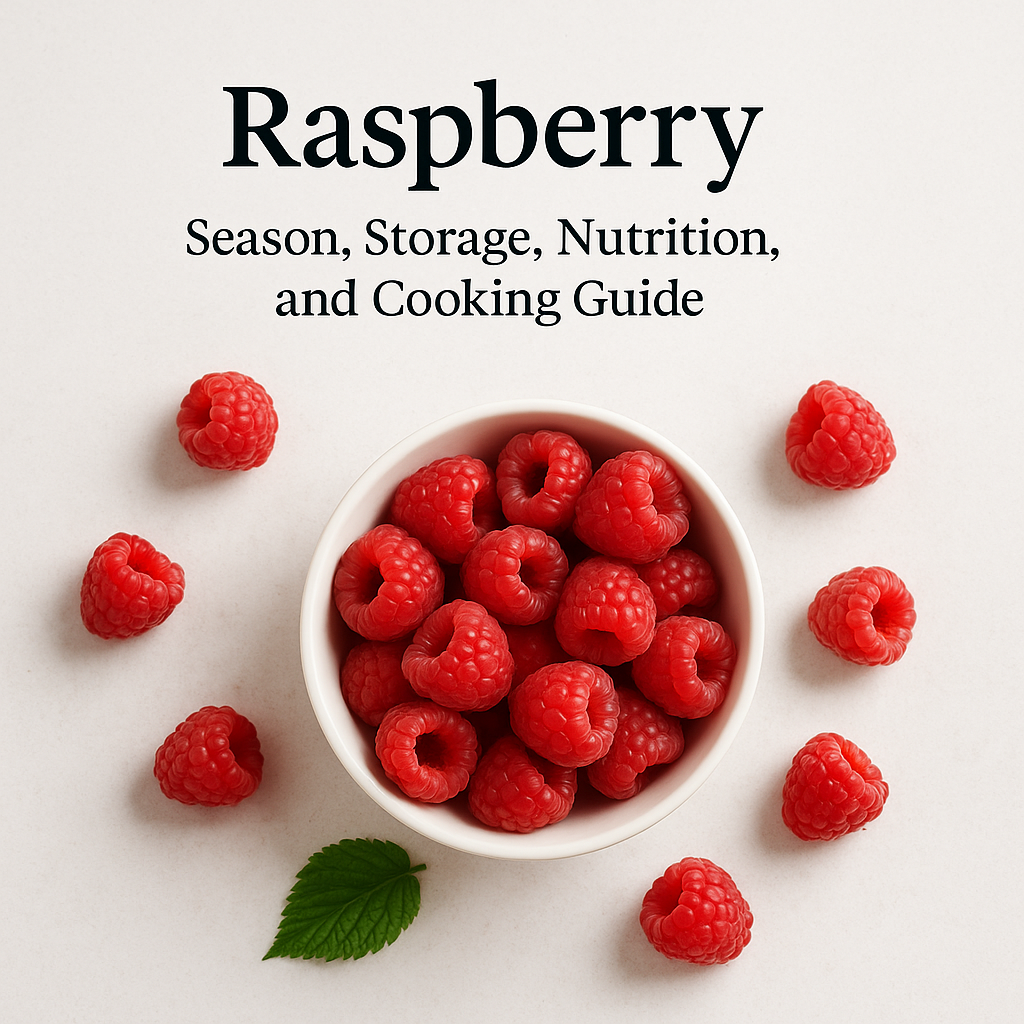
Raspberries are small, aggregate fruits that are native to Europe and Northern Asia. They belong to the Rosaceae family and are closely related to other berries like blackberries and strawberries. A raspberry consists of multiple drupelets arranged around a central core, offering a luscious texture and distinct taste.
💪 Benefits
Raspberries are known for their remarkable nutritional profile. They are rich in dietary fiber, vitamins C and K, and manganese. These attributes contribute to overall wellness, supporting digestive health and providing antioxidants that help combat oxidative stress. A diet inclusive of raspberries can be beneficial for heart health and aid in maintaining a balanced diet.
🌍 Origin
Originating from Europe, raspberries have been cultivated for their health and culinary benefits since ancient times. Their cultivation has since spread worldwide, with significant production in countries like the United States, Russia, and Chile. These berries thrive in temperate regions, favoring climates with warm summers and cool winters.
📅 Harvest Season
Raspberries are typically harvested in the summer, peaking in June and July in the Northern Hemisphere. However, modern agricultural advancements have led to the availability of raspberry varieties that ripen in the autumn, extending the fresh supply well into the colder months. This ensures that raspberry enthusiasts can enjoy these delicious berries almost year-round.
🧺 Varieties
There are several varieties of raspberries, each bringing its unique flavor and characteristics. Common types include red, black, and gold raspberries. Red raspberries are the most widely cultivated and recognized, offering a sweet yet tangy flavor. Black raspberries, known for their intense color and rich antioxidant content, provide a slightly earthier taste. Gold raspberries are sweeter and milder and are often used to add a vibrant touch to culinary creations.
🛒 How to Choose (Checklist)
- Look for: Bright and uniform color without any signs of mold or damage.
- Check the firmness: Berries should be firm and plump, not mushy.
- Smell: Fresh raspberries will emit a sweet fragrance.
- Inspect the container: Ensure there is no moisture or juice leakage.
- Purchase in season: Opt for local produce when in season for the freshest taste.
🍽 Cooking & Eating Methods
Raspberries can be enjoyed fresh or incorporated into a variety of dishes. They make an excellent addition to salads, cereals, and desserts. Raspberries can be cooked into jams and sauces or used as a topping for pancakes and waffles. For a refreshing twist, consider incorporating them into smoothies and cocktails. Cooking with raspberries allows their flavors to shine, enhancing both sweet and savory recipes.
❄ Storage Tips
To maximize their shelf life, store fresh raspberries in the refrigerator. Place them in a single layer on a paper towel-lined tray, cover them lightly with a paper towel, and consume within 2-3 days. For long-term storage, freezing is an effective option. Spread them on a baking sheet to freeze individually before transferring them to an airtight container. Proper storage ensures that raspberries retain their juicy texture and vibrant flavor.
❓ FAQ
Can raspberries be eaten every day?
Yes, raspberries can be part of a balanced daily diet. They provide essential nutrients and add variety and flavor to meals. However, it’s important to consume them in moderation as part of a varied diet.
How do you wash raspberries without damaging them?
To wash raspberries without damage, rinse them gently under cool, running water just before consumption. Avoid soaking as it may lead to sogginess and reduced shelf life.
Are frozen raspberries as nutritious as fresh ones?
Frozen raspberries retain most of their nutritional value. They are typically frozen shortly after harvest, preserving their vitamins and minerals. Opt for unsweetened varieties to ensure no added sugars.