🍓 Rambutan: Season, Storage, Nutrition, and Cooking Guide
Rambutan is a tropical gem often overshadowed by its more famous cousin, the lychee. With its vibrant red skin and peculiar hairy spikes, it not only piques curiosity but also offers a deliciously sweet and slightly tangy flavor. This comprehensive guide explores everything you need to know about rambutan, from its seasons and storage to its nutritional benefits and cooking variations.
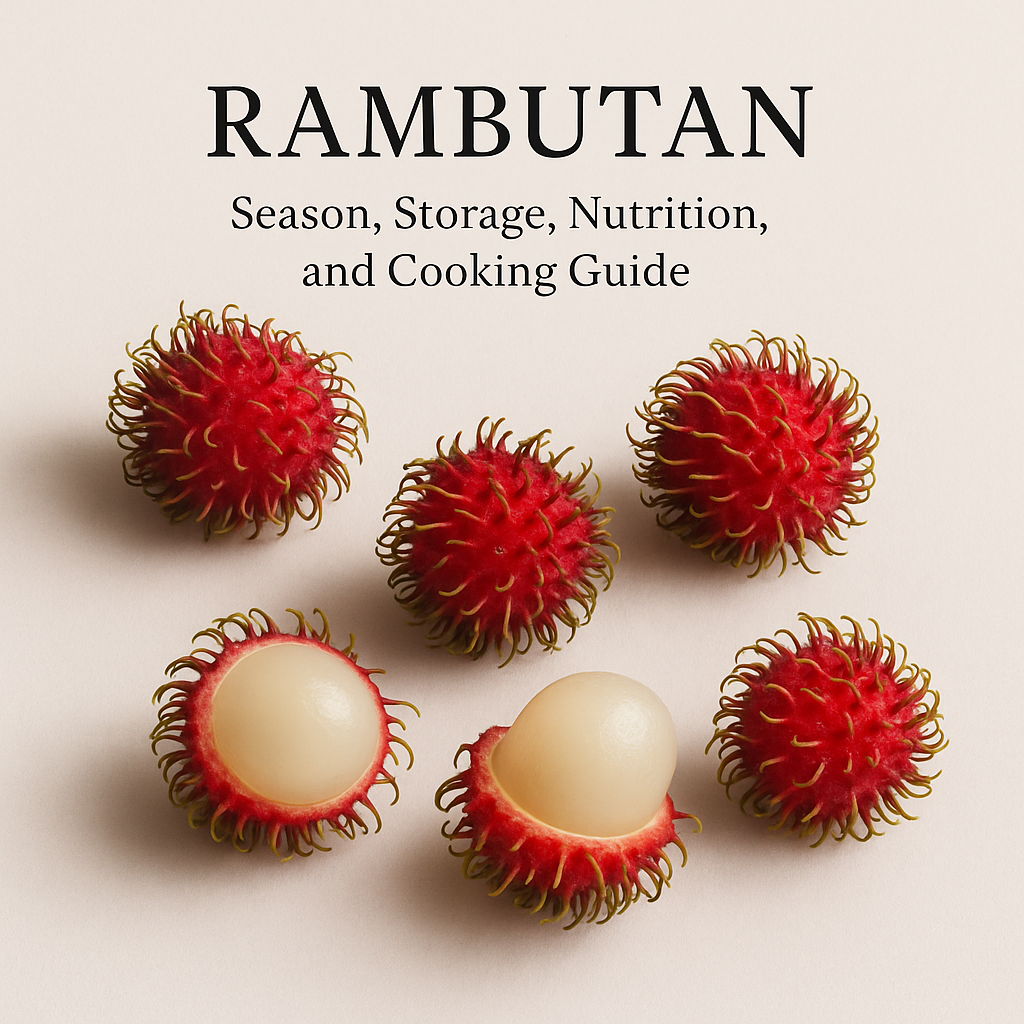
✨ Characteristics
The rambutan fruit is instantly recognizable with its hairy exterior. Despite its daunting appearance, it is easy to peel and reveals a white, translucent flesh inside. Rambutan is appreciated not only for its unique look but also for its juicy and pleasantly sweet taste. It grows in clusters on a medium-sized tropical tree that belongs to the family Sapindaceae. The fruit itself is approximately 3-6 cm in length.
💪 Benefits
While rambutan is mainly beloved for its flavor, it also packs a range of nutritional benefits. It is rich in several vitamins and minerals, including vitamin C, which aids in boosting the immune system, and copper, important for bone and brain health. Rambutan also contains small amounts of phosphorous and magnesium. Moreover, its fiber content can aid digestion, helping to maintain a healthy gut.
🌍 Origin
Rambutan is native to the Malay-Indonesian region and other regions of tropical Southeast Asia. It has also been cultivated widely in other warm climates around the world, such as in East Africa, the Caribbean islands, and Central America. Thought to have been spread by ancient trade routes, the fruit now enjoys global popularity.
📅 Harvest Season
The peak season for rambutan varies slightly depending on the geographical location. Generally, throughout Southeast Asia, rambutan is harvested during the summer months, typically from June to August. In some places like Southern India and Hawaii, there might be multiple harvests annually, exploiting the warm climate to produce two blooming periods.
🧺 Varieties
There are several rambutan varieties cultivated around the world. The most common varieties include:
- Nephelium lappaceum: Known for high quality and exotic flavor, typical of what is found in market shelves.
- Nephelium mutabile: Compared to lappaceum, mutabile has a slightly reddish tinge and often has more tightly curled spines.
- Jit Lee: Known for larger, juicier fruit with a more uniform pyriform shape.
🛒 How to Choose (Checklist)
When selecting rambutan, a visual and tactile inspection is key. Here is a checklist for choosing the best fruits:
- The skin should be firm and bright, typically red or purple.
- Spines should be flexible and not brittle, indicating freshness.
- Avoid fruits with leaky or deep brown/black patches.
- A gentle press should reveal firm flesh beneath the skin.
- Fruits should have a mild, sweet aroma rather than sour.
🍽 Cooking & Eating Methods
Rambutan is traditionally eaten fresh, often as a snack or dessert. Simply peel off the skin to reveal the edible fleshy fruit underneath. Besides eating raw, there are several other delectable ways to enjoy rambutans:
- Fruit Salads: Add peeled rambutans to fruit salads for a tropical twist.
- Smoothies: Blend them with other fruits like bananas or pineapples to amplify their sweetness.
- Sauces: Create a rambutan sauce as a condiment for grilled meats or seafood.
- Jams and Jellies: Preserve rambutan flavor by making jams or jellies that can be enjoyed year-round.
❄ Storage Tips
Rambutan should be stored properly to maintain its freshness. When left at room temperature, it is best consumed within a few days. For prolonged storage, place rambutans in a plastic bag, leaving it partly open to prevent condensation, and then store them in the refrigerator. This can keep them fresh for up to two weeks. When storing peeled rambutan, ensure they are in an airtight container to prevent them from drying out.
❓ FAQ
- Is it safe to eat rambutan seeds? The seeds of the rambutan are not typically consumed. They can be mildly toxic or bitter when raw. If planning to incorporate them in recipes, it is crucial to roast them thoroughly to nullify any bitterness, though traditionally, they are not a culinary focus.
- Can you grow rambutan at home? Yes, you can attempt to grow rambutan from seed, given you provide a suitable tropical environment. This includes warm temperatures above 20°C (68°F) and adequate humidity. It is key to note that trees grown from seeds may not yield fruit identical to the parent due to genetic variation.
- Does rambutan cause allergies? While rare, some people might experience allergic reactions to rambutan, similar to reactions to other tropical fruits. If you have fruit allergies or have never tried rambutan before, it is best to start with a small amount.