🍓 Quince: Season, Storage, Nutrition, and Cooking Guide
The quince fruit, often overlooked, holds a treasure trove of flavors and nutrients. Known for its striking appearance and aromatic allure, quince is a versatile fruit that boasts a rich culinary history. This guide delves into the multifaceted world of quince—from its origins to how best to store and savor it.
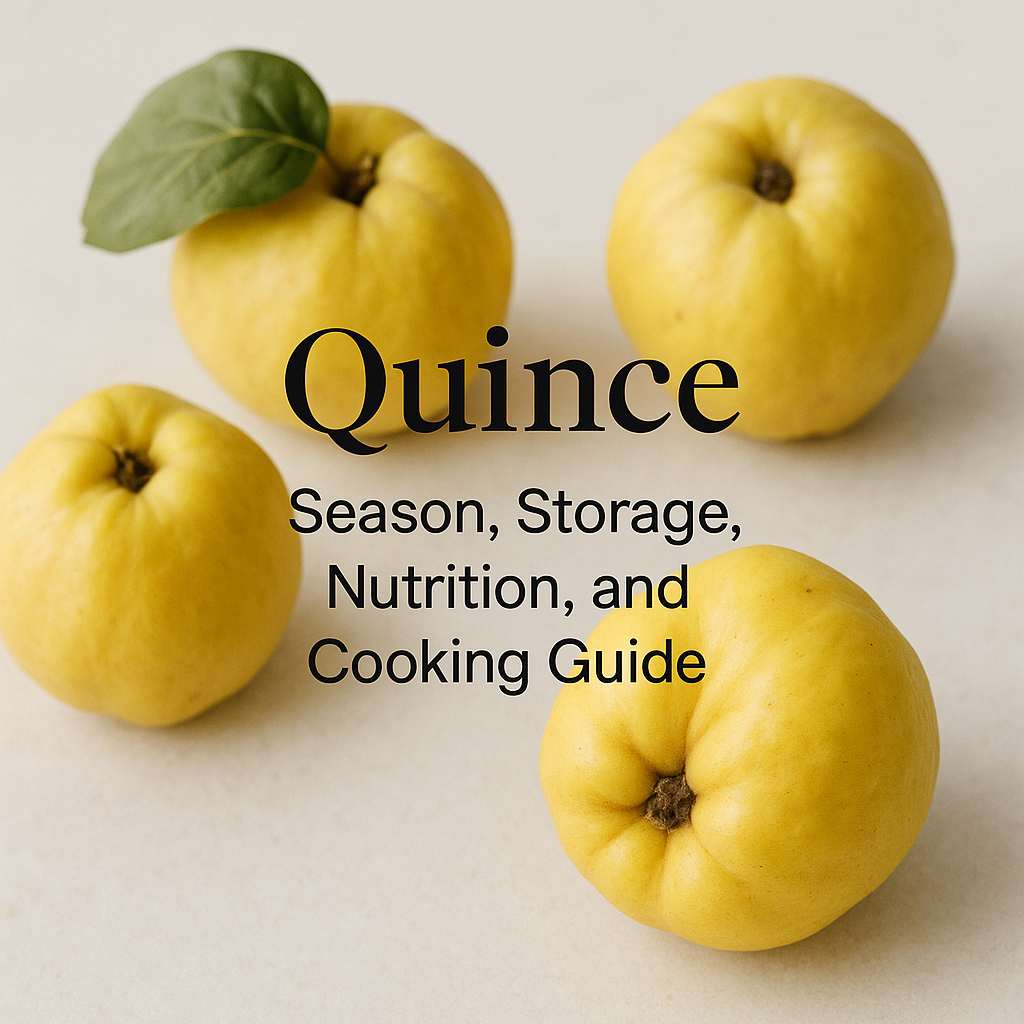
✨ Characteristics
Quince (Cydonia oblonga) is a yellow, aromatic fruit that resembles a cross between a pear and an apple. Beneath its bumpy, awkward exterior hides a hard, white flesh that transforms beautifully when cooked. Quince is inherently tart in its raw state, making it less popular for fresh consumption but a favorite in jams, jellies, and desserts when cooked.
💪 Benefits
While quince may not be as commonly consumed as apples or pears, it holds its own in the nutritional arena. It's a good source of dietary fiber, vitamin C, and several antioxidants. These components can help support digestive health, boost the immune system, and protect against oxidative stress. Quince is also naturally low in fat and calories, making it a healthy addition to a balanced diet.
🌍 Origin
Quinces have a storied history, believed to have originated in the rocky hillsides and temperate zones of Asia, particularly in Armenia, Turkey, and Iran. They have been cultivated for thousands of years and were cherished by ancient Greeks and Romans. The quince was historically symbolic of love and fertility and was often presented in mythology and folklore.
📅 Harvest Season
The quince fruit is typically harvested in the fall, with the peak season ranging from late September through November. The timing of harvest can slightly vary depending on the geographical location and climate. During this period, the fruit reaches its optimal maturity, characterized by a golden-yellow hue and a fragrant aroma.
🧺 Varieties
While there are several kinds of quince, the most common varieties include the 'Smyrna', 'Pineapple', and 'Champion'. Each has unique characteristics:
- Smyrna: One of the most popular varieties, known for its intense aroma and softer inside when cooked.
- Pineapple: This variety is named for its pineapple-like scent and is slightly sweeter, making it ideal for desserts and marmalades.
- Champion: Distinguished by its large size and robustness, perfect for culinary uses where volume is requisite.
🛒 How to Choose (Checklist)
When selecting quinces, keep the following in mind to ensure you pick the best quality fruits:
- Look for fruits that are firm, with a bright golden-yellow color.
- Avoid quinces with blemishes, bruises, or signs of molding.
- Choose fruits with a rich aroma, which indicates ripeness.
- Check for a uniform texture without any soft spots or irregularities.
🍽 Cooking & Eating Methods
Quince is most famously transformed through cooking, as heat softens its tough flesh and balances its tartness. Here are some popular methods of preparation:
- Poaching: Slowly simmering quince in water, with added sugar and spices, creates tender, fragrant slices perfect for desserts or as a sideline to savory meats.
- Baking: Baking quince enhances its natural sweetness and flavors, often with honey or sugar, resulting in a caramelized, tender offering.
- Marmalade and Jams: Quince is a classic choice for preserves, its high pectin content aiding in the natural thickening process.
Additionally, quince jelly and pastilles are popular products derived from its dense pulp, offering rich, fruit-flavored treats.
❄ Storage Tips
To maximize the shelf life of quince, proper storage is crucial:
- Keep unripe quinces at room temperature until they reach a golden-yellow color and give off their natural aroma.
- Once ripe, quinces can be stored in the refrigerator's crisper drawer, wrapped in a paper towel or plastic bag, for up to two weeks.
- For longer preservation, consider poaching or baking quince before freezing. Cooked quince maintains its flavor and texture better than raw when frozen.
❓ FAQ
- What does quince taste like? When cooked, quince has a delicate sweetness with floral notes and a hint of tartness, similar to a mix between apples and pears.
- Can quince be eaten raw? While technically edible raw, quinces are quite hard and astringent, making them more enjoyable when cooked.
- Are quinces easy to grow? With the right climate and soil conditions, quince trees are fairly low-maintenance and can be a beautiful addition to home orchards, though they require patience as they mature slowly.