🍓 Pomelo: Season, Storage, Nutrition, and Cooking Guide
Pomelo, known for its impressive size and delightful flavor, is a citrus fruit that carries a rich legacy and numerous culinary possibilities. Packed with nutritional benefits and an intrinsic aroma, this fruit is a staple in many cultures. Dive into this comprehensive guide to understand more about pomelo’s characteristics, how to select the best ones, and innovative ways to include them in your diet.
✨ Characteristics
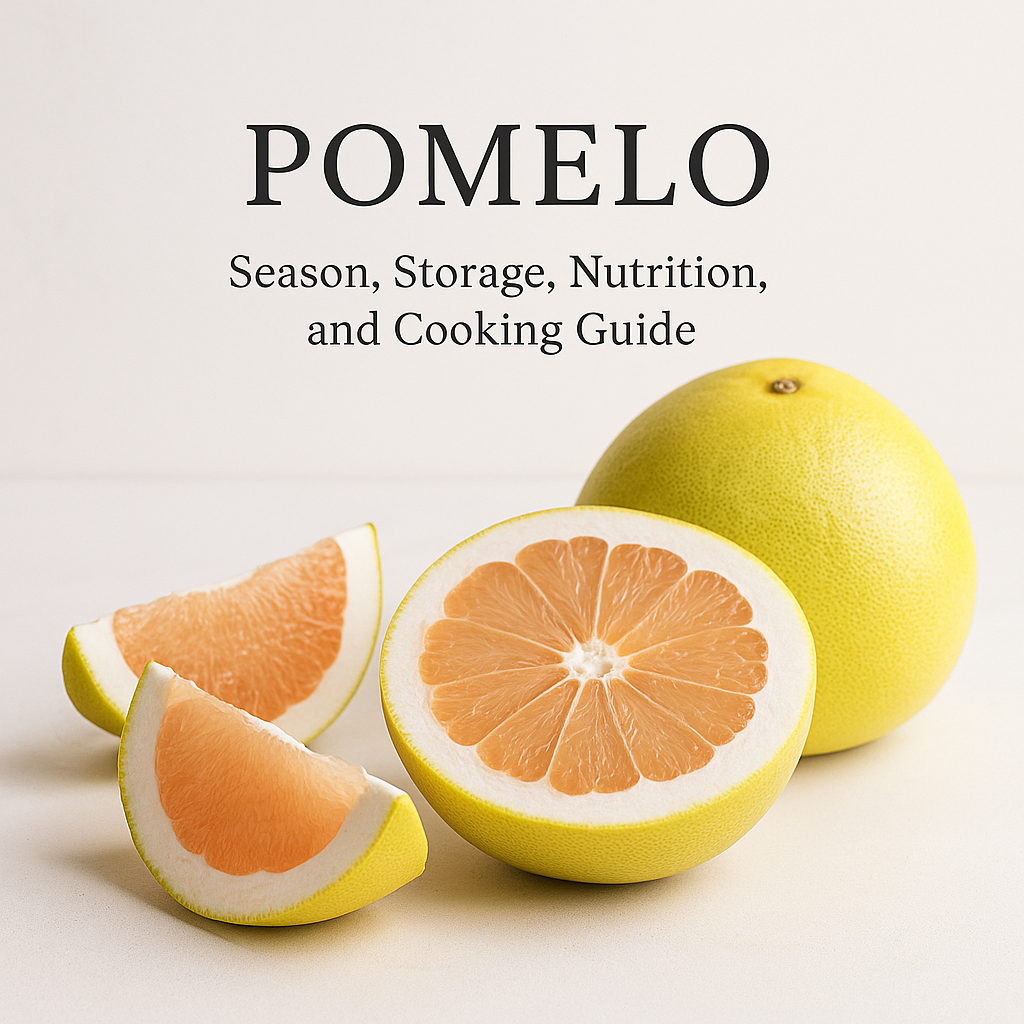
The pomelo is the largest member of the citrus family, often compared to grapefruits but larger and sweeter. With a pale green to yellow rind when ripe, its flesh can vary from white to pinkish-red. The texture is juicy yet firm, with a delicate balance between sweetness and tartness. The pomelo's thick rind makes it easy to peel, but its true charm lies inside, where the segmented flesh offers an unexpectedly refreshing treat.
💪 Benefits
Pomelos are not just known for their size but also for the array of benefits they offer. They are rich in vitamin C, which is essential for immune function and skin health. The fruit is also a good source of dietary fiber, aiding in digestion and supporting intestinal health. Additionally, pomelos provide antioxidants that help combat free radicals, contributing to overall wellbeing. Eating pomelo may encourage hydration due to its high water content, making it a refreshing snack option.
🌍 Origin
Pomelos are believed to have originated in Southeast Asia, with historical ties to Malaysia, Thailand, and southern China. Over centuries, they have been cultivated and naturalized in many warm regions, from the subtropical climates of India and Sri Lanka to the citrus-growing areas in the United States. The fruit’s adaptability to different climate conditions has made it a beloved staple in many tropical and subtropical territories around the world.
📅 Harvest Season
Pomelos are typically in season during the late fall to winter months, with their peak availability ranging from November to March. This seasonal window allows for the best flavors and nutritional values. During these months, pomelos are at their ripest and most flavorful, although in some regions, you may find them year-round due to varied growing conditions and importation.
🧺 Varieties
Several varieties of pomelos exist, each offering unique flavors and qualities. Some popular varieties include:
- Chandler: Known for its pink flesh and sweet taste, often less tangy than other varieties.
- Golden: Characterized by its pale yellow skin and sweet, juicy interior.
- Red Shaddock: Offers a blend of sweet and tangy flavors with a reddish-pink interior.
Choosing the right variety can enhance your culinary creations, depending on the flavor profile you desire.
🛒 How to Choose (Checklist)
- Weight: Select pomelos that feel heavy for their size, indicating juiciness.
- Aroma: A fragrant aroma near the stem end suggests ripeness.
- Skin: Choose fruits with smooth, undamaged rinds free from soft spots or blemishes.
- Color: Even coloring without any green patches signifies ripeness.
By following these tips, you'll ensure that you pick only the best pomelos for your consumption.
🍽 Cooking & Eating Methods
Pomelos can be a versatile ingredient in your kitchen, employed in numerous culinary applications:
- Fresh: Enjoy slices of pomelo on their own as a refreshing snack or dessert.
- Salads: Add segments to salads; they pair well with leafy greens and vinaigrettes.
- Salsas: Combine diced pomelo with herbs and spices for a tangy, citrusy salsa.
- Juices: Extract the juice for refreshing beverages or as a marinade base.
Experiment with these options to discover new favorites and flavorful dishes.
❄ Storage Tips
Proper storage can extend the life of your pomelos, keeping them fresh longer:
- Room Temperature: If you plan to consume them within a few days, keep them at room temperature away from direct sunlight.
- Refrigeration: Store pomelos in the refrigerator if you need to keep them for up to two weeks, as cooler temperatures slow the ripening process.
- Peel Each Section: Once peeled, separate sections should be stored in airtight containers to maintain freshness.
Following these storage tips will ensure that you can enjoy pomelos at their best, whether in recipes or as a standalone treat.
❓ FAQ
Q: Can I eat pomelo if I am on a calorie-restricted diet?
A: Yes, pomelo is low in calories yet filling due to its high water content, making it an excellent choice for those watching their calorie intake.
Q: How can I tell if a pomelo has gone bad?
A: Signs that pomelo has gone bad include a sour smell, soft spots on the rind, and an overly wrinkled skin texture. If any of these indicators are present, it’s best to discard the fruit.
Q: Are pomelo seeds edible?
A: Pomelo seeds are generally not consumed as they have a bitter taste and hard texture. It’s best to remove them before eating or cooking.