🍓 Pomegranate: Season, Storage, Nutrition, and Cooking Guide
The pomegranate is a jewel of the fruit world, boasting vibrant seeds packed with a tart and sweet flavor. This guide explores the pomegranate in depth, from its seasonal availability to its numerous uses in cooking, providing insights into the nutritional benefits and proper storage techniques to help you make the most of this exotic fruit.
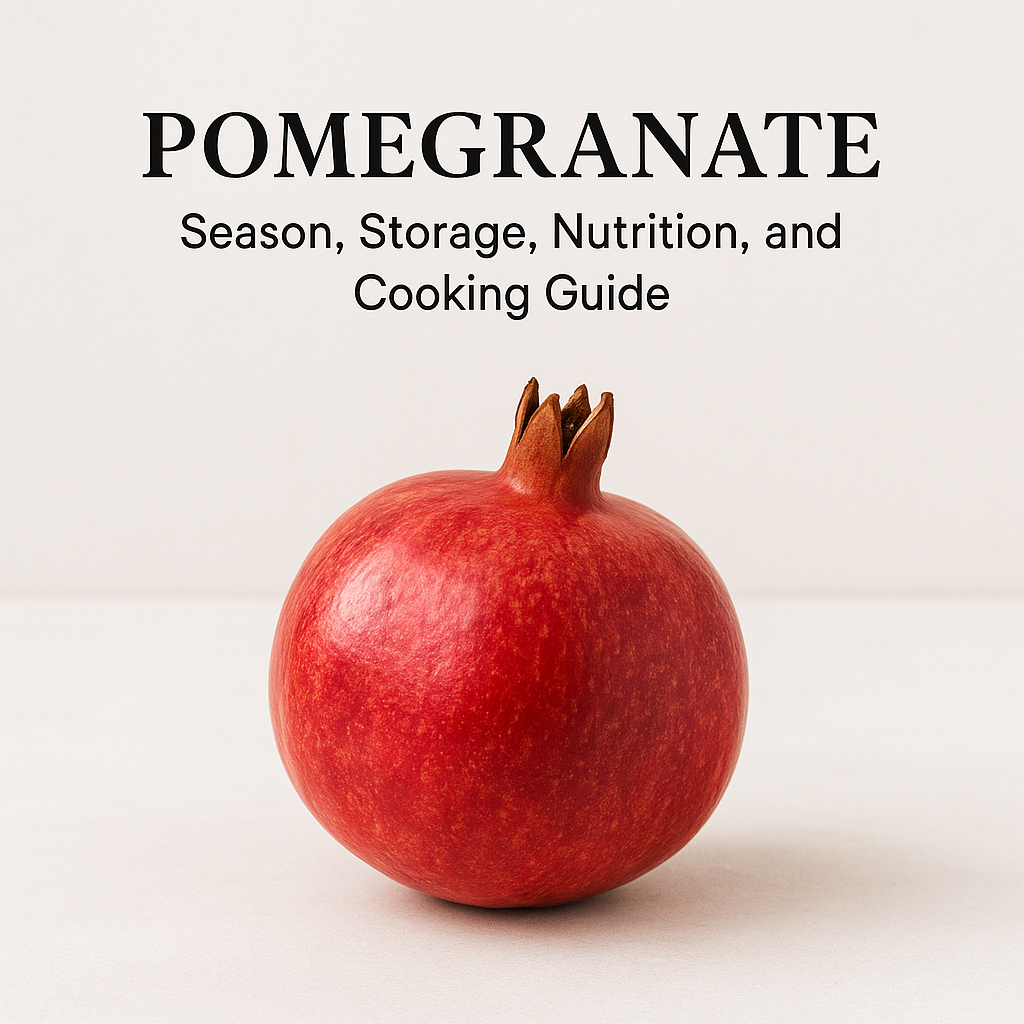
✨ Characteristics
The pomegranate is a unique fruit encased in a thick, reddish-colored husk. Inside, it houses a multitude of seeds, each encased in a juicy, red aril. These arils are both the edible and most exciting part of the fruit, delivering a burst of flavor that can be described as a delicate balance of tartness and sweetness.
Renowned for its aesthetic appeal, the pomegranate has been cultivated since ancient times and is often admired in art and literature. Its distinct ruby-red arils add a visually appealing element to any dish, making it a popular choice for garnishes and salads.
💪 Benefits
Pomegranates are not only delicious but also touted for their impressive range of benefits. Known primarily for their antioxidant capacity, pomegranates contain compounds that help to protect the body from oxidative stress. These antioxidants may contribute positively to cellular health.
Additionally, pomegranates are a good source of dietary fiber, supporting digestive health. They also contain vitamins C and K, along with several other crucial nutrients, playing a supportive role in maintaining overall health and wellness.
🌍 Origin
Originally native to the regions spanning present-day Iran to northern India, pomegranates have been cultivated throughout the Mediterranean region for several millennia. They hold cultural significance in many societies, often symbolizing prosperity and fertility.
Today, pomegranates are grown worldwide, with successful cultivation in regions with Mediterranean climates, including parts of the United States, Spain, and Turkey. The adaptability of the pomegranate tree to different environments has facilitated its global spread.
📅 Harvest Season
In general, pomegranates are harvested in the Northern Hemisphere from September through February. The peak season varies by region, but this timeframe ensures the best flavor as the fruit fully ripens.
During the peak harvest period, pomegranates are readily available at grocery stores and markets, ensuring that consumers can enjoy the freshest and most flavorful fruits. It's during these months that the arils are at their juiciest and most flavorful, capturing the essence of the season.
🧺 Varieties
There are several popular varieties of pomegranates, each with unique qualities and flavors. The "Wonderful" variety is the most widely grown, known for its deep red color and rich flavor. "Angel Red" is another favored variety, appreciated for its soft seeds and sweet taste.
Other notable varieties include "Eversweet," which has a unique sweet flavor with almost no tartness, and "Grenada," appreciated for its early harvest window. These varieties highlight the diverse palette that pomegranates can offer, catering to differing taste preferences.
🛒 How to Choose (Checklist)
- Weight: A ripe pomegranate should feel heavy for its size, indicating juicy, full arils inside.
- Skin: Look for a firm, taut skin without cuts or bruises. Minor skin blemishes do not affect the fruit's quality.
- Color: Colors can range from light pink to deep red. More critical is uniformity and vibrancy, suggesting ripeness.
- Sound: Tap the fruit gently. A metallic sound may indicate ripeness, as opposed to a dull thud.
🍽 Cooking & Eating Methods
Pomegranates offer versatile culinary uses, from being enjoyed raw to being incorporated into various dishes. The arils can be consumed raw as a refreshing snack or added to salads, desserts, and yogurt to add texture and flavor.
The juice is a popular ingredient, widely used in drinks, dressings, and sauces. A traditional Middle Eastern dish, Fesenjan, features a pomegranate-based sauce as its key flavor element. Additionally, pomegranate molasses, a reduction of the juice, serves as a tart and tangy cooking ingredient.
❄ Storage Tips
Whole pomegranates can be stored at room temperature in a cool, dry place away from sunlight for several weeks. If you wish to extend their shelf life, refrigerating them can keep them fresh for up to two months.
Once opened, or the arils are separated, store them in an airtight container in the refrigerator, where they'll keep for up to a week. For longer storage, you can freeze the arils — spread them on a baking sheet, freeze until firm, and then transfer them to a freezer bag, where they'll last for several months.
❓ FAQ
-
How do I efficiently de-seed a pomegranate?
To de-seed a pomegranate easily, cut it in half, hold it over a bowl, and firmly tap the back with a wooden spoon. The seeds should fall out with ease.
-
Are the pomegranate seeds edible?
Yes, the seeds (also known as arils) are completely edible. Some people chew them to enjoy the juice and spit out the seed, while others eat the whole aril, seed included, for added fiber.
-
Can I use pomegranate juice in cooking?
Absolutely. Pomegranate juice can be used in marinades, dressings, or as a base for sauces and glazes, imparting a unique flavor profile to dishes.